Michigan Senate rivals clash over health care and Israel
Abdul El-Sayed and Mike Rogers disputed health coverage, Israel and Canada tariffs in their first Michigan Senate debate Thursday.
Lauren Collins ·
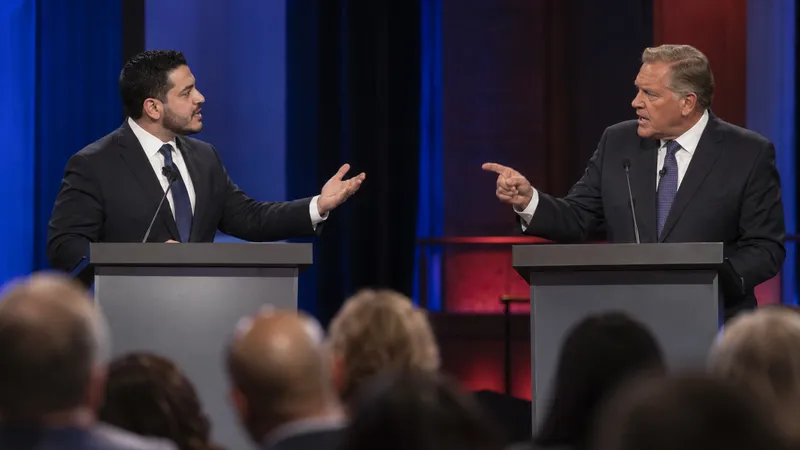
Abdul El-Sayed and Mike Rogers disputed health coverage, Israel and Canada tariffs in their first Michigan Senate debate Thursday.
The Democrat and Republican offered different approaches to federal insurance, immigration enforcement and relations with Israel. Their contest puts those choices before voters in a state important to determining the Senate majority in November.
Rogers, a former Republican representative, also described an effort to persuade President Trump’s administration to reach a trade agreement with Canada. That position introduced a disagreement within the Republican camp alongside the divisions between the candidates.
Canada tariffs test Rogers’s position
Michigan’s border with Canada gives the tariff dispute a direct regional dimension. Rogers said he had contacted the White House and spoken with the commerce secretary during the week to press for an agreement.
“There are tariffs that I think are too high and not helpful for us,” Rogers said. He also argued that Canada should remove duties on American products, presenting his position as a call for changes on both sides rather than an unconditional rejection of tariffs.
El-Sayed accused Rogers of changing his stance and advocated “smart tariffs” linked to manufacturing employment. The disagreement was therefore not simply between support for trade barriers and opposition to them; both candidates described circumstances in which they would support tariffs.
El-Sayed leaves private coverage open
On healthcare, El-Sayed backed Medicare for All while leaving room for families to retain private insurance. “If families want to keep their private health insurance, that’s fine by me,” he said.
His stated goal was universal coverage without charges at enrollment or when receiving care, or restrictions based on provider networks. Rogers opposes Medicare for All, placing the candidates on different sides of the question of how far Washington should expand its responsibility for medical coverage.
The account of the debate supplied no financing estimates or legislative text explaining how El-Sayed’s universal guarantee would coexist with private plans. If that approach became a legislative proposal, its treatment of existing insurance would be central to understanding the consequences for patients, employers and insurers.
Israel and enforcement divide candidates
Rogers challenged El-Sayed’s response to the anniversary of the October 7, 2023, attack on Israel. El-Sayed said he had condemned the attack and accused Rogers of exploiting it politically.
Asked to choose whether Israel or Iran posed the greater danger to the United States, El-Sayed rejected the premise and questioned Israel’s standing as an ally. “Both of them have proven dangerous in their own way,” he said, expressing his assessment rather than identifying a shared position between the candidates.
On immigration, El-Sayed accused U.S. Immigration and Customs Enforcement of unconstitutional conduct, while also supporting stronger southern-border security and access to citizenship for people facing unresolved immigration status. Rogers defended the administration’s enforcement effort and attributed reductions in crime to its targeting practices, a causal claim not substantiated by supporting data in the supplied account.
The debate established competing policy commitments but did not settle their implementation. For voters weighing the November choice, the unresolved details include how El-Sayed would fund expanded coverage and what terms Rogers would accept in a Canadian trade agreement.