

Vance declines to back Iran strikes as Trump defends war
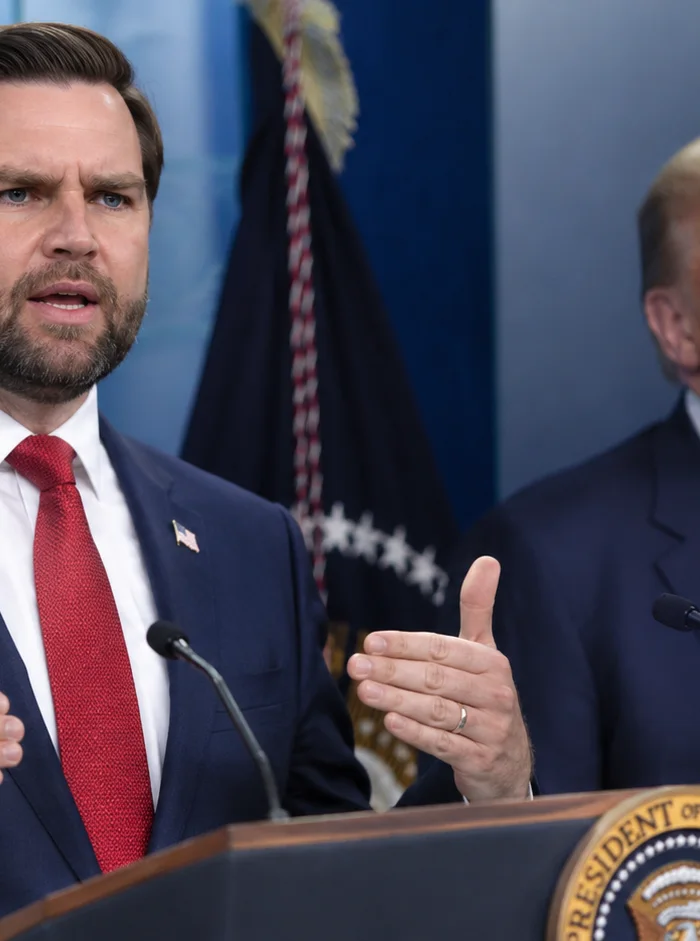
Vice President JD Vance withheld a personal endorsement of Iran strikes while reaffirming his support for President Donald Trump.
At their joint White House appearance on November 20, 2026, Vance endorsed preventing an Iranian nuclear weapon but stopped short of endorsing Trump's military decision as his own. Trump wanted more: an acknowledgment that the February attacks were necessary and a statement that Vance would authorize them himself.
Vance separates loyalty from military judgment
The exchange drew a distinction between backing the president's authority and agreeing with his choice of military action. Asked whether the conflict justified Republican congressional defeats, Vance emphasized his supporting role rather than directly answering whether the operation was worthwhile.
Vance described denying Iran a nuclear weapon as an essential objective and argued that such a weapon would give Tehran leverage or enable attacks. Those were the vice president's assessments of potential dangers, not evidence presented at the briefing about Iran's current nuclear capabilities.
Trump said he accepted that members of his administration could hold different views. But he also said Vance's election assessment had omitted the argument that military action was justified and worth repeating, making clear that an expression of loyalty did not fully answer his concern.
Republican losses sharpen the Iran dispute
The disagreement followed Vance's public assessment of the midterm results, in which he attributed Republican losses to the conflict and advocated an American withdrawal. In his social media post, Vance wrote: "The reason we lost is the war."
That statement was a political explanation offered by the vice president, not an independently established account of voter behavior. His argument asked supporters of the operation to defend its electoral cost, placing the consequences for Republicans alongside the administration's stated security objective.
Vance's position also matters beyond the immediate disagreement: he is considering a presidential campaign for 2028. His comments leave him supporting Trump's authority while declining to commit himself to the same military judgment, a distinction with relevance to any future campaign debate over foreign policy.
Trump closes Vance's negotiating channel
Before the public exchange, Vance had served as Washington's principal negotiator in efforts to end the fighting. His diplomacy produced a temporary summer ceasefire that subsequently collapsed, and he later contacted Iranian hardliners in an effort to revive discussions.
Trump halted that outreach after Vance published his election assessment and directed him toward domestic issues. Announcing the instruction on social media, Trump wrote: "We don’t need a deal with Iran," rejecting the negotiating course his vice president had been pursuing.
The disagreement over Iran did not prevent Vance from praising Trump's diplomacy elsewhere. After Trump's Asia trip, which included a meeting with Chinese President Xi Jinping and Russian President Vladimir Putin, Vance publicly applauded the value of giving negotiations an opportunity.
The unresolved issue is whether Trump's restriction on Iranian contacts will hold or whether he will authorize another negotiating effort. If the restriction remains, Vance's earlier diplomatic role would stay curtailed; reopening talks would require a change from the president's announced direction, not simply another statement of support from his deputy.
More stories
- Paul seeks 20%-30% federal credit for U.S. film shoots
- Trump targets data centers abroad with tax threat to firms
- Cao faces Senate scrutiny over $32.5m-a-day Iran blockade estimate
- Nvidia forms security panel as chip controls tighten again
- Sanders proposes $2,400 Social Security increase
- Trump administration plans vaccine-injury payments for doctors
- Trump's Iran war pledge links military claims to oil costs
- Kimberly Guilfoyle resigns as U.S. ambassador to Greece
Latest news
- Young adults overestimate life insurance costs by 10 times
- Estonia to close 5 Russia road crossings for six months
- Greece targets 2.3% growth in 2027 budget
- Mashatile seeks GBVF action after 1-in-3 violence finding
- Madrid teachers march for funding and oppose strike rules
- US stocks face Goldman warning on further forced selling
- Milan tenants seek lease safeguards as housing costs rise
- Al-Fatlawi recasts Iraq on screen with about $2.5m debut