

Al-Fatlawi recasts Iraq on screen with about $2.5m debut
The Blind Ferryman premiered at Cairo after a 45-day Iraq shoot and a $15,000 Mexico underwater sequence that avoided a costlier tank.
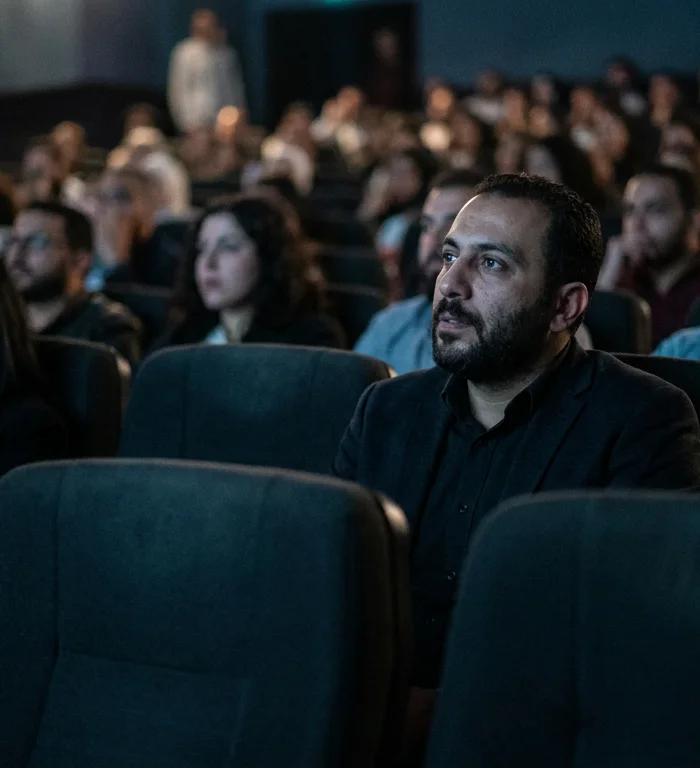
Ali Toffan Al-Fatlawi said in a Variety interview published Nov. 21 that “The Blind Ferryman,” financed with approximately $2.5 million as his fiction feature debut, rejects portrayals of Iraq built around Western pity.
The 47th Cairo International Film Festival premiere places a marshlands-set Iraqi story before festival audiences after a 45-day Iraq shoot and a $15,000 underwater scene, compared with a $100,000-to-$150,000 tank estimate.
“I don’t want to do a movie which shows that we are poor people, asking for sympathy,” Al-Fatlawi told Variety. “I’m really very careful not to make a movie which makes the West feel good about their life.”
The film follows Ayoub, played by Ahmed Moneka, a blind boatman in Iraq’s southern marshlands. He falls in love with Genya, played by Sam Rahmani, a woman his community cannot see and treats as imagined.
Al-Fatlawi said the idea dates to 2006, when he was living in Switzerland during Iraq’s civil war and thinking about two blind aunts. “I think we lost the ability to think with our feelings,” he said. “Or, as we say in Arabic, ‘Seeing things with our heart.’”
The story draws on accounts Al-Fatlawi heard from his father about a mythical woman in the marshlands, as well as Sumerian mythology and the “Epic of Gilgamesh.” He told Variety he was interested in how prominent female deities in ancient Mesopotamian belief contrast with the more male image of God in contemporary religion.
That question of perception shapes the casting and imagery. Ayoub is a Black Iraqi, while the threatening outsider from the city is a white, blue-eyed man in religious clothing, a choice Al-Fatlawi described as intended to unsettle assumptions about heroes and villains.
A painter and performance artist before moving deeper into cinema, Al-Fatlawi developed the script through drawings. He said he painted scenes before writing them, then worked with his cinematographer in a 4:3 aspect ratio and framed some shots so water reflections occupied half the image.
Al-Fatlawi also said he asked Moneka to keep Ayoub’s eyes open and steady, avoiding familiar screen cues that invite pity for blindness. “I don’t want people to feel sorry for you,” he recalled telling the actor. “I want you to be strong.
You see more than everybody who has eyes.”
Rahmani told Variety that playing Genya meant balancing a physical woman with a possibly mythical figure. “I had to portray the whole spectrum without losing credibility as either,” she said. “Sometimes I went against my instinct, but that’s why I give so much credit to Ali as the creator of this whole world.”
The project began development in 2015 and received support from the Doha Film Institute, El Gouna and Red Sea film festivals. It also took part in Cannes’ L’Atelier program in 2022, the year it secured approximately $2.5 million in financing.
For the underwater sequence, Al-Fatlawi chose a cenote near Playa del Carmen, Mexico, after deciding not to use a tank estimated at $100,000 to $150,000. With two underwater photographers who had not previously shot a feature, he completed the scene for about $15,000.
More stories
- Strictly expands stage for 8 couples in Blackpool return
- Anoop Lokkur seeks backers for $1.3m Bengaluru dark comedy
- Jeff Buckley track tops 500,000 TikTok uses this year
- Some schools remove David Walliams books after allegations
- Sotheby’s raises $378.7m as collectors stay selective
- I Play Rocky team shot Stallone origin story in 34 days
Latest news
- Young adults overestimate life insurance costs by 10 times
- Estonia to close 5 Russia road crossings for six months
- Greece targets 2.3% growth in 2027 budget
- Mashatile seeks GBVF action after 1-in-3 violence finding
- Madrid teachers march for funding and oppose strike rules
- US stocks face Goldman warning on further forced selling
- Milan tenants seek lease safeguards as housing costs rise
- Bitcoin falls below $57,742 as investors seek other bets