

Trump targets data centers abroad with tax threat to firms
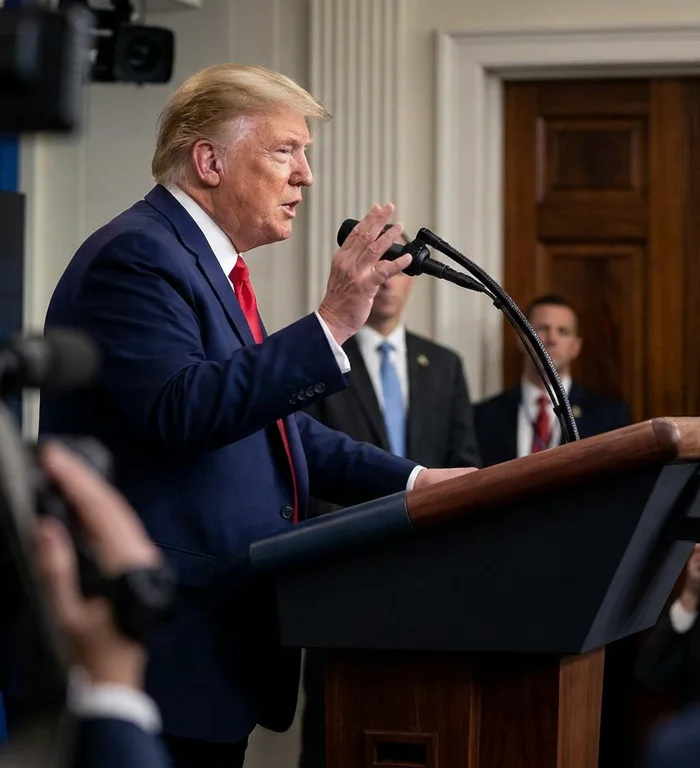
President Donald Trump threatened to tax US companies building data centers abroad, without specifying a rate or legal authority.
Speaking at a White House briefing on November 20, 2026, Trump said he wanted American technology companies to locate those investments domestically. His remarks left unresolved which overseas projects would face a charge and how the government would collect it.
Trump framed the threatened tax as a consequence of choosing foreign locations, rather than announcing a prohibition on overseas construction. “But we’re going to put a tremendous tax on them. If they do it, we want them to build it here,” he said.
Global networks meet domestic pressure
The companies operating across those borders include Microsoft Corp., Alphabet Inc., which owns Google, and Amazon.com Inc. All have international data center networks and are investing in additional computing infrastructure for artificial intelligence.
Trump has previously singled out Google’s investment in Finland, contrasting that spending with investment at home. Google is also supporting large American projects, so its overseas expansion is taking place alongside domestic construction, not simply instead of it.
That distinction matters for the scope of any eventual measure. Trump did not explain whether domestic investment would affect a company’s exposure to the threatened charge, or whether existing foreign facilities and future developments would receive different treatment.
Electricity claims shape the domestic argument
Trump also rejected the suggestion that expanding data center capacity would increase American households’ power bills. He said the facilities would supply their own electricity and told consumers, “Actually, your electricity costs will go down.”
That was a presidential assurance, not a demonstrated outcome for the projects under discussion. The remarks did not specify generation capacity, construction schedules or arrangements governing how electricity would reach nearby consumers.
Domestic opposition remains part of the political setting for his push. Several Democrats who campaigned for tighter oversight of data centers won midterm contests, while Trump maintained that communities still wanted the investment.
The competing positions concern both where facilities are built and the conditions attached to their construction. If stricter local requirements delay American projects, a federal effort to discourage foreign expansion could leave companies facing constraints in both locations.
Tax design determines the investment stakes
If an enforceable tax makes foreign construction more expensive, Google would have to weigh that expense alongside its investments in Finland and the US. Microsoft and Amazon would face similar decisions wherever their projects fell within the measure’s scope; across the sector, the mechanism would be a change in relative project costs.
At the international level, a resulting shift in construction would redirect infrastructure investment between host countries, rather than necessarily increase total spending. If companies instead postponed projects while awaiting rules, the immediate effect could be delayed investment rather than relocation to the US.
If the threat produces no enforceable measure, there would be no new tax cost from the announcement alone. The next substantive developments would be a defined legal basis, the activities covered and a timetable; electricity arrangements and local approvals would remain separate tests for any domestic expansion.
More stories
- Paul seeks 20%-30% federal credit for U.S. film shoots
- Cao faces Senate scrutiny over $32.5m-a-day Iran blockade estimate
- Nvidia forms security panel as chip controls tighten again
- Sanders proposes $2,400 Social Security increase
- Trump administration plans vaccine-injury payments for doctors
- Airlines face FAA outage reset after nationwide shutdown
- Trump mail-in voting fight reaches Supreme Court docket
- Florida judge lets Trump lawsuit rewrite move ahead for now
Latest news
- Fidelity bars Anthropic IPO flippers for six months
- Liberia seeks bigger US exports as AGOA runs to 2028
- SAF-RSF fighting worsens 10-year oil pollution crisis, groups say
- Rwanda women-owned exports fall 51% from 2021 peak
- Strictly expands stage for 8 couples in Blackpool return
- Spain opens 200m-voter test for Europe's right
- Saudi event season faces EASA airspace warning to Jan. 31
- EU housing costs outpace incomes after home prices rise 70%