Trump mail-in voting fight reaches Supreme Court docket
President Trump’s mail-in voting order is before the Supreme Court after lower courts blocked key provisions in 23 states and Washington, DC.
Lauren Collins ·
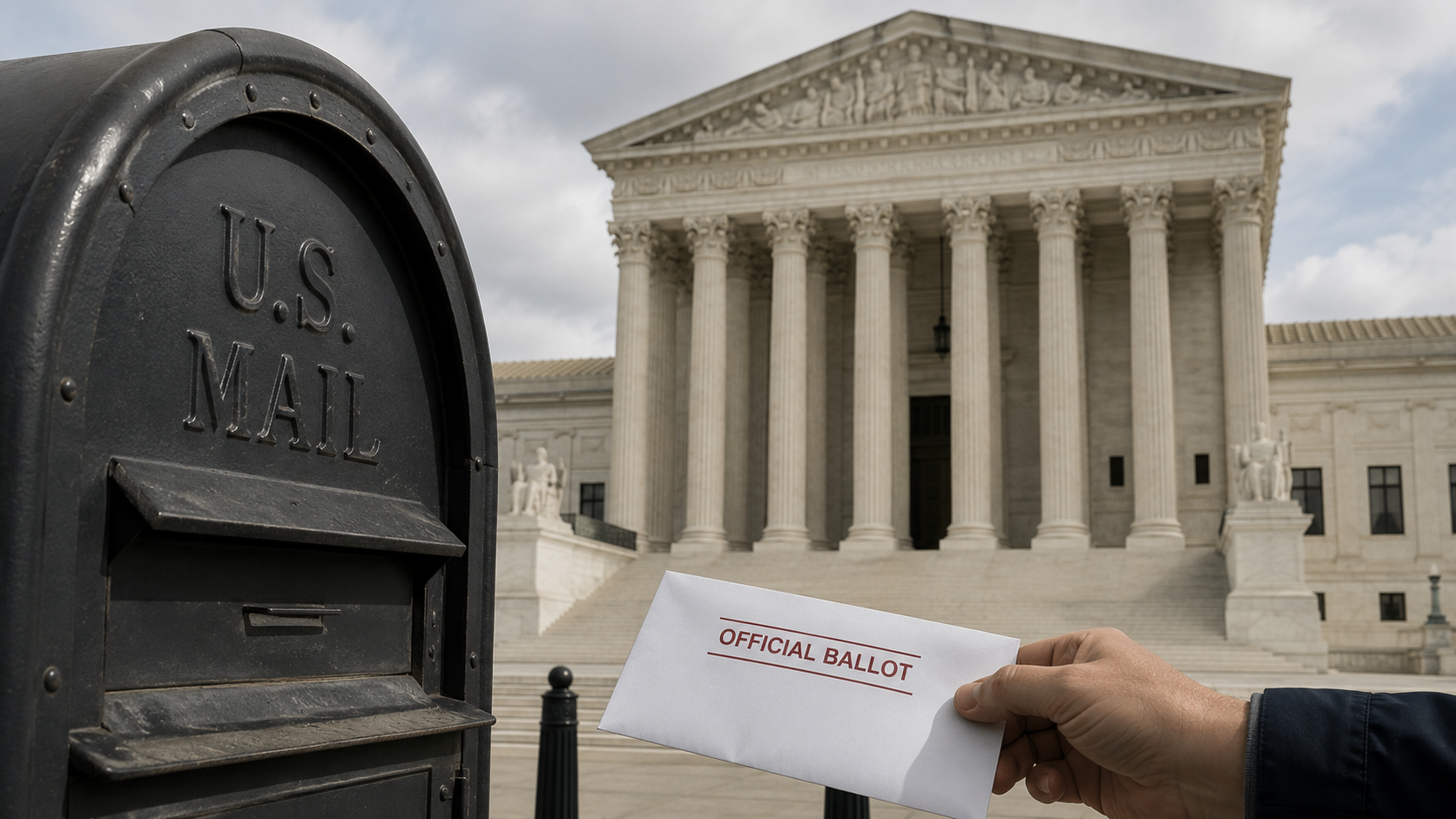
The Trump mail-in voting dispute is now before the Supreme Court, where the administration seeks to revive ballot rules blocked in 23 states and Washington.
The Justice Department filed an emergency application on Monday asking the justices to let federal officials continue work on President Trump’s March executive order before the November midterms. A federal appeals court had rejected the government’s position over the weekend, leaving a Boston federal judge’s injunction in place.
Emergency request follows appeals loss
The order at issue bars federal agencies from carrying out central parts of the election directive in the jurisdictions that sued. The coalition includes 23 states and Washington, DC, with California’s attorney general’s office leading the case, according to the source material.
The Justice Department argues the injunction arrived too early because agencies have not finished deciding how the order would be implemented. US Solicitor General D. John Sauer told the justices that federal officials need enough time to complete rulemaking before election deadlines begin to harden.
“The district court has issued an extraordinary injunction barring federal agencies from implementing an executive order promoting election integrity,” Sauer wrote.
The administration’s filing frames the case as a fight over federal power to strengthen voting safeguards. Its opponents describe the same provisions as an intrusion into state-run election systems during a cycle in which Republicans are defending a narrow congressional majority.
Postal Service role draws scrutiny
The challenged provisions would allow federal agencies to develop their own lists of eligible US citizen voters and would give the US Postal Service more discretion over which ballots it delivers. Those two pieces matter because they reach both ends of the voting process: who is recognized as eligible and whether a mailed ballot moves through the postal system.
President Trump and his allies have promoted the executive order as a tool against voter fraud. Democrats and voting organizations allege the plan would disrupt election administration and create uncertainty for voters, local officials and postal workers close to the midterms.
The state coalition’s response has centered on control. US elections are administered primarily by states, and the lawsuit challenges whether federal agencies can alter procedures through an executive directive rather than through legislation or state election rules.
“The district court correctly blocked key provisions of President Trump’s second elections-related executive order and the Court of Appeal properly declined, in a well-reasoned order, to grant the federal government’s request to pause that injunction,” the California attorney general’s office said.
The office said it expected to file its response with the Supreme Court. A Justice Department spokesperson did not immediately comment, according to the source material.
November deadlines narrow the options
The practical stakes are larger than the language of the filings. If the Supreme Court grants the emergency request, federal agencies could resume preparing rules while states and election offices assess whether new federal procedures affect ballot timelines, voter lists or postal handling.
If the justices leave the lower-court order intact, the suing states would keep the current injunction through the near term, limiting the administration’s ability to change mail ballot procedures before November. That would protect existing state processes, but it would not resolve the deeper legal question over the reach of presidential authority in elections.
A narrower ruling is also possible. The Court could permit some agency planning while keeping restrictions on final implementation, which would preserve federal preparation without forcing immediate operational changes on state election systems.
Each route carries different consequences. A stay would give the White House and federal agencies more leverage, put the US Postal Service closer to the center of ballot handling, and raise pressure on the election administration sector to adjust quickly; a denial would favor state control and continuity, while reducing the immediate institutional uncertainty watched by investors, foreign governments and campaigns.
The open questions are concrete: how fast the justices act, whether they treat the dispute as premature, and how much authority they believe federal agencies can exercise before rules are finalized. The Court’s emergency docket will now shape whether President Trump’s mail-in voting order affects the November contest or remains blocked while litigation continues.