Andy Burnham faces Trump test as UK election waits to 2029
Andy Burnham ruled out an early UK election before 2029 while setting conditions for UK dealings with President Trump and defense spending.
Lauren Collins ·
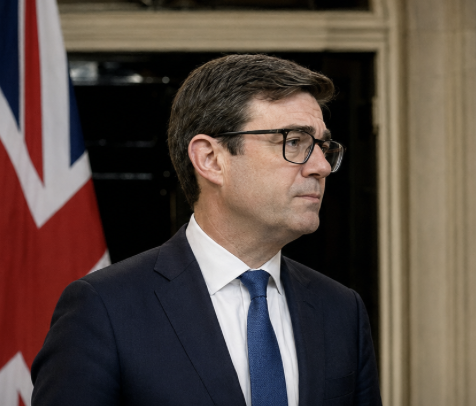
Andy Burnham ruled out an early UK election and said he would challenge President Trump when British interests require it. It frames his first week.
Burnham, who succeeded Keir Starmer as Britain’s prime minister last week, is trying to define authority on two fronts at once: the country’s relationship with Washington and the domestic timetable for his own mandate. His comments also left open one of the largest budget questions facing his new government, the route to defense spending worth 3% of GDP.
Burnham sets Trump boundary
The new prime minister described his first exchange with President Trump as “really warm,” while making clear that personal rapport would not settle policy disputes. Burnham said he would defend national interests and speak directly if he believed the US position cut against Britain’s judgment.
His sharpest caveat concerned the war in Iran. Burnham said he had concerns when, in his account, the conflict was started by President Trump, and he added that he would say what he thought was right as events changed.
Asked twice whether he trusted President Trump, Burnham declined to give a direct answer. He said, “It’s a changing world isn’t it, and you just obviously have to call things as they develop.”
No election before 2029
Burnham also said he had no plan to call an early general election before the next vote is due in 2029. He said he was “going to rule it out” because he believed voters did not want another national campaign and because his priority was getting the country “where it should be.”
The decision matters because Burnham entered Downing Street through a change in party leadership, not through a fresh election. By rejecting an early vote, he is choosing continuity over an immediate mandate, which gives his government time but also ties its legitimacy to delivery rather than a new campaign result.
For opposition parties, the pledge narrows the near-term electoral calendar. For Burnham, it raises the cost of policy drift: voters will judge his government by whether public services, living standards and security policy improve before 2029, not by whether he can reset the political clock.
Defense pledge lacks timetable
Burnham would not specify when his government would commit to spending 3% of GDP on defense. He said the task for him and Chancellor John Healey was to ensure that the defense investment plan was fully funded as they prepared for the budget later this year.
The prime minister did not disown the 3% ambition, but he avoided turning it into a dated promise. He said ministers had “got to work out the way of doing” it, a formulation that points toward a fiscal negotiation rather than an immediate spending order.
Defense Secretary Wes Streeting gave Burnham political cover in a separate Sunday interview, saying he accepted the post only after receiving reassurance that the armed forces would receive more money. Streeting also stopped short of naming a specific number, leaving the Treasury, the Ministry of Defence and industry suppliers waiting for the same signal: when the money arrives and how binding the target becomes.
Three paths for Burnham
If Burnham keeps the no-election pledge and delivers a funded defense plan in the budget, the macro effect is policy stability in a major allied economy. For Burnham, that would convert an inherited premiership into a governing program; for the defense sector, it would improve visibility on contracts and procurement timing.
If the 3% target remains undated, the global signal is weaker because allies would see an ambition without a financing schedule. Burnham would preserve fiscal flexibility, but defense companies and military planners would face uncertainty over staffing, production and long-term investment.
If relations with Washington stay cordial despite disagreements over Iran, Burnham can separate diplomacy from personal alignment with President Trump. If the dispute widens, the pressure point becomes harder: Britain would have to balance alliance management with its own reading of international security, while energy, defense and foreign policy decisions become more politically exposed.
The next test is the budget, because that is where Burnham’s language on defense either becomes a funded plan or remains a promise under construction. The open questions are narrow but consequential: whether 3% gets a date, whether Healey identifies durable funding, and whether Burnham’s Trump position survives the next foreign-policy crisis.