

Democrats face limits on gains as midterm voting arrives
Democrats face a narrow route to congressional control in Tuesday’s midterms, despite polling advantages and dissatisfaction with President Trump.
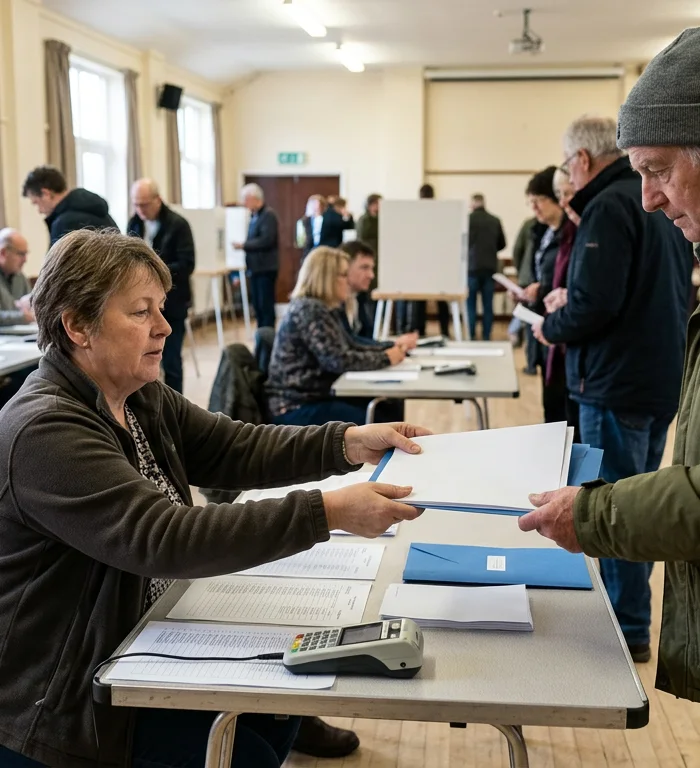
Democrats face a narrow route to congressional control in Tuesday's midterms, despite polling advantages and dissatisfaction with President Trump.
Election analysts estimate that roughly 40–50 constituencies are genuinely in play across the 435-seat House, restricting the scope for a sweeping victory. Their assessments generally favor a Democratic takeover, but suggest a majority of between five and 20 seats rather than gains comparable to the party's 41-seat pickup in 2018.
Recent polling has identified Democratic opportunities in districts previously considered secure for Republicans. Analysts nevertheless distinguish between an unfavorable national climate for the governing party, including voter frustration over prices and the Iran war, and the individual contests that determine congressional control.
The Senate presents a separate hurdle
A House victory would not necessarily deliver the Senate. Democrats need four additional seats, net of any losses, to secure a 51–49 majority, and several of their principal opportunities lie in states where Trump won comfortably in 2024.
Election analyst David Wasserman said Democrats would need to win in states where Trump's margin reached double digits. In his assessment, even a nationwide Democratic shift of 10 percentage points would leave them two seats below the threshold for control.
Andrew Busch, a University of Tennessee, Knoxville public policy professor who has written about midterm elections, also pointed to close contests in Maine, New Hampshire and Michigan. Those races, which Democrats had expected to be less difficult, complicate the idea of a uniformly favorable election.
The House has its own structural limits: analysts attribute the smaller competitive field to partisan polarization and changes to district boundaries, including gerrymandering. Bill Galston, who advised President Bill Clinton, said even a gain of 25 Democratic seats would produce a workable rather than overwhelming majority.
Turnout tests the Democratic polling advantage
Surveys indicate greater enthusiasm among Democratic voters, but strategists caution that enthusiasm does not guarantee participation. Younger, Black and Hispanic voters, important parts of the Democratic coalition, have historically participated less in midterms than in presidential elections.
Exit-poll surveys from the 2022 midterms put voters aged 50 or above at nearly twice the share of the electorate represented by younger voters. Those surveys also indicate that older voters have tended toward Republicans in recent years.
Early-voting records from states with party registration indicate stronger Democratic engagement. Republican strategists counter that their supporters often vote on Election Day, making those records an incomplete measure of the final electorate.
Republican spending adds a late counterweight
Federal Election Commission records show Trump directed more than $277 million toward supporting Republican candidates, primarily through MAGA Inc., during the closing advertising and mail campaign. Separately, advertising tracker AdImpact put Republican spending on competitive Senate races $188 million above Democratic spending through September.
Busch said late financial advantages can influence closely contested elections, although spending has produced mixed results across key races. Polling error remains another uncertainty: surveys understated Republican strength in the 2014 midterms but underestimated Democratic performance in 2022.
If Democratic enthusiasm translates into votes across competitive districts, the party could capture the House without overcoming the Senate's tougher electoral geography. If turnout disappoints or close races favor Republicans, national dissatisfaction with Trump may yield fewer seats than Democrats expect; the decisive evidence will be district and state results, not the national polling margin alone.
More stories
- Democrats hold Michigan Senate seat with El-Sayed victory
- Midterm elections 2026: Final hours of voting
- Stevens backs Rogers for Senate after a Democratic defeat
- Senate contests put Trump's remaining agenda on the line
- Rubio says Trump remains open to another meeting with Kim
- Trump administration escalates election suits before vote
- SAVE America Act Fight Puts Senate Rules in Focus This Week
- Tankers near Strait of Hormuz reroute under Iran pressure
Latest news
- British Airways restores daily Dubai-Heathrow flights
- Türkiye Desk: e2vc opens $150m growth fund for games and tech
- Data centers face backlash after Democratic midterm wins
- Pedro Sánchez ties US midterms to Spain’s election fight
- Townsquare suspends dividend after $4m Q3 net loss
- Democratic sweep lifts stock futures, dents dollar, yields
- Ethiopian Human Rights Commission puts Shirka toll at 48
- Abu Dhabi draws private-equity firms as secondary deals hit $121bn