

Stevens backs Rogers for Senate after a Democratic defeat
Representative Haley Stevens endorsed Republican Mike Rogers for Michigan’s Senate seat after losing the Democratic primary to Abdul El-Sayed, exposing a…
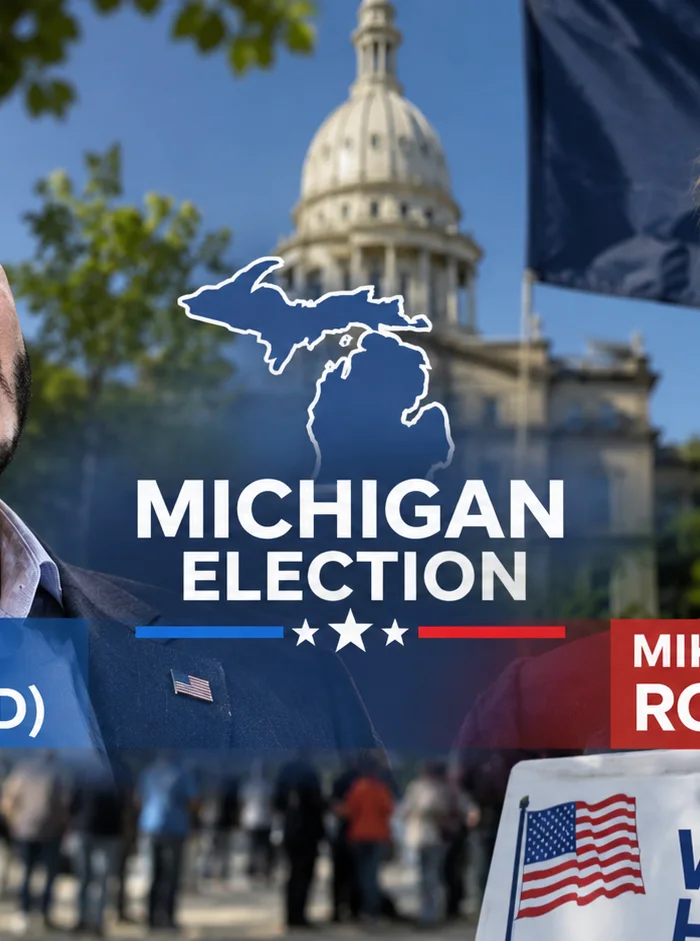
Representative Haley Stevens endorsed Mike Rogers for Michigan’s Senate seat, crossing party lines after losing the Democratic primary to Abdul El-Sayed.
Stevens announced her choice alongside Rogers at Perfecting Church in Detroit on November 1. Her backing puts the defeated Democratic contender behind the Republican supported by President Donald Trump, rather than the candidate who narrowly defeated her in August.
Stevens makes her choice public
Speaking beside Rogers outside the church, Stevens described her decision in personal terms. “This was a personal and private decision,” she said.
Stevens then explicitly identified Rogers as her preferred candidate: “I woke up this morning and I decided to go to church, and I am here with the person who I am voting for for United States Senate, and that is Mike Rogers.” Her statement committed her own support without saying how other Democrats should vote.
The endorsement follows a primary contest that left El-Sayed carrying the Democratic nomination and Stevens outside the general-election contest. Her appearance with his Republican opponent makes that division public; it does not establish how widely her choice is shared among voters who supported her during the primary.
Early ballots limit remaining choices
Almost 30% of Michigan’s registered electorate had voted before the church appearance, through absentee ballots or early voting, according to the Michigan Department of State. That measure concerns registered voters, not the eventual number of people participating in the election, so it cannot establish the share of final turnout already recorded.
The timing distinguishes this endorsement from one delivered before voting began. Any assessment of its electoral reach must account for the ballots already cast, rather than treating the entire registered electorate as a pool of voters still deciding between Rogers and El-Sayed.
Stevens’ announcement also separates her personal preference from the Democratic nomination process. El-Sayed won the primary, while Rogers remains the Republican candidate; her support changes neither designation and provides no direct measure of whether either campaign has gained or lost votes.
Rogers gains support, not certainty
If Stevens persuades previously undecided voters or supporters who have not yet voted, Rogers could benefit from her endorsement beyond the church appearance. That scenario depends on those voters following her across party lines, rather than retaining their Democratic preference or making a different choice independently.
If her former supporters instead remain behind El-Sayed, the announcement could leave the contest’s voting balance largely unchanged despite the public split. The uncertainty is not whether Stevens has broken with her party’s nominee, but whether her decision translates into choices by other voters.
For Rogers, the immediate development is support from a Democratic representative who recently sought the same seat. For El-Sayed, the electoral test is whether the coalition that delivered his primary victory can hold through the general election despite Stevens’ decision to back his opponent.
More stories
- Senate contests put Trump's remaining agenda on the line
- Rubio says Trump remains open to another meeting with Kim
- Trump administration escalates election suits before vote
- Trump holds back on Bolsonaro claim to Brazil leadership
- Judge Rules Trump Administration Illegally Fired Maurene Comey, Prosecutor in Epstein and Diddy Cases
- Trump targets El-Sayed with extremist claims in Michigan
- FDA nominee Overton faces Senate fight over vaccine role
- White House access restored for journalists in Trump case
Latest news
- U.S. economy grows 3.4% as household finances lag behind
- Bulgaria vote gives Yotova victory in preliminary count
- Bulgaria vote gives Yotova victory in preliminary count
- Iran crisis prompts UAE call for a diplomatic resolution
- Julius Baer CEO warns AI bubble tops market risks
- Indian banks cite up to 50% gains from AI systems
- Acemoglu urges Democrats to rebuild working-class appeal
- Russian state-affiliated media raise UK posts 15% in September