

Judge Rules Trump Administration Illegally Fired Maurene Comey, Prosecutor in Epstein and Diddy Cases
Judge Jesse Furman ruled Maurene Comey’s dismissal unlawful and ordered back pay, rejecting the Justice Department’s removal arguments.
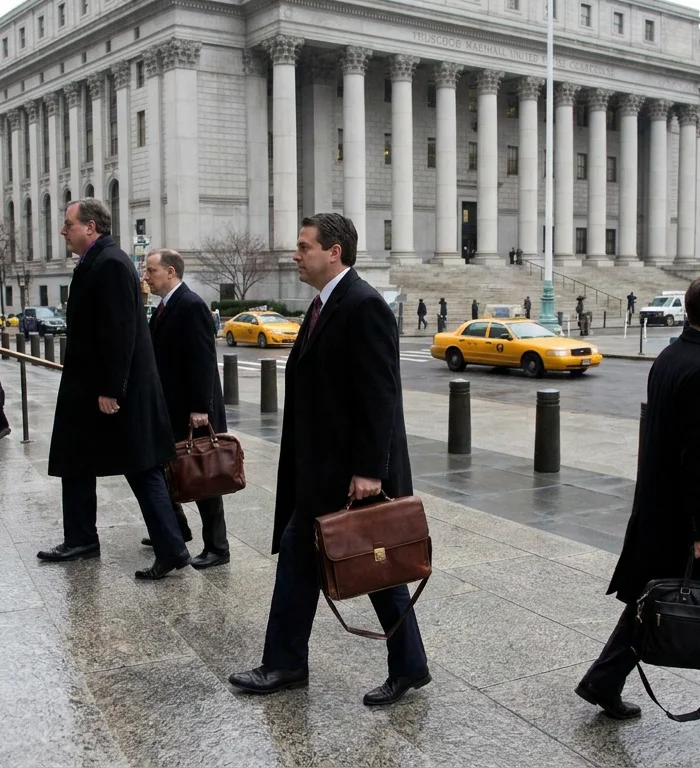
Judge Jesse Furman ruled Maurene Comey's dismissal unlawful and ordered back pay, rejecting the Justice Department's removal arguments.
The Monday decision in Manhattan grants retroactive reinstatement covering July 16, 2025, her dismissal date, through December 20, 2025. Furman inferred that Comey took another job on the latter date; the relief therefore covers a defined period rather than ordering an unrestricted return to her former post.
The Department of Justice said it would challenge the decision once Furman enters final judgment. The dispute centers on whether the attorney general could dismiss Comey without cause and without observing the employment protections the judge found applicable.
Furman rejects unrestricted dismissal authority
Comey served as an assistant U.S. Attorney in the Southern District of New York. Her prosecution work included cases involving Jeffrey Epstein, Ghislaine Maxwell and Sean “Diddy” Combs.
The department argued that then-Attorney General Pam Bondi had authority to dismiss her without cause. Furman rejected that position, along with the argument that current Attorney General Todd Blanche could validate the dismissal retrospectively, as he attempted to do in May.
The department also argued that the dismissal itself implicitly established a sufficient service-related reason under the Civil Service Reform Act. Furman rejected that interpretation, pointing instead to the department's acknowledgment that neither Comey's performance nor a for-cause justification explained the decision.
According to Furman's ruling, Comey's evaluations consistently praised her legal ability, supervision and courtroom work. Those assessments stood in contrast to the department's argument that the act of dismissal could itself satisfy the statutory standard.
Civil service safeguards shape the decision
Furman said the applicable law required advance notice in writing, an opportunity to answer, representation and a written explanation of the decision. He said the department conceded that Comey received none of those safeguards.
The judge also rejected the department's constitutional argument that Article II supplied authority for the dismissal. Furman said accepting that position would require departing from Supreme Court decisions that remained binding on his court.
Comey's lawsuit offered a separate explanation for her removal: alleged retaliation linked to her father, James Comey, or her perceived politics. President Donald Trump dismissed James Comey as FBI director in 2017, but Furman's decision did not establish the retaliatory motive alleged by his daughter.
Appeal and constitutional claim remain unresolved
Comey's lawyers welcomed the ruling as a defense of legal constraints on executive authority. The Justice Department maintained its opposition, saying: “The Department disagrees with this decision and will appeal in due course.”
An appeal would put the department's challenge before a higher court after final judgment. If the ruling survives that challenge, the decision would preserve Comey's awarded relief; a reversal could change the outcome, depending on the appellate court's reasoning.
Furman separately left Comey's First Amendment claim unresolved. He gave her until November 9 to explain why it should remain active rather than be dismissed as moot following the relief already granted, leaving both that claim and the department's planned appeal as unfinished proceedings.
More stories
- Trump targets El-Sayed with extremist claims in Michigan
- Damages dispute puts Trump finances at center of lawsuit
- Oil and Iran frame Trump’s pitch before November midterms
- Congress faces Supreme Court rulings with control at stake
- US visa revocations exceed 300,000 in Trump's second term
- White House backs Katie Zacharia as credentials face test
- Kennedy faces Trump push on childhood vaccines policy again
- New office conversions face safety halt at 222 Broadway
Latest news
- GE Vernova lifts 2026 free-cash-flow outlook to $16bn-$17bn
- South African parties split over Cape Town's 30,000-home annual gap
- Kinross Gold faces Q3 test after 2%-3% output cut
- Ruto seeks Russian investment in Kenya's $380m trade push
- Sudan teachers seek 20% budget share with 8m children outside school
- Spain rail network faces scrutiny after 64 killed near Toledo
- Private equity firms face scrutiny over third of methadone clinics
- Spain reports at least 30 dead in high-speed train crash