

Spain rail network faces scrutiny after 64 killed near Toledo
The collision was the country’s second fatal rail crash in nine months, with unions already planning a Renfe stoppage over safety concerns.
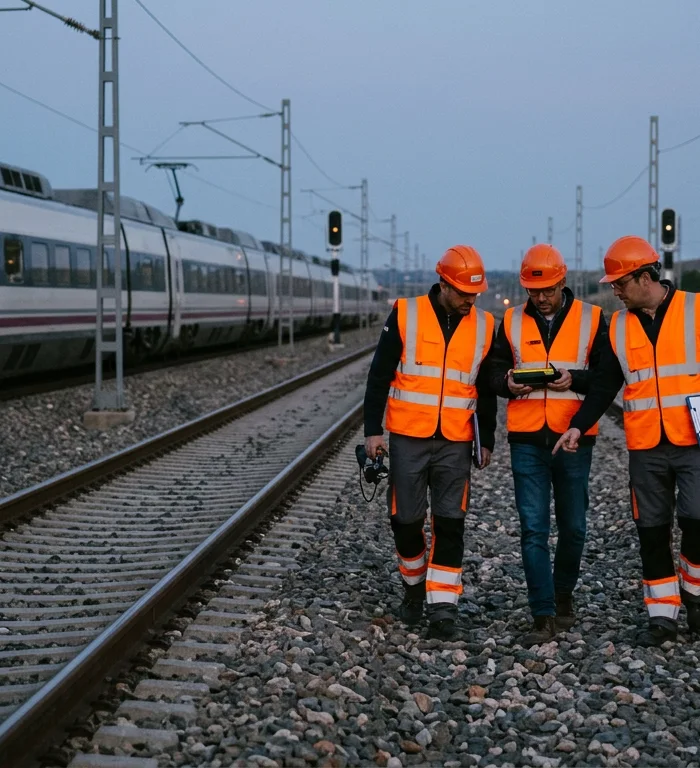
Spain’s high-speed rail system faced renewed safety questions on Wednesday after officials said at least 64 people died when two trains carrying 544 passengers collided near Toledo, the Guardian reported in a news analysis.
The Oct. 28 Guardian analysis said the crash was Spain’s second fatal rail collision in nine months, adding pressure to a network where train use rose 40% from 2019 to 2024.
The cause has not been confirmed. A person described by Reuters as a source said a service operated by Iryo, a private company, stopped near Toledo because of a signalling fault and under instructions from Adif, Spain’s infrastructure manager.
Soon afterward, a state-owned Renfe train travelling on the same line at high speed hit the stopped Iryo train, the Reuters source said, according to the Guardian. Renfe said in a statement that its service had been told to continue and collided with the stationary train “for reasons we don’t know”.
Rail unions had already been pressing safety complaints before the Toledo crash. Spain’s largest train drivers union had scheduled a 24-hour stoppage at Renfe for Thursday, saying earlier this month: “Our goal is to change the system and make it safer.”
The same union also called for “reliable and safe” trains and said it wanted “real and definitive technical solutions to the safety and reliability issues that have long plagued our rolling stock.” It has also called a rolling, six-day strike for drivers at Ouigo, another high-speed rail operator.
Wednesday’s accident followed a January crash near Adamuz in Andalucía that killed 46 people and injured dozens more, according to the Guardian. Spanish media pointed to similarities between the two incidents: both involved Renfe and Iryo and occurred on the Madrid-Andalusia line, the oldest part of Spain’s high-speed system.
Spain’s high-speed network is Europe’s largest and ranks behind only China globally, according to the Guardian. The country opened the network to private operators during a period of fast passenger growth; 25 million people used high-speed trains in Spain in the first half of this year.
The safety debate is not one-sided. The Spanish government says it has lifted railway network maintenance spending by 54% since taking office in 2018, the Guardian reported. A Reuters analysis of EU data cited by the Guardian found Spain spent about €1.5 billion a year on high-speed rail from 2018 to 2022, more than any other country.
More than 90% of Spain’s rail network has the EU’s highest level of safety control systems, according to the Guardian. Before this year, Eurostat data put Spain among the bloc’s lower-accident rail systems, with one or fewer fatalities per thousand kilometres of track.
What remains unclear is whether maintenance, signalling, operating instructions or another factor caused Wednesday’s collision. European Commission data cited by the Guardian indicates Spain’s maintenance investment in its 4,000 kilometres of high-speed lines trailed countries including Germany and Switzerland, though the comparison may reflect differences in line age and construction costs.
The next immediate test is industrial action: the Renfe drivers’ 24-hour stoppage was planned for Thursday, one day after the Toledo crash.
Source: news analysis, The Guardian, Oct. 28, 2026.
More stories
- Ruto seeks Russian investment in Kenya's $380m trade push
- Sudan teachers seek 20% budget share with 8m children outside school
- Spain reports at least 30 dead in high-speed train crash
- Villa Vie disembarks 203 passengers in Cambodia over fuel costs
- NEITI faces methane data questions over 18 incomplete records
- Trump credits endorsement after Netanyahu bloc's 57-seat tally
- Internal dissent places India's Election Commission in the eye of a political storm
- Canada population growth slows to wartime-era low