New office conversions face safety halt at 222 Broadway
Office conversions in Manhattan face renewed scrutiny after inspectors halted 222 Broadway work over cracked top-floor beams.
Lauren Collins ·
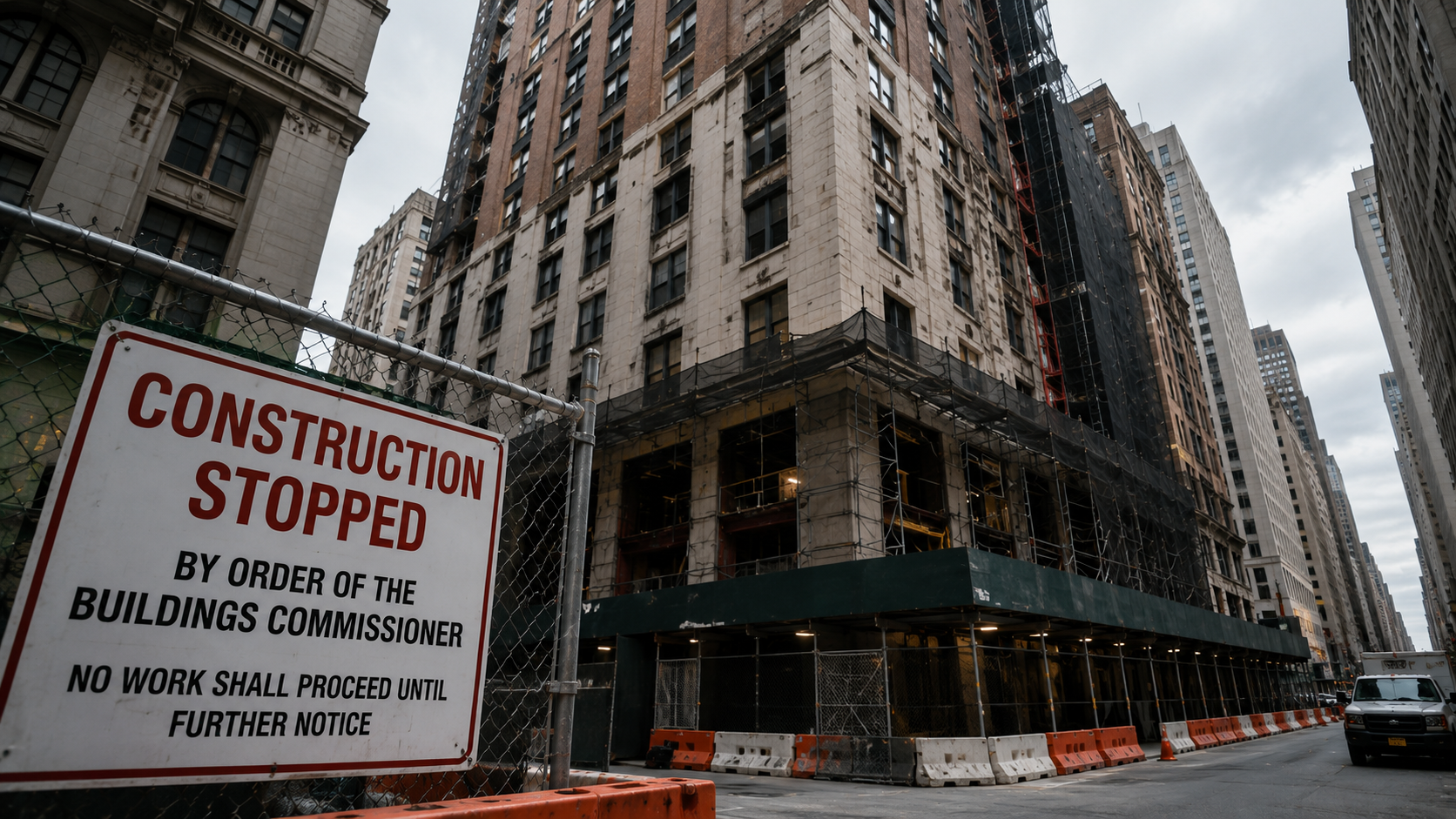
Office conversions in Manhattan face renewed scrutiny after New York City halted 222 Broadway work over cracked top-floor beams.
The stop-work order landed Thursday at the lower Manhattan tower, where GFP Real Estate is turning a former office building into a 32-story residential property with nearly 800 apartments. The plan also includes a rooftop pool, spa and co-working areas, making the project part of a broader push to reuse aging office space for housing.
Cracked beams on Broadway
City inspectors acted after the contractor failed to notify officials that two concrete beams on the top floor had cracked, according to a spokesman for GFP Real Estate. The cracks first appeared in March and were repaired quickly, the spokesman said.
GFP’s spokesman described the city’s action as a dispute over disclosure timing rather than building safety. He said the issue was a "reporting timeline discrepancy" and not tied to "safety issues of any kind," adding that inspectors found the tower stable.
The contractor, Leeding Builders Group, and the engineering firm, DeSimone Consulting Engineers, did not provide responses in the source material. That leaves unresolved how the contractor and project engineers interpreted the notification rules after the March repairs.
Pfizer tower triggered inspections
The Broadway shutdown followed a Department of Buildings inspection sweep after serious structural problems emerged at the former Pfizer headquarters in Midtown. MetroLoft had been converting that building into 1,600 apartments before officials ordered the property evacuated earlier this month.
At the Midtown site, two columns buckled, creating a risk of partial collapse and forcing nine nearby buildings to close temporarily. MetroLoft founder Nathan Berman said the structural problems were at least partly linked to added weight from new construction on top of the building.
The detail matters for 222 Broadway because its cracked beams were also on a newly added upper floor. GFP added the 32nd story to support the rooftop pool deck, but the company declined to address whether the weight of that addition contributed to the cracking.
Housing demand meets structural scrutiny
New York’s office-to-residential conversions have become more important as older office towers struggle with changed work patterns and the city searches for additional housing. Buildings such as 222 Broadway are attractive targets because they already sit near transit, jobs and commercial services.
The trade-off is engineering complexity. Office towers were not designed around apartment layouts, residential amenities, rooftop pools or the same mechanical systems, so each conversion can require structural changes that regulators may inspect more closely after the Midtown incident.
For GFP, the immediate effect is a pause in construction until the city is satisfied with the reporting record and the condition of the repaired beams. Delays can raise carrying costs, complicate contractor scheduling and push back the arrival of hundreds of planned units.
Three paths for conversions
If city inspectors keep finding documentation gaps rather than unsafe structures, the broader market impact may stay limited. In that scenario, global macro effects would be minor, GFP could resume work after compliance steps, and developers would likely absorb stricter reporting as a manageable cost.
If inspections uncover more weight-related structural problems, the consequences would be larger. New York could slow approvals or demand deeper reviews, GFP’s project could face longer delays, and the conversion sector would need to price in heavier engineering risk before adding rooftop amenities or new floors.
If the 222 Broadway halt is resolved quickly but the Pfizer case leads to tougher rules, the industry may shift rather than stall. Developers could focus on simpler conversions, lenders may demand more technical diligence, and city officials would have to balance housing production against the safety risks of reshaping older high-rises.