

Democrats hold Michigan Senate seat with El-Sayed victory
Abdul El-Sayed won the Michigan Senate contest, according to media projections, preserving a Democratic seat without reducing the party’s remaining path to a…
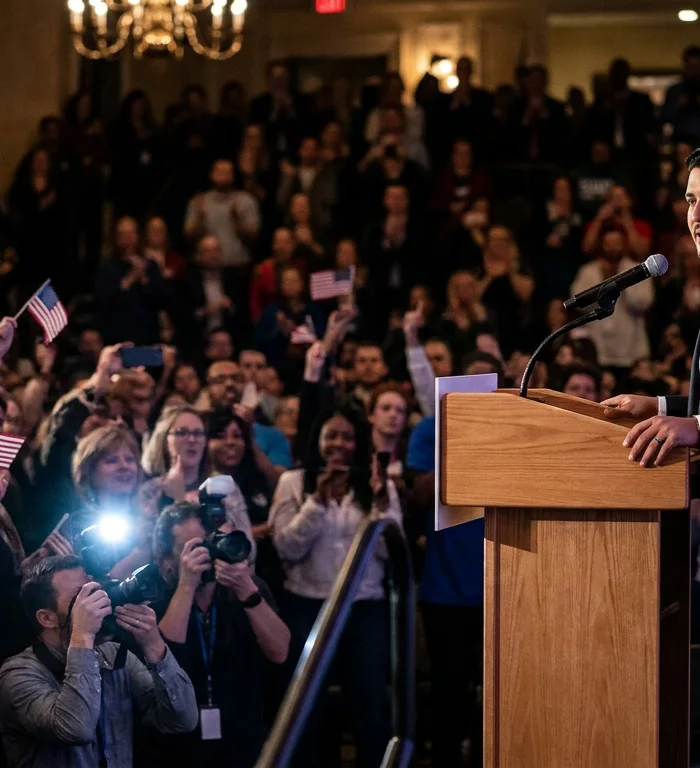
Abdul El-Sayed won the Michigan Senate contest, according to media projections, keeping Gary Peters’ seat under Democratic control.
The projected result denied Republicans an opportunity to replace the retiring Democratic senator with Mike Rogers, a candidate backed by President Trump. Election reporting also identified El-Sayed as the first Muslim elected to the Senate, a milestone that remains dependent on confirmation of the result.
Michigan preserves the Democratic foothold
Republicans began the election with 53 Senate seats against the Democrats’ 47. Democrats therefore needed to increase their total by four seats to secure control, making Michigan a seat to defend rather than an opportunity to narrow that gap.
Keeping Peters’ seat prevents a Republican gain but does not establish which party will run the chamber. The supplied results do not settle the national balance, and the Michigan projection includes neither a vote margin nor a count of outstanding ballots.
El-Sayed, a former official in public health, campaigned on household affordability and limiting the political power of corporations. His victory gives the Democratic progressive faction a senator-elect whose policy priorities include a larger government role in healthcare.
Healthcare and overseas policy divide candidates
El-Sayed supported Medicare for All, a proposal for publicly financed universal health coverage. That position placed healthcare funding alongside living costs in his campaign, although the result alone does not establish which issue determined voters’ choices.
Rogers brought experience as a congressman and an FBI agent, along with support from national Republicans. He also sought support among Jewish voters while highlighting differences with El-Sayed over Israel.
El-Sayed opposed American military assistance to Israel and described its conduct in Gaza as genocide. That characterization was his stated position, not a legal finding established by the election report; the material does not quantify how either candidate’s foreign-policy views affected the vote.
The campaign also exposed differences between Rogers and Trump. Near the election, Rogers called for an end to the Iran war and the trade confrontation between the United States and Canada, arguing that both steps were necessary to ease costs for companies and households.
Senate arithmetic limits the policy opening
If Democrats secure a majority through results elsewhere, El-Sayed would join a party positioned to pursue its Senate agenda. Even under that scenario, his election would not by itself demonstrate sufficient support for Medicare for All or his preferred changes to military assistance.
If Republicans retain control, the Michigan result would preserve Democratic representation without transferring command of the chamber. For healthcare businesses and recipients of federal spending, the distinction is between a candidate’s policy preferences and measures that can obtain legislative approval.
The immediate unresolved issues are the official Michigan tally and the outcome of the wider Senate contest. Those results will determine both the final scale of El-Sayed’s victory and the institutional setting in which he would seek to advance his campaign commitments.
More stories
- Democrats face limits on gains as midterm voting arrives
- Midterm elections 2026: Final hours of voting
- Stevens backs Rogers for Senate after a Democratic defeat
- Senate contests put Trump's remaining agenda on the line
- Rubio says Trump remains open to another meeting with Kim
- Trump administration escalates election suits before vote
- Trump midterms blitz tests whether his voters transfer now
- Texas Trump campaign blitz opens with Senate stakes ahead
Latest news
- Türkiye Desk: e2vc opens $150m growth fund for games and tech
- Data centers face backlash after Democratic midterm wins
- Pedro Sánchez ties US midterms to Spain’s election fight
- Townsquare suspends dividend after $4m Q3 net loss
- Democratic sweep lifts stock futures, dents dollar, yields
- Ethiopian Human Rights Commission puts Shirka toll at 48
- Abu Dhabi draws private-equity firms as secondary deals hit $121bn
- NNPC puts Nigeria crude output at 1.8m bpd after reforms