Texas Trump campaign blitz opens with Senate stakes ahead
President Trump opens a 32-day campaign swing in Texas and Oklahoma as Republicans defend narrow congressional majorities and test his pull in competitive…
Lauren Collins ·
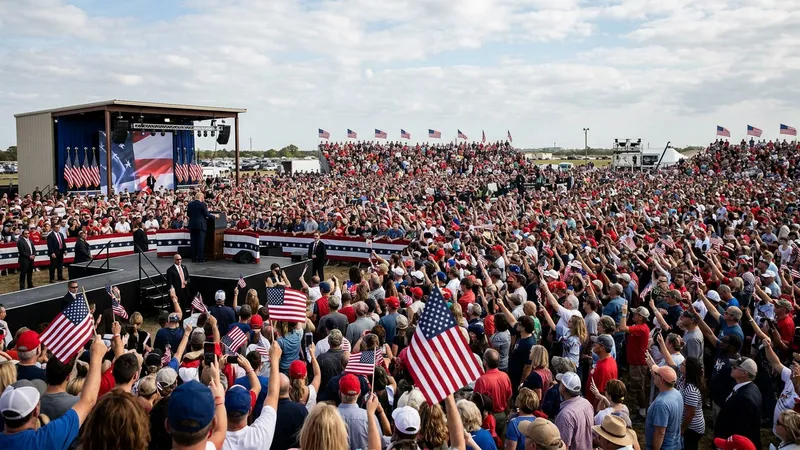
Trump campaign blitz begins in Texas and Oklahoma as Republicans defend slim House and Senate majorities before November’s midterms.
Texas starts the 32-day push
President Trump travels Thursday to Texas, then Oklahoma, at the start of a 32-day campaign schedule built around Republican candidates. The trip puts him at the center of the party’s midterm case at a point when control of Congress rests on narrow margins.
The choice carries both value and risk for Republican candidates. Some contenders in competitive House and Senate races have welcomed Trump’s appearances, while others have shown more distance on issues that have irritated voters, including the war with Iran and electricity-intensive data centers.
At a White House event on Wednesday, Trump told supporters he had not done enough to sell his economic record since returning to office in January 2025. Political analysts now describe some seats once treated as safe Republican territory as competitive in November, a shift that has made the president’s economic pitch more central to the party’s defense.
Paxton race tests party discipline
Texas is one of eight US Senate races rated competitive by political analysts. Ken Paxton, the state attorney general and Republican Senate candidate, is expected to appear with Trump north of Dallas, Paxton’s campaign said.
The appearance follows the leak of a recording in which Paxton was said to have told donors that Trump’s September midterm convention hurt him and other Republican candidates. Paxton’s campaign called the recording "manipulated nonsense," while Trump told reporters Wednesday he had not heard about it.
"I can tell you that the convention was amazing," Trump said in the Oval Office. The exchange matters because Trump backed Paxton over incumbent US Senator John Cornyn in the Republican primary, pushing the party to spend heavily to protect a seat that had been considered reliably Republican.
Democrat James Talarico is now the opponent Republicans must hold off in November. For Paxton, Trump’s visit offers turnout muscle; for national Republicans, it also ties the race more tightly to the president’s personal brand.
Tariffs meet fuel costs
Trump is expected to highlight his tariff and trade agenda during a stop at Peterbilt Motors in Denton. The White House says truck tariffs from Trump’s administration helped support job growth at companies including PACCAR, Peterbilt’s owner.
The administration said those tariffs enabled PACCAR to add more than 2,000 jobs nationwide, including about 1,000 at the Texas plant. That claim gives Trump a concrete manufacturing number to attach to a broader protectionist argument.
Fuel prices complicate the message. Diesel in Texas reached a record $5.97 a gallon two weeks ago, while average gasoline prices are $3.92 a gallon, up almost 44% from the same point last year, according to AAA.
The White House case is that tariffs protected industrial jobs; the political counterweight is that truck operators and drivers are seeing higher operating costs at the pump. If fuel prices stay elevated, Republicans risk defending a manufacturing policy while voters judge the economy through diesel and gasoline bills.
Oklahoma rally widens Texas reach
After Texas, Trump is due to rally in Durant, in southern Oklahoma. He won the state with more than 66% of the vote in the 2024 presidential election, making it a safer Republican venue than the contested states that will decide the congressional map.
The Republican National Committee said the Durant location, near the Texas border, was chosen partly to draw supporters from neighboring Texas. Trump is also scheduled to continue campaigning Friday in Alabama, another reliably conservative Southern state without a marquee competitive race.
The next phase has three conditional paths. If the tariff-and-jobs message dominates, Trump gains a cleaner economic frame, PACCAR and Peterbilt get political cover for hiring claims, and truck makers face pressure to show domestic investment. If fuel costs or Republican splits lead the coverage instead, the national debate shifts back to inflation and trade costs, Paxton carries more risk into the Senate race, and transport firms face closer scrutiny over prices.