Senate Republicans block vote on Israeli violence in the West Bank
Senate Republicans blocked a West Bank rights resolution, leaving Democrats with a recorded split over Israel aid and oversight.
Lauren Collins ·
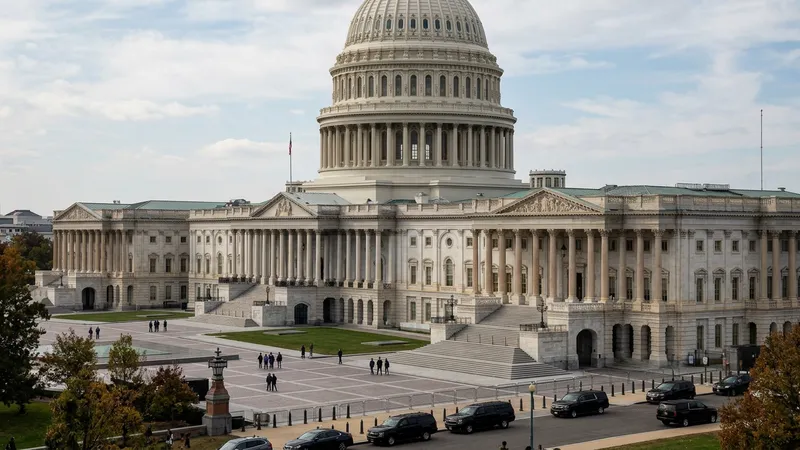
Senate Republicans blocked a West Bank resolution in a 51-47 vote, putting Israel aid oversight on a public roll call. Democrats nearly united behind it.
The Democratic-led measure, rejected Tuesday, sought a State Department report on Israeli human rights practices and violence in the West Bank. Its defeat preserved the current posture toward Israel, while showing how far Democratic support for scrutiny of Prime Minister Benjamin Netanyahu’s government has moved.
Van Hollen’s report demand
Sen. Chris Van Hollen of Maryland sponsored the resolution, and Sen. Tim Kaine of Virginia was among its co-sponsors. According to a statement from Van Hollen, the measure could have triggered the possible termination of certain security assistance to Israel if the administration did not comply with the reporting requirement.
The proposal centered on the West Bank, where Democratic sponsors cited the killing of nine American citizens and violence against Palestinians by Israeli settlers as reasons for a formal assessment. The resolution did not pass, but the vote created a record that future arms-transfer and foreign-aid fights can now draw on.
Kaine framed the resolution as the result of repeated but, in his view, ineffective pressure on Israeli officials. “The reason this resolution’s on the floor is because of a deep perception by us in this body that, despite our friendship with Israel, we are not being listened to,” he said.
Fetterman breaks from Democrats
Every Democrat except Sen. John Fetterman of Pennsylvania supported the measure, according to the roll call described by its backers. That alignment matters in a chamber where Israel policy has often cut across party factions but rarely produced such a nearly unified Democratic challenge.
The vote also followed months of Democratic discomfort over Israel’s military conduct in Gaza and other regional conflicts. For many lawmakers, the West Bank has become a separate test of whether US support for Israel should be tied more closely to civilian protection and human rights reporting.
Republicans cast the resolution as a political exercise aimed at weakening a US ally during wartime. Sen. Steve Daines of Montana called it “another cynical ploy by Democrats to isolate our closest ally in the region and to turn Israel’s righteous war of self-defense into a domestic political issue.”
Netanyahu faces Senate pressure
The immediate winner was the Republican position: no new report requirement advanced, and no security assistance was put at risk through this vote. The immediate loser was the Democratic effort to force the administration to document West Bank conduct in a way that could carry consequences for aid.
For Netanyahu’s government, the warning is less about Tuesday’s failed resolution than about the Democratic vote count behind it. If Democrats retake the Senate in November, a caucus already willing to back this measure could have more control over hearings, floor time and conditions attached to future security packages.
The defense and foreign-policy sectors will read the vote through process rather than rhetoric. If reporting mandates gain support, arms sales and assistance packages could face more procedural review; if Republican control holds, the current approach to security aid is more likely to remain intact.
Three paths for Israel aid
If the administration voluntarily increases reporting on West Bank violence, the global effect would be a narrower one: more diplomatic friction, but less immediate disruption to aid flows. For Israel, that path would add documentation pressure without necessarily changing weapons deliveries, while defense contractors would face more disclosure risk than contract risk.
If Democrats win Senate control and return to the issue, the mechanism changes from messaging to agenda power. That scenario could affect the global picture by linking Middle East security assistance to human rights compliance, expose Netanyahu’s government to more congressional conditions, and push the defense sector to plan for slower approvals.
If Tuesday’s vote remains the high-water mark, the policy impact will be limited to a political marker. The main open question is whether Democratic frustration over Gaza and the West Bank becomes a governing position, or stays a protest vote without the majority needed to alter Israel aid.