

Trump, Putin and Xi to hold historic trilateral in Shenzhen
Leaders from the US, Russia, and China will meet in Shenzhen on November 19 to discuss nuclear arms control and regional conflicts during the APEC summit.
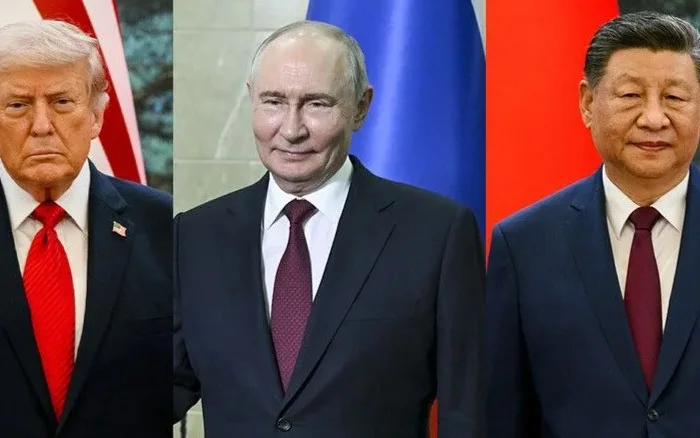
A high-stakes diplomatic encounter
The leaders of the world's three most influential nations are scheduled to convene in Shenzhen, China, on November 19. Donald Trump, Vladimir Putin, and Xi Jinping will participate in a trilateral meeting on the sidelines of the Asia-Pacific Economic Cooperation (APEC) summit, marking a significant moment in modern international relations.
Official confirmation of the gathering arrived via Beijing on November 16, following earlier signals from both Washington and Moscow. While the event is set to proceed, the Chinese government has maintained a reserved stance regarding the specific agenda and expected outcomes of these discussions.
This meeting carries weight beyond bilateral ties, touching upon global security architectures, energy policy, and the shifting balance of power. Observers are closely monitoring the session to see how these major powers navigate their competing interests.
Nuclear arms and regional stability
Reports indicate that the American delegation intends to prioritize nuclear non-proliferation and the reduction of atomic stockpiles. Officials suggest that the US administration views direct dialogue between the primary nuclear-armed states as essential for maintaining global stability.
The ongoing conflict in Iran is also slated for discussion. Sources close to the matter suggest that the US president hopes to engage his counterparts on potential pathways to de-escalation in the region.
However, achieving consensus on nuclear policy remains a significant challenge. Beijing has consistently argued that the US and Russia, which possess the largest arsenals, should lead in disarmament efforts before expecting other nations to follow suit. The impending expiration of the New START treaty in early 2026 adds urgency to these deliberations.
Exclusions and diplomatic sensitivities
Notably, the war in Ukraine is expected to be omitted from the formal trilateral agenda. Washington maintains that separate diplomatic channels exist for that conflict and that China is not a party to those specific negotiations.
Despite this, the optics of the three leaders meeting have caused concern in European capitals and Kyiv. There is apprehension that decisions regarding regional security could be made without the participation of those most directly affected, drawing comparisons to historical conferences that reshaped borders.
While some commentators have speculated about a new geopolitical settlement, Kremlin representatives have downplayed such analogies. They emphasized that while the dialogue is important, no single nation should attempt to impose its vision of global order on others.
Strategic objectives and future outlook
For the participants, the summit serves as a platform to project influence. Moscow sees the event as an opportunity to reaffirm its status as a major power despite Western sanctions, while Beijing aims to demonstrate its central role in international diplomacy.
The meeting is not expected to yield a comprehensive agreement. Instead, officials describe it as a foundational exchange intended to clarify priorities and establish a framework for future communication. The broader APEC summit will continue to address economic cooperation, artificial intelligence, and trade, but the trilateral session remains the focal point of the event.
More stories
- COP31 negotiators face $250m loss-and-damage eligibility test
- Saudi tourism faces Houthi threat after 13 killed at airport
- Singapore court jails Cambodia scam recruit for 14 months and two weeks
- Tigray official says 520 Ethiopians face Saudi death sentences
- UK and EU seek 3 deals in Burnham reset
- Iraq government sacks nine officials over oil-smuggling claims
- South Africa records 76,922 HIV prevention jab initiations
- Three Elections Today. A Global Political Test Ahead.