

Iraq government sacks nine officials over oil-smuggling claims
The Jurf al-Sakhar operation tests Prime Minister Ali al-Zaidi’s effort to pressure Iran-linked militias without a direct armed confrontation.
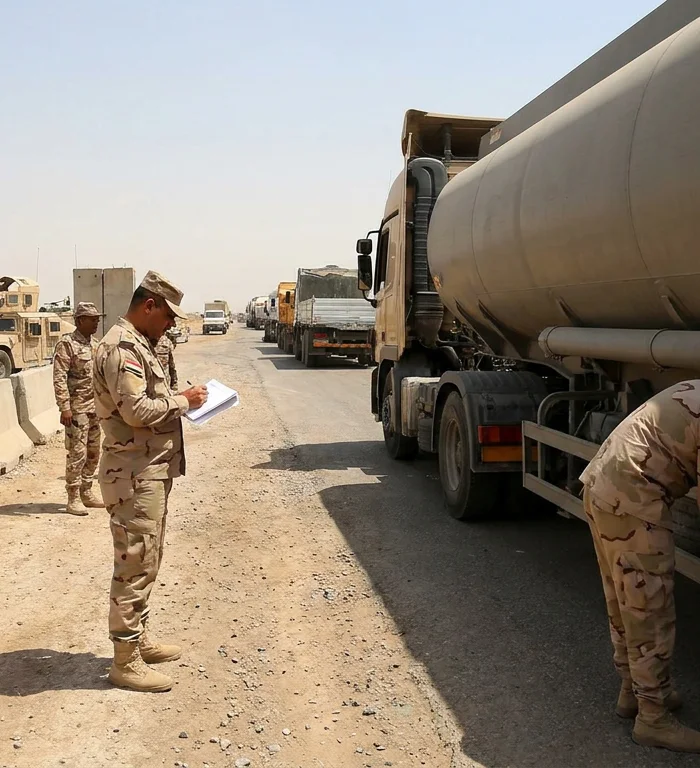
Iraq’s government dismissed and referred nine senior officials to the judiciary over alleged oil-smuggling corruption in Jurf al-Sakhar, Al Jazeera reported in a news report published Nov. 15.
The operation matters because analysts cited in the Nov. 15 report said it tests Prime Minister Ali al-Zaidi’s attempt to bring armed factions under state control in an area about 60km from Baghdad and outside normal government reach for more than 10 years.
Al Jazeera said the campaign also removed top security directors, the Babil police chief and the director of the Oil Pipelines Company at the Ministry of Oil. The government has framed the action as an effort to protect public money from a smuggling network.
An intelligence report released last week claimed Jurf al-Sakhar, also known as Jurf al-Nasr, was at the centre of a corruption scheme involving oil revenue and Iran-linked militias. Al Jazeera reported that an Iraqi security committee entered the area on Friday to investigate after other officials accused of graft were arrested.
Michael Knights, head of MENA research at Horizon Engage, told Al Jazeera that Iran-linked militias built their influence during the campaign against ISIL. “Iran-backed militias illegally seized and renamed Jurf al-Sakr when they conducted sectarian cleansing of the Sunni residents in the area in 2014, under the cover of the anti-Daesh [ISIL] war,” Knights said.
Jurf al-Sakhar sits near the Shia pilgrimage route between Baghdad and Karbala. Knights said its former role as a site for Saddam Hussein-era military industrial complexes also made it useful for armed groups to test, assemble and conceal rockets, drones and missiles.
“If full control is taken, which is unlikely, the government would be able to finally tell Iraqis that a militia had been removed from its base and the legal residents of the area allowed to return,” Knights said. “This would be like taking back the Bekaa Valley from Hezbollah.” He also said the financial blow to Kataib Hezbollah could be less than expected because the group has other revenue sources.
Saif Raad, a security and strategic expert, told Al Jazeera the campaign sends a message that armed groups are not beyond state authority. “This duality is over. Part of what happened now is that the Iraqi people knew these factions and knew why they hold onto weapons, and I believe this is a victory achieved by the government without a single drop of Iraqi blood,” Raad said.
Al Jazeera reported that al-Zaidi sought to avoid a Shia-on-Shia armed clash by coordinating with leaders in the Popular Mobilisation Forces, including the Badr Organisation, before arrests and dismissals in Jurf al-Sakhar. Raad said Badr’s role was central because it is “considered the largest combat force within the Popular Mobilisation Forces.”
Ali Fadhlallah, a political analyst, told Al Jazeera that a confrontation among Shia factions was unlikely because of Iraq’s political and religious structures and the influence of Grand Ayatollah Ali al-Sistani. “The presence of the rational religious authority, which has always controlled the rhythm of the political process at dangerous crossroads, definitely has a very large role,” Fadhlallah said.
More stories
- COP31 negotiators face $250m loss-and-damage eligibility test
- Saudi tourism faces Houthi threat after 13 killed at airport
- Singapore court jails Cambodia scam recruit for 14 months and two weeks
- Tigray official says 520 Ethiopians face Saudi death sentences
- Trump, Putin and Xi to hold historic trilateral in Shenzhen
- UK and EU seek 3 deals in Burnham reset
- Canada and UK back $1.3tn climate finance goal at COP31
- ASEAN faces South China Sea rift at 49th Manila summit
- Senegal faces end-November ruling in AFCON title appeal
- Macron keeps interior minister after 2,400 France protest arrests