

Higher arginine diets were associated with fewer colon tumors in mice
Rockefeller researchers describe an animal-and-cell mechanism that may help explain links between low arginine, immune escape and infection severity.
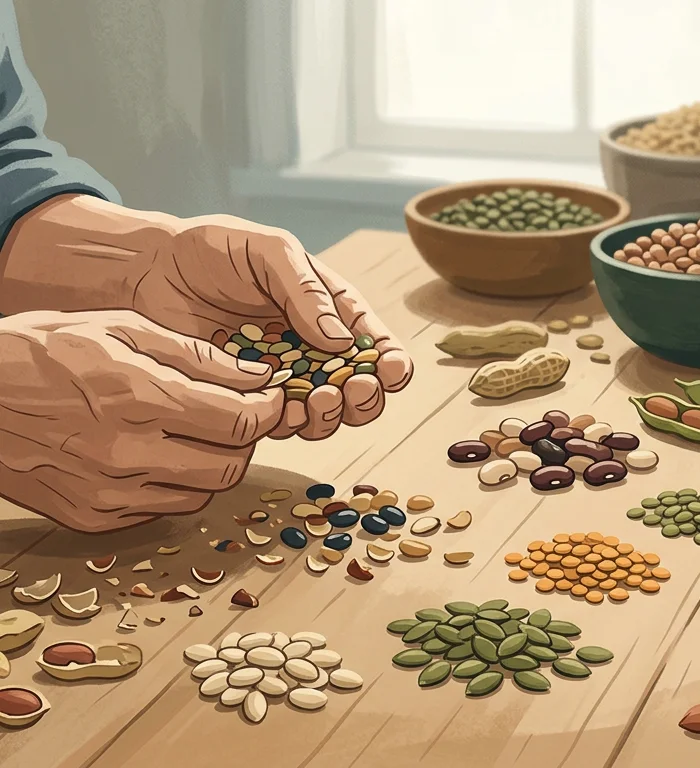
Rockefeller University researchers reported Nov. 15 that mice given arginine-rich diets had fewer colon tumors and milder viral infections, in a Cell study summarized by ScienceDaily Health.
The study matters because arginine, an amino acid made by the body and obtained from protein-rich foods, was linked to 414 protein changes in cultured cells and to immune-recognition effects in animal models, not human trials.
“Our work reveals how a lack of arginine interferes with the immune system, and suggests that upping arginine intake could prove beneficial,” first author Qiushuang Wu, a postdoc in Sohail Tavazoie’s laboratory, said in the Rockefeller summary. “Perhaps that means it could be used in combination with other therapies to treat both cancer and viral infections.”
The mechanism centers on MHC-I, or major histocompatibility complex class I. These proteins sit on cell surfaces and display internal protein fragments to T cells, helping the immune system detect infected or abnormal cells.
Wu’s cell experiments found that low arginine was associated with disrupted production of proteins tied to MHC-I. The researchers reported that ribosomes, the cell machinery that builds proteins, stalled when arginine was scarce, leaving fewer warning signals on the cell surface.
In mouse experiments, animals on low-arginine diets developed more colon tumors, while animals receiving more arginine had fewer. In separate mouse models, higher arginine intake was associated with less severe influenza and SARS-CoV-2 illness; giving arginine after influenza infection was also associated with improved outcomes, according to the Rockefeller summary.
“Not only did mice with an arginine-rich diet have milder symptoms from viral infections, giving the mice arginine after influenza infection improved their outcomes too,” Wu said. “That was very surprising. From our genetic models, we knew manipulating arginine levels had a strong effect on gene expression, but we didn't expect the dietary manipulation to be equally impactful.”
The findings build on earlier Rockefeller work from 2023, when the team reported that removing arginine from colon cancer cells was linked to increased genetic mutations. The new study adds a possible immune explanation for why low arginine has been associated with diseases including colon cancer.
The study cannot show that arginine supplements lower cancer risk, treat viral infections or improve immunotherapy results in people. The evidence described is from cultured cells and mice, and the Rockefeller summary did not provide human outcome data.
Tavazoie said arginine could be tested in patients receiving immunotherapies or in groups at high risk after viral exposure. The research was supported in part by the Stavros Niarchos Foundation Institute for Global Infectious Disease Research at The Rockefeller University and the Weill Cancer East Hub.
Source: research summary, Rockefeller University via ScienceDaily Health, Nov. 15, 2026; Cell study.
Atlas360 reports health research and does not provide medical advice.
More stories
- Singapore CDA gains first WHO infection-control centre role
- Longer estrogen exposure ties to 8% lower brain-vessel disease odds
- NHS England faces 9,490-patient cancer treatment shortfall
- Children in England receive 341 GLP-1 prescriptions in four months
- Roche's Gazyva gains EU panel backing after 76.7% lupus response
- NIH-funded researchers map basal ganglia at single-cell resolution
Latest news
- Americans carry record $1.29tn in credit card debt
- IRS taxes $14,000 inherited IRA cash-out as income
- COP31 negotiators face $250m loss-and-damage eligibility test
- Saudi tourism faces Houthi threat after 13 killed at airport
- Singapore court jails Cambodia scam recruit for 14 months and two weeks
- Microsoft plans Project Helix as Xbox console for PC games
- Tigray official says 520 Ethiopians face Saudi death sentences
- Trump, Putin and Xi to hold historic trilateral in Shenzhen