

Saudi tourism faces Houthi threat after 13 killed at airport
Travel advisories and airline suspensions threaten a sector Riyadh wants to double to 10% of GDP by 2030.
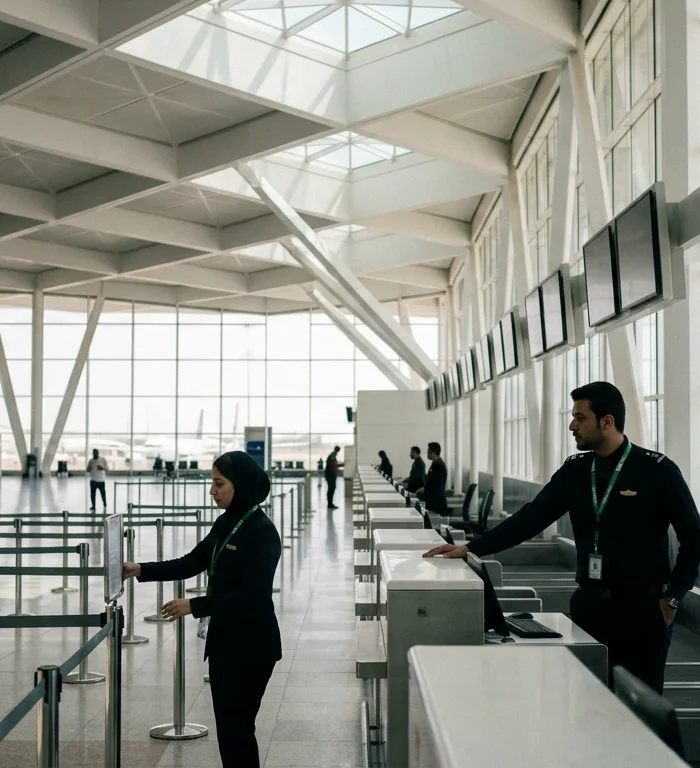
Saudi Arabia’s tourism drive faces a security test after Houthi missile and drone strikes killed at least 13 people at Riyadh’s airport in October, a news report by The Independent said on Nov. 16.
The stakes are high for Vision 2030, Riyadh’s diversification plan: OECD data cited in the report showed tourist arrivals up 67% from 2019, while Saudi Arabia wants tourism to reach 10% of GDP by 2030.
The UK government advised against all but essential travel to almost all of Saudi Arabia on Oct. 17, and against all travel within 10 kilometers of the Yemen border. The US issued a Level 3 “reconsider travel” advisory and ordered non-emergency US government personnel to leave Saudi Arabia, the report said.
Flight disruption has been severe at King Khalid International Airport. Between Oct. 8 and Oct. 25, 4,071 of 4,736 scheduled flights, or about 86%, were cancelled, The Independent reported, citing Reuters’ evaluation of Cirium aviation data.
Riyadh’s airport has partly reopened, but airlines including Lufthansa, Qatar Airways and Air France suspended flights into late October and November, according to the report. British Airways had suspended flights to the capital until Nov. 3, while Virgin Atlantic said in April it was dropping its London-Riyadh route about one year after launch.
Saudi Arabia has spent recent years building tourism as a non-oil growth engine. Inbound visits reached 29.3 million in 2025, below the previous year but well above pre-pandemic levels. Religious travel still accounted for almost half of inbound tourism, while leisure visitors made up about 24%.
The sector contributed 5% of Saudi GDP in 2025, up from 3% in 2019, according to figures cited in the report. But inbound tourism fell 13% in the first quarter of 2026 from a year earlier, before the October airport attack and subsequent travel warnings.
Saudi Arabia’s Ministry of Tourism argued in a report that a 16% year-on-year rise in domestic tourism in the first quarter showed “resilience” despite “temporary softness in international arrivals.” That domestic cushion may matter if foreign visitors delay trips because of regional security risks.
The pressure also intersects with Saudi Arabia’s large development programme. The kingdom has promoted the Red Sea coast, AlUla, Jeddah’s waterfront, Aseer mountain retreats, Diriyah, Qiddiya and Neom as tourism or leisure anchors, with private investors delivering roughly 50% of incoming hotel rooms, the report said.
Some projects already faced scrutiny before the latest escalation. The Line, a planned 170-kilometer city within Neom, has been scaled back, and other Neom plans including Trojena have also been reined in, according to the report.
Alice Gower, a geopolitics and Middle East security expert at Azure Strategy, told The Independent that the war and Houthi escalation had dealt a “serious blow” to Vision 2030 by raising costs and weakening perceptions of the region as safe for investors and visitors.
She said she expected Riyadh to continue the programme to show the kingdom is still open. “Cancelling these would also hand Iran and the Houthis a psychological victory by demonstrating the impact of their attacks,” Gower said.
The next measurable test will be whether airline schedules and inbound arrivals recover after October’s disruption, and whether domestic tourism can offset any further weakness in international demand.
Source: news report, The Independent, Nov. 16, 2026
More stories
- COP31 negotiators face $250m loss-and-damage eligibility test
- Singapore court jails Cambodia scam recruit for 14 months and two weeks
- Tigray official says 520 Ethiopians face Saudi death sentences
- Trump, Putin and Xi to hold historic trilateral in Shenzhen
- UK and EU seek 3 deals in Burnham reset
- Iraq government sacks nine officials over oil-smuggling claims
- Taiz hospital cuts dialysis sessions to 2.5 hours
- Lebanese doubt Oct. 27 Israel vote ends south Lebanon presence