

COP31 negotiators face $250m loss-and-damage eligibility test
A Nov. 16 article says narrow country lists may exclude communities facing climate harm despite $770.6 million pledged at COP28.
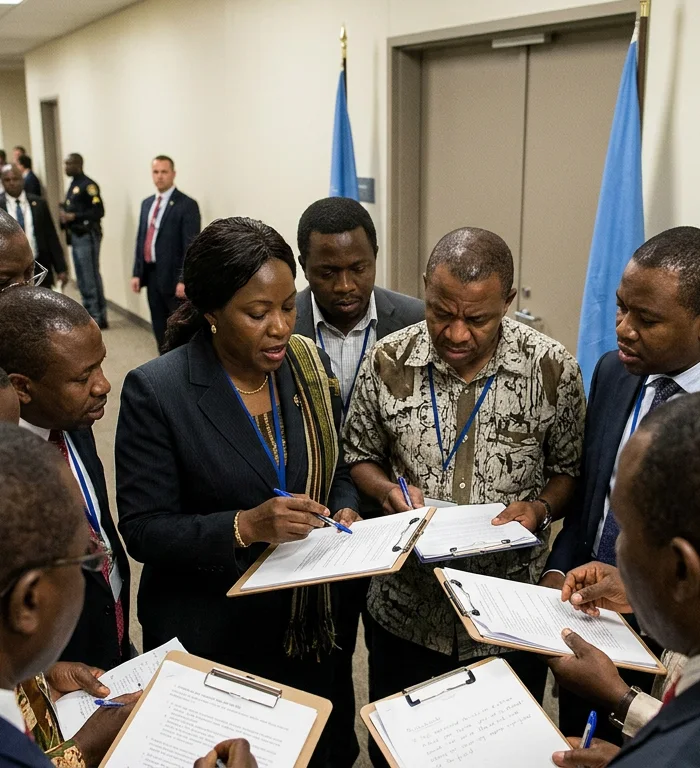
African negotiators at COP31 face a fight over who can access a loss-and-damage fund with $250 million set aside for initial grants, The Conversation Africa reported on Nov. 16.
The Nov. 16 article said the Fund for Responding to Loss and Damage has about $770.6 million in pledges from COP28, far below economic loss-and-damage estimates running into trillions of dollars a year.
The fund was agreed at COP27 in 2022 to support developing countries hit hardest by climate change. It is meant to cover losses including destroyed homes, damaged livelihoods, deaths and lost cultural heritage.
The fund was officially launched a year later and is intended for developing countries deemed “particularly vulnerable” to climate impacts. The article said that definition remains unresolved and will shape which countries receive money, which are excluded and how limited grants are divided.
The authors, a legal academic and a human geographer, said their research drew on years of following UN climate negotiations and an analysis of relevant texts. They argued that defining vulnerability is both a legal and political decision.
The dispute matters for Africa because the 1992 UN climate convention used a broad description that covered small islands, low-lying coasts, arid and semi-arid areas, flood- and drought-prone places, desertification zones and fragile mountain ecosystems. Read literally, the authors said, that wording would cover much of the continent.
The article said the meaning later narrowed. At a 2007 meeting in Bali, governments under the UN Framework Convention on Climate Change identified least-developed countries, small-island states and African countries affected by drought, desertification and floods as most at risk.
The authors said borders and national income are blunt tools for deciding climate vulnerability. They cited the Horn of Africa drought of 2020-2023, where pastoralist families in Ethiopia, a least-developed country, and Kenya, a lower-middle-income country, both lost cattle, their main livelihood.
They also pointed to people in informal urban settlements, smallholder farmers, displaced people, women with weaker land rights, older people and children as groups whose exposure may not be captured by country labels. The Intergovernmental Panel on Climate Change says vulnerability differs between and within regions and is shaped by inequality, exclusion, governance and colonialism.
Existing climate-finance systems add another risk. The article cited research on the Green Climate Fund and the Adaptation Fund showing that institutional capacity to apply for and manage money has influenced allocations, meaning governments may qualify on paper but struggle to draw funds.
The authors said African negotiators at COP31 should resist narrow country-by-country eligibility lists and push for all developing countries to be considered for high vulnerability. They also said communities and local organisations should be able to access the fund directly, rather than relying only on national governments.
More stories
- Saudi tourism faces Houthi threat after 13 killed at airport
- Singapore court jails Cambodia scam recruit for 14 months and two weeks
- Tigray official says 520 Ethiopians face Saudi death sentences
- Trump, Putin and Xi to hold historic trilateral in Shenzhen
- UK and EU seek 3 deals in Burnham reset
- Iraq government sacks nine officials over oil-smuggling claims
- French unions call more protests after nationwide marches
- CENTCOM reportedly readies Iran strike options after Nov. 3 polls