

CENTCOM reportedly readies Iran strike options after Nov. 3 polls
Al Jazeera cited US media reports on post-election strike planning as Tehran warned of wider retaliation and analysts questioned the military objective.
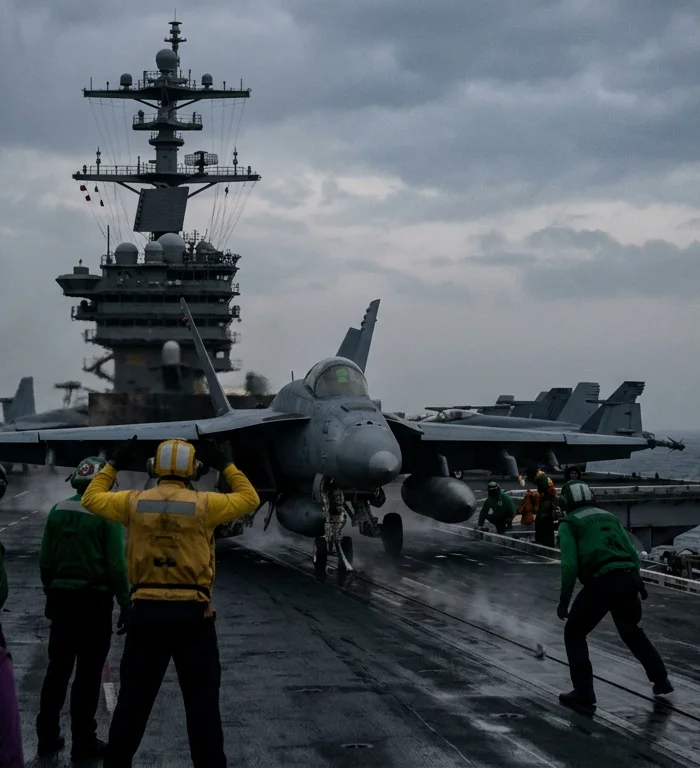
CENTCOM has prepared options for renewed attacks on Iran after the Nov. 3 US midterm elections, Al Jazeera said in an Oct. 25 news report citing The Hill.
The Oct. 25 report raises the risk of renewed regional escalation as more than 120 ship attacks in October make it the worst month for such attacks since the war began in February, Al Jazeera said.
The Hill reported that US Central Command, which oversees American forces in the Middle East, has follow-up strike plans ready if the White House authorises them. It also said military planners prepared several options for Defense Secretary Pete Hegseth.
Al Jazeera said those preparations do not amount to an order to attack. The decision rests with President Donald Trump, who has publicly left open both military action and negotiations with Tehran.
Trump said at a rally on Friday that Washington “may do another little Epic Fury”, referring to the US-Israeli operation against Iran that began on Feb. 28. On Saturday, he declined to give a timetable and suggested a strike could happen as soon as “tomorrow”, while also referring to the possibility of a “big, beautiful” agreement with Iran.
Other US media reports have pointed in the same direction. Axios reported earlier this month that the Pentagon had told CENTCOM to finish preparations for possible major combat operations, with its sources saying targets could include Iranian energy facilities, infrastructure and nuclear sites. The New York Times reported on Wednesday that the US and Israel had prepared joint plans for a post-election attack.
The reports come with US warnings about alleged Iranian threats. Al Jazeera cited a Friday intelligence memo from Director of National Intelligence Jay Clayton to Secretary of State Marco Rubio saying Iran had “substantially increased efforts to target US personnel” and that lethal plots had reached “advanced stages” in the Middle East and elsewhere. The publicly reported memo did not name targets or give timing for any alleged attack.
Iran has paired calls for talks with threats of retaliation. President Masoud Pezeshkian said in remarks broadcast on Saturday, “We were having negotiations, the cowards [Americans] messed everything up,” while adding that efforts to reach an agreement should continue.
Iran’s army said it shot down a US-developed LUCAS drone over Bandar Abbas on Sunday, according to the semi-official Tasnim news agency. Reuters, citing Iranian security officials, reported that Tehran had plans to target undersea communications cables in the Gulf if US and Israeli attacks resume.
Iranian officials have also warned that countries hosting bases used in US attacks could become targets. “Our defence doctrine was previously defensive; we used to say that if a country attacks us, we will respond. Now we say that if a country attacks us, we will both respond and launch an offensive,” Islamic Revolutionary Guard Corps spokesman Hossein Mohebi said.
Atlas360 reported on Oct. 25 that Iran had put Hormuz routes under review, with Abbas Araghchi saying security conditions had changed after one and a half years of regional wars. The Strait of Hormuz is a central route for Gulf energy exports, making shipping incidents and threats to infrastructure relevant beyond the immediate US-Iran confrontation.
Julie Norman, an associate fellow at Chatham House, told Al Jazeera the preparations were both deterrence and a possible military option after the elections. “With Trump, I think he is always keeping options on the table, but I think this particular drawing up of plans is an immediate posturing deterrent, but also a very real option after the midterms,” she said.
Mohamad Elmasry, a professor at the Doha Institute for Graduate Studies in Qatar, told Al Jazeera that recent signals pointed more toward renewed fighting than diplomacy. “There is a lot of signalling, a lot of posturing suggesting that we are headed for another round of fighting,” he said.
Norman said a core question remains unanswered. “What would these strategies do to force Iran to the negotiating table? And I don’t think there has been a clear answer to that,” she said.
Dates driving decisions
The Nov. 3 US midterm elections are the clearest political marker in the reports cited by Al Jazeera. The Hill report focused on possible attacks after that vote, while Trump’s public remarks also left open an earlier strike.
Israel’s election is due on Tuesday, according to Al Jazeera. The report said Israeli Prime Minister Benjamin Netanyahu has been pushing for an attack as his support declines in polling and after he said overthrowing Iran’s government remains Israel’s “primary objective”.
The US is deploying a third aircraft carrier strike group, the USS Theodore Roosevelt, about 10,000 additional soldiers and the 13th Marine Expeditionary Unit to the Middle East by the end of November, Al Jazeera said.
More stories
- Three Elections Today. A Global Political Test Ahead.
- Rayner backs Burnham over UK-EU free-movement debate
- Machado returns to Venezuela, testing Rodríguez’s opening
- Portugal police remove 171 housing protest structures
- Serbia records higher turnout as students challenge Vucic
- French unions call more protests after nationwide marches
- Philippine internet users 16 and older use AI at 94.4% rate
- Nelson Mandela Bay faces 70 Route 67 fixes
- WHO rejects Nigeria outbreak label after 1 imported Ebola case
- Cali Fund collects just $7,085 toward $1bn nature goal