

Serbia records higher turnout as students challenge Vucic
Serbia records higher early turnout as student-backed candidates challenge Aleksandar Vucic after almost two years of protests over corruption allegations.
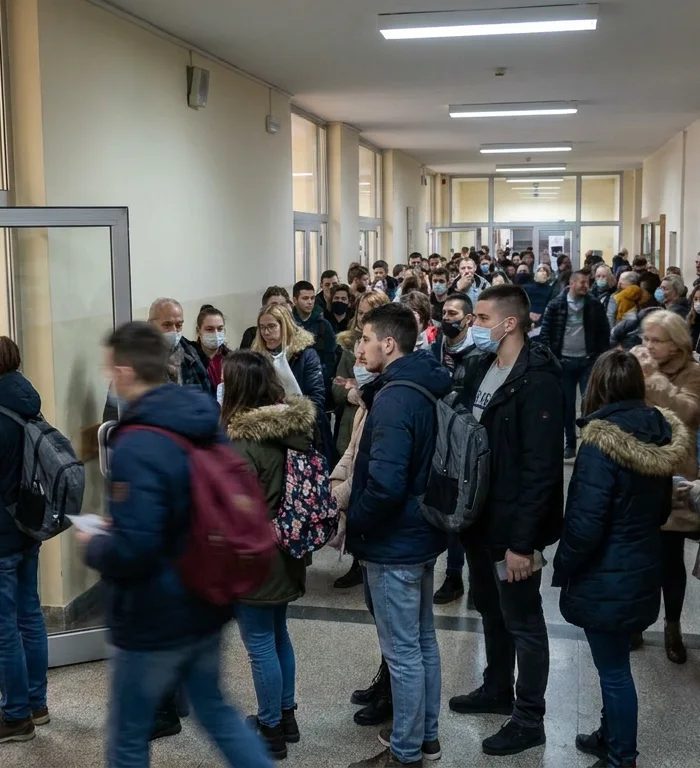
Serbia recorded 27.3% turnout by 11 a.m. in Sunday's election, monitors said, as student-backed candidates challenged Aleksandar Vucic's hold on power.
CeSID and Ipsos put participation above the 15.1% recorded at the equivalent point during the 2023 election. Queues stretched outside voting locations across Serbia, with Vucic himself waiting almost two hours before casting his ballot.
The October 25 parliamentary contest follows almost two years of demonstrations that developed into an electoral challenge against the longtime leader. Vucic called the early election in September and stepped down from the presidency during his second term to seek the premiership.
Novi Sad disaster drives student campaign
The movement emerged after a railway station canopy fell in Novi Sad in 2024, killing 16 people. Students turned the disaster into a campaign against alleged corruption and increasingly authoritarian government, drawing support beyond university campuses.
Their electoral platform centers on tackling corruption and improving education. Cardiologist Ilija Srdanovic heads a slate that brings together academics, performers and agricultural workers, many without established political profiles.
The identity of a prospective student-backed prime minister remains unresolved. The movement has also offered less detail about its foreign-policy objectives than its domestic priorities, leaving voters without a clear account of how it would manage Serbia's external relationships.
Vucic offers spending and continuity
Vucic has campaigned on increases in pensions and government-sector pay, alongside additional healthcare investment. Supporters credit his leadership with infrastructure improvements, including roads, rail links, educational facilities and hospitals.
That record gives his campaign a different emphasis from the students' focus on institutional accountability. The contest pits his offer of continued development and higher household incomes against demands for changes in how Serbia is governed.
Abroad, Vucic has pursued stronger relations with China while maintaining ties with Russia. China is an important investor in Serbia, while Russia supplies much of its natural gas; Vucic also continues to advocate EU membership.
The EU is Serbia's leading trade partner, making the accession relationship economically relevant as well as political. If the students win, their approach to these competing relationships would become a governing question; their campaign has not established a detailed alternative.
Election monitors report voting concerns
Election Commission chief Vladimir Dimitrijevic said the voting process had been incident-free so far. CeSID and CRTA, however, reported problems involving voter registers and ballot privacy, presenting a different assessment of conditions at polling locations.
The available accounts do not establish how widespread those problems were or whether they affected the outcome. Early participation figures measure turnout, not support for either side, and cannot settle a contest that pre-election polling indicated would be close.
Vucic and the Serbian Progressive Party (SNS) reject allegations of corruption, surveillance of opponents and repression. Rights organizations and activists say pressure on dissent has increased during the protest period, although the supplied accounts do not identify those groups or independently substantiate their claims.
Vucic said after voting that he would accept the electorate's decision. Voting ends at 8 p.m., with preliminary indications expected roughly two hours later; the result will determine whether the student movement can translate street-level support into parliamentary power.
More stories
- Three Elections Today. A Global Political Test Ahead.
- Rayner backs Burnham over UK-EU free-movement debate
- Machado returns to Venezuela, testing Rodríguez’s opening
- Portugal police remove 171 housing protest structures
- French unions call more protests after nationwide marches
- CENTCOM reportedly readies Iran strike options after Nov. 3 polls
- Ethiopian troops reach Zalambessa border town, sources say
- Russian hybrid threat stretches MI5 after 1,000 expulsions