

WHO rejects Nigeria outbreak label after 1 imported Ebola case
Nigeria is tracing 44 contacts in Abuja as health authorities classify the case as imported rather than community transmission.
WHO Regional Director for Africa Mohamed Janabi said on Wednesday that Nigeria’s 1 confirmed imported Ebola case does not amount to an outbreak, Premium Times reported on Oct. 22.
The reassurance matters because Nigerian authorities are tracing 44 contacts in Abuja, while ECDC data cited in the report put the DRC outbreak at 9,552 confirmed cases and 4,602 deaths as of Oct. 19.
Janabi delivered the message in a video posted on his X account on Wednesday night, according to the Premium Times report. "One imported case does not by itself mean that Nigeria is experiencing an Ebola outbreak," he said.
WHO is supporting Nigerian officials and partners on case investigation, monitoring of contacts, laboratory checks, infection-control measures and protection for medical staff and communities, Janabi said.
He urged the public to avoid rumours and follow official health guidance. "There is no benefit in fear or misinformation," he said. "What helps is early reporting, cooperation with the health authorities, and reliable information from reliable sources."
Nigeria confirmed the Ebola Bundibugyo virus disease case on Tuesday after a woman who had recently travelled to the country was diagnosed at a private hospital in Abuja, Premium Times reported. The patient developed symptoms after arrival and is receiving treatment in isolation in the Federal Capital Territory.
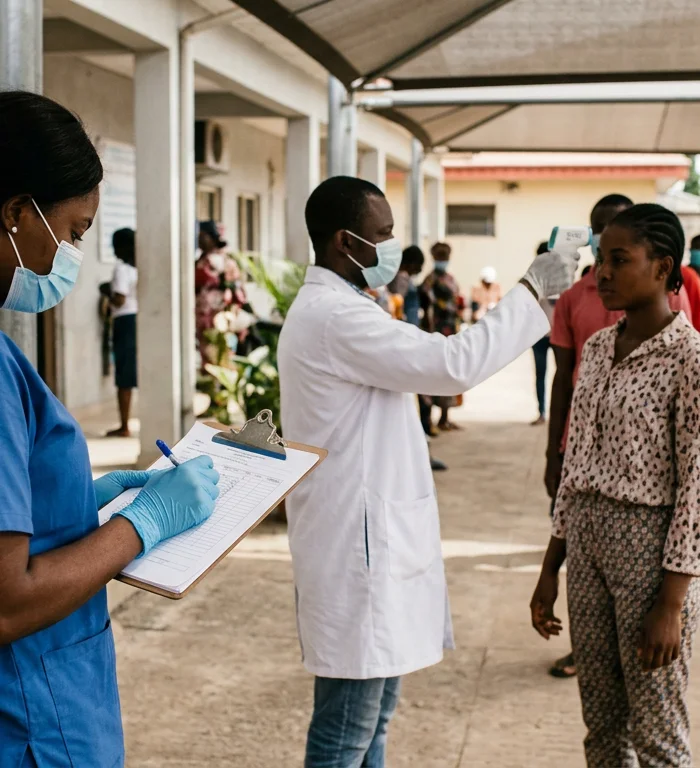
The Nigeria Centre for Disease Control and Prevention has activated its incident management system, an emergency coordination structure for public-health response. Authorities have also begun contact tracing, the process of identifying and monitoring people who may have been exposed, with 44 contacts listed as healthcare workers, patients, caregivers and travel contacts.
The Nigerian government said the case is being handled as an imported infection rather than community transmission. That distinction is central to the current response because the government has not reported local spread in the material provided.
Oyewale Tomori, a virologist and chairman of the West African National Academy of Scientists, told Arise TV on Wednesday night that the interval between symptoms and confirmation should push authorities to improve diagnostic readiness. He said health workers should show greater suspicion when treating travellers from areas where Ebola is circulating instead of first treating symptoms as common illnesses such as malaria.
"If I hear somebody is coming from a country where Ebola is going on, or close to where Ebola has occurred, my first thought would be, is there Ebola?" Tomori said. He also urged officials to prepare for the possibility that more cases may emerge among the 44 contacts under monitoring.
The Nigerian case is unfolding while the Bundibugyo virus continues to spread in the Democratic Republic of the Congo, according to ECDC figures cited by Premium Times. The DRC outbreak has affected 66 of 178 health zones across eight provinces, with Ituri described as the most affected province.
Kenya has recorded imported cases linked to the DRC outbreak, with health authorities reporting 9 confirmed cases as of Oct. 20. Janabi said the DRC situation shows why African countries need strong surveillance, laboratory readiness and rapid response capacity.
Source: Premium Times report distributed by AllAfrica, Oct. 22, 2026
More stories
- Policy Alert seeks Nigeria hearing over $50bn offshore plan
- Cali Fund collects just $7,085 toward $1bn nature goal
- Singapore prepares grid for up to 6.5% annual demand growth
- ECB faces 6.1% Lithuania inflation with 2.50% rate
- Philippine Supreme Court bars Congress budget increases
- Philippines explores Taiwan cable cooperation despite one-China policy
- WHO backs Kenya Ebola response after second case
- Bunia health teams rebuild trust after 4,000 Ebola deaths