

Singapore prepares grid for up to 6.5% annual demand growth
EMA and SP Group are planning upgrades and more energy sources as data centres, factories and electric vehicles lift demand.
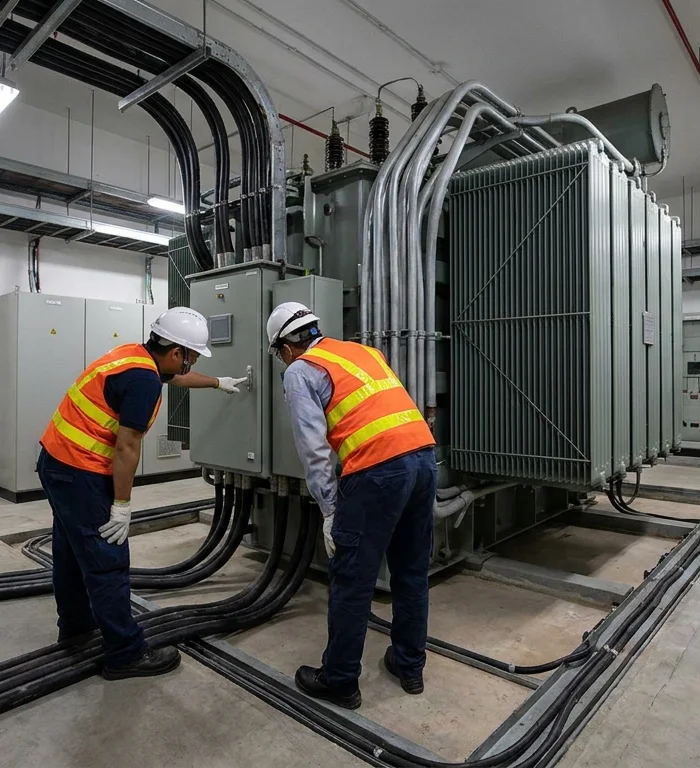
Singapore is preparing its grid for peak power load to increase 2.9% to 6.5% a year over the next decade, a Channel NewsAsia news report said Oct. 22, citing Energy Market Authority projections.
The planning matters for reliability and costs as Singapore hosts 70 data centres and electric vehicles reached 49,262, or 7.4% of cars in 2025, compared with 4% a year earlier, the report said.
The Energy Market Authority and SP Group said their response includes long-term demand planning, grid upgrades and a broader set of supply sources, according to the report. The work is aimed at supporting demand from data centres, advanced manufacturing and other heavy power users.
SP Group vice president of asset planning and strategy Quek Swee Xian said in a CNA938 interview on Wednesday that planning must identify both the location and timing of new demand. SP Group works with the Energy Market Authority, JTC Corporation and the Economic Development Board to map expected load growth, the report said.
"It is not only about how much capacity is coming in, but more importantly where the demand is and also when it is coming, so that we can prepare ahead," Quek said.
Quek said the electricity network is shifting from one-way supply from generators to consumers toward two-way flows as solar panels and battery storage become more common. "For example, a building with solar panels can now draw electricity from the grid and at the same time, send electricity back to the grid," she said.
Reliability remains central to the strategy. Quek described Singapore’s system as "one of the world's most reliable electricity networks" and said average interruptions that could reach 30 minutes a year in the 1990s are now measured in seconds.
The grid has built-in redundancy, allowing electricity to be supplied through alternative routes when faults occur, Quek said. The Energy Market Authority said generation companies can use a standby liquefied natural gas facility if gas supplies are disrupted and must maintain fuel stockpiles, according to the report.
Electricity prices are less certain. Energy Market Authority Assistant Chief Executive Eugene Toh said solar power is cheaper than natural gas and that more solar in the system could create "downward pressure" on prices, while future tariffs would also depend on fuel diversification and grid investment.
"How you balance these three factors will really be the key to answering how our energy needs are met in the long run," Toh said, referring to affordability, decarbonisation and energy security.
Singapore is also looking beyond its borders. The Association of Southeast Asian Nations aims to establish an interconnected power grid by 2045 to support cross-border electricity trade and strengthen energy security, the report said.
The Energy Market Authority is studying an energy infrastructure cluster on Pulau Tekong that could include hydrogen-ready gas-fired power plants, liquefied natural gas infrastructure and other low-carbon technologies. The 200-hectare site equals 2 square kilometres, according to Atlas360 calculations, underscoring the land-use question in a city-state with limited space.
Next grid milestones
- Mid-2027: The Energy Market Authority expects to appoint a consultant for the Pulau Tekong energy infrastructure cluster study, according to the Channel NewsAsia report.
- 2045: The Association of Southeast Asian Nations aims to establish an interconnected power grid to facilitate cross-border electricity trade and strengthen energy security, the report said.
More stories
- ECB faces 6.1% Lithuania inflation with 2.50% rate
- Philippine Supreme Court bars Congress budget increases
- Philippines explores Taiwan cable cooperation despite one-China policy
- State Department orders Saudi Arabia staff to leave posts
- Kim Yo Jong signals North Korea shift on border tensions
- UAE contender joins UN leadership race without consensus
- Starshield limits disrupt Ukraine drones, officials say
- Singapore P2P fares rise 12.3% in August