

State Department orders Saudi Arabia staff to leave posts
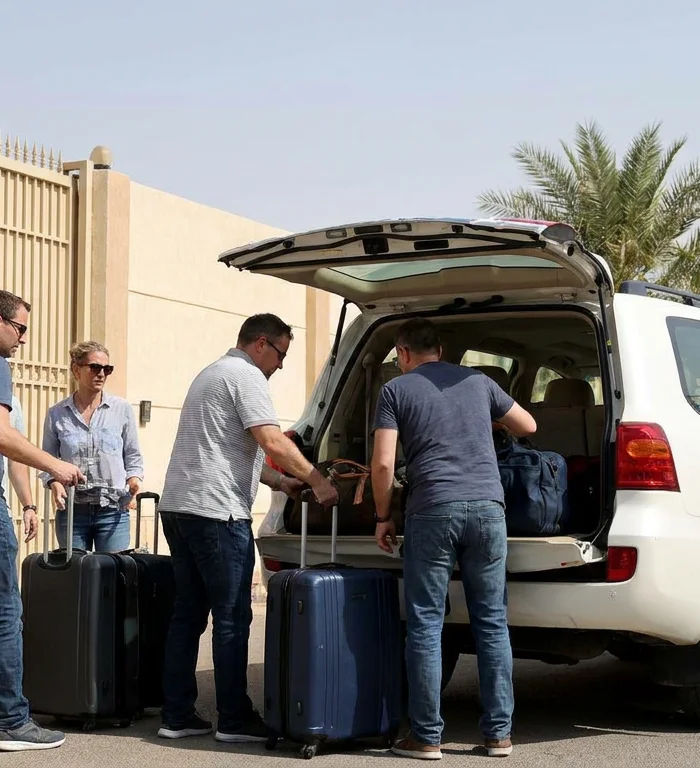
The State Department ordered non-emergency personnel and their families to leave Saudi Arabia, citing an increasing threat from Yemen’s Houthis.
The directive concerns diplomatic staffing, while a separate report described movements of American military personnel elsewhere in the Middle East. US Central Command declined to discuss specific movements, leaving the reported military relocations unconfirmed by the command’s public response.
Saudi departure order targets nonessential staff
The departure requirement covers personnel whose duties are classified as non-emergency, along with their families. It is not described as an instruction for every American citizen to leave Saudi Arabia, and the announcement does not specify how many people must depart.
State Department spokesman Tommy Pigott outlined the department’s justification in a social media post on Wednesday. He identified attacks affecting civilian aviation and other infrastructure as part of the threat facing Saudi Arabia.
“Iranian-supported Houthis have increasingly engaged in hostilities against Saudi Arabia, including attacks on civilian airports and other critical infrastructure resulting in civilian casualties and severe travel disruptions,” Pigott wrote. His statement did not identify individual incidents, provide casualty totals or quantify the disruption.
Pigott also said protecting department employees and their families remained its priority. The announcement establishes the group covered by the departure order, but does not give a departure deadline, transport arrangements or conditions for their return.
Military movements remain publicly unconfirmed
The separate report, published Wednesday and citing unnamed US officials and other unidentified sources, said American service members were leaving regional bases. It also described diplomatic relocations and attributed the moves to threats involving Iran and other regional actors.
That account compared the movements with relocations at the beginning of the Iran war in late February. The comparison belongs to the report; it does not establish that the current movements involve the same locations, personnel numbers or operational purpose.
Asked about the report, Navy Captain Tim Hawkins, a US Central Command spokesman, said the military routinely repositions personnel and assets to support readiness. He declined to address particular movements, citing operational security, rather than confirming the reported withdrawals or their stated rationale.
Departure timing and mission scope unresolved
The distinction between the two accounts matters for assessing the extent of the US response. The State Department has announced a specific personnel measure in Saudi Arabia; the broader account of military departures rests on unnamed sources whose roles and reasons for anonymity were not explained.
If the diplomatic order remains limited to non-emergency staff, its scope would differ from a broader evacuation. If military relocations are subsequently confirmed, their operational implications would depend on which personnel and assets move, their destinations and whether missions change.
For now, the statements leave both the duration of the diplomatic departure requirement and the status of the reported military movements unresolved. Neither spokesman supplied a timetable for a further announcement or identified a threshold for reversing personnel measures.
More stories
- Syria rejects Yemen role after 600-troop Saudi border report
- Pangilinan questions Davao assessor on 379 sqm SALN lot
- Ruling-family cases leave reform uncertain in 6 African states
- Aigner nears German presidency before Jan. 30 vote
- Iran secures Chinese oil sites for sanctioned crude, letter says
- French police officers face up to 15 years over 2020 beating
- Kim Yo Jong signals North Korea shift on border tensions
- UAE contender joins UN leadership race without consensus
- US-China talks lift tone before Trump-Xi summit this week
- Greenland security deal opens Arctic door to US capital