

Russia releases Stephen Hubbard after Trump seeks return
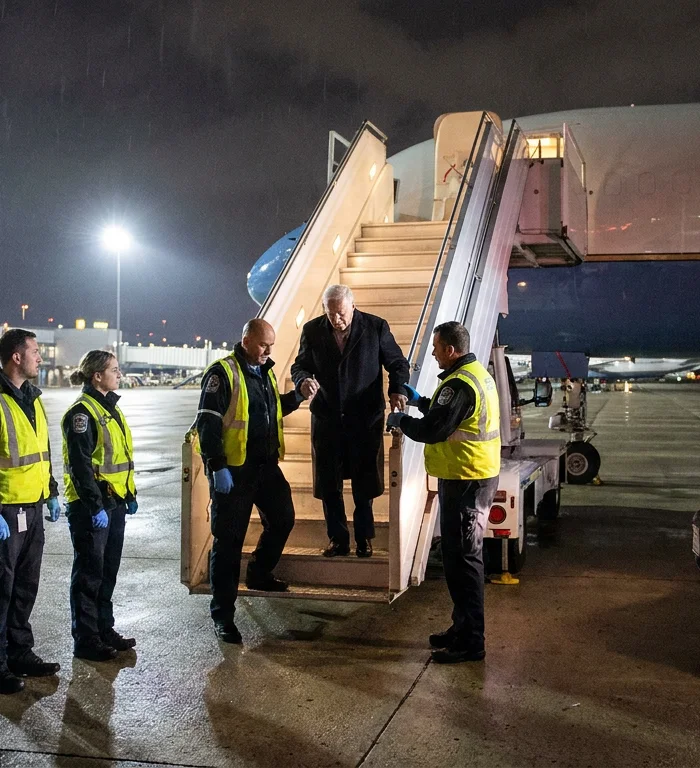
Russia has freed Stephen Hubbard, a 74-year-old American whose detention became part of President Trump's diplomacy with Moscow.
President Trump said he sought Hubbard's freedom in a call with Russian President Vladimir Putin the previous week. In a Wednesday post on Truth Social, Trump said Washington made no concessions to secure the American's release.
The release brings an end to the former schoolteacher's imprisonment, but his return also involves medical care. Martin De Luca, a lawyer involved in the case, said Hubbard was in fragile health and would receive rehabilitation in Texas after reaching the United States.
Hubbard faces recovery after imprisonment
U.S. special envoy Steve Witkoff traveled to St. Petersburg to meet Hubbard and accompany his return journey. De Luca said they were flying separately, with Hubbard expected to reach Washington on Wednesday evening before continuing to the rehabilitation facility.
Three people previously imprisoned at the same facility attributed Hubbard's deteriorating health to mistreatment during his confinement. Their accounts concern the conditions of his imprisonment; De Luca's description establishes the immediate concern about his health as arrangements proceed for his return.
Mercenary conviction remains disputed
Russian forces detained Hubbard in eastern Ukraine during the opening phase of Moscow's 2022 invasion. He had already spent years living in the country, making his detention a case involving an American resident caught in territory where Russian troops were operating.
A Russian court subsequently convicted him on a mercenary charge, an allegation both Hubbard and the U.S. government rejected. The State Department later classified his detention as wrongful, placing Washington's position in direct opposition to the Russian legal proceedings.
That distinction remains important to the account of his release: the conviction was a Russian judicial finding, not an admission by Hubbard. His departure resolves his continued confinement, while the allegation underlying it remains contested by the American and his government.
Trump connects release to sanctions
Trump later linked the negotiations to his handling of planned sanctions against Russia. He said imposing those measures would have stopped the release talks, presenting his decision not to proceed as necessary to keeping the negotiations alive.
That explanation is Trump's account of the diplomatic calculation, rather than an independently established description of how Moscow would have responded. His assertion that Washington gave nothing in exchange likewise remains an administration claim about the terms of the release.
At a meeting with Putin, Witkoff thanked the Russian leader and praised him in humanitarian terms. The encounter placed the release within direct engagement between the two administrations, although the return of one prisoner does not by itself establish a broader diplomatic agreement.
The immediate next steps are Hubbard's arrival and transfer for rehabilitation, according to De Luca. Beyond his recovery, the unresolved policy issue is whether Trump's handling of the planned sanctions represents a temporary accommodation for these negotiations or a choice that will extend to subsequent dealings with Moscow.
More stories
- UN agencies seek aid for 30.3m facing DR Congo hunger
- Hungary seizes nearly $20m in Orban-era corruption probe
- Singapore aid groups face Gaza delivery bottlenecks despite 200 daily trucks
- North Korea changes flag as Kim reshapes national symbols
- Nvidia names Kress interim CEO after Huang exits in scandal
- Lutnick faces White House review over Nvidia AI exports
- Musk pledges $10.7bn SpaceX stake to US children
- Researchers urge wider mental-health systems for African schools
- Zimbabwe court keeps mental-health abortion limits
- KAYAK puts Rovaniemi Christmas hotel rates down 22%
Latest news
- Airlines face FAA outage reset after nationwide shutdown
- Fielding distances himself from Brand after 10-year sentence
- Children in England receive 341 GLP-1 prescriptions in four months
- MEPs seek EU cloud shift with US groups at 70% share
- Roche's Gazyva gains EU panel backing after 76.7% lupus response
- FAA halts US departures after communications disruption
- Europe faces unity test as Trump revives Ukraine diplomacy