

Philippines explores Taiwan cable cooperation despite one-China policy
A Philippine diplomat tied the talks to Bashi Channel security, undersea data links and gray-zone pressure near the South China Sea.
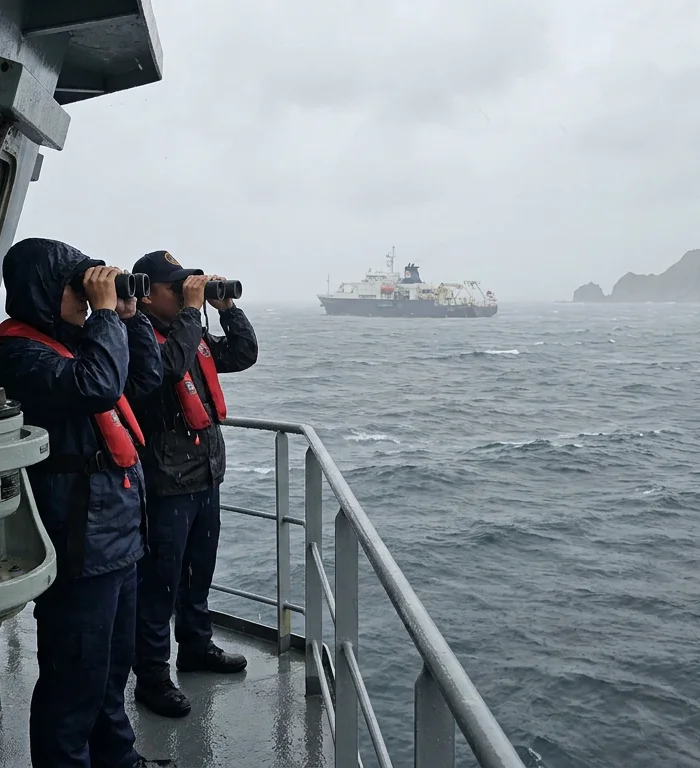
The Philippines is exploring deeper cooperation with Taiwan to protect undersea cables, Felipe F. Carino III said at a Washington seminar on Wednesday, Oct. 21, according to a Straits Times news report.
Carino said cables carry nearly all intercontinental data flows and that 60%-67% of cyber incidents occur in the region, testing how far Manila can work with Taipei while recognizing Beijing under its one-China policy.
Carino, Manila's deputy chief of mission in Washington, described the approach to Taiwan as "pragmatic and practical" and linked it to mutual interests in the Bashi Channel, the waterway between Taiwan and the Philippines.
"These are very important features that should be protected, so much so that we are exploring deeper cooperation with our friends in Taiwan," Carino said, adding that Manila was doing so "notwithstanding our one China policy."
He said the two sides were looking at "practical and more pragmatic approaches in cooperation, including knowledge-sharing and capacity building" and added: "We see this cooperation leading towards ... addressing the gray-zone issues in our part of the world."
Gray-zone activity refers to coercive pressure that stops short of direct armed confrontation. The Philippines and Taiwan have repeatedly complained about Chinese activity they describe in those terms, while China claims Taiwan as its territory and has overlapping claims with both Taiwan and the Philippines in the South China Sea.
Carino did not name China when connecting cable security to tensions in the South China Sea. Asked whether cooperation with Taiwan could extend to joint patrols or accountability for vessels that disrupt communications, he said he had no details, but added: "I'm sure that this is a constantly evolving cooperation, and some of the things that you mentioned may be actually coming to fruition."
The comments point to a practical channel of engagement between Manila and Taipei even as the Philippines maintains formal recognition of Beijing. That balance is sensitive because undersea cables are critical infrastructure and because the Bashi Channel sits near military and commercial routes linking the South China Sea and the western Pacific.
Taiwan has increased efforts to secure its undersea communications after several incidents involving cables and China-linked vessels, according to the report. At the same seminar, Andrea Yang, Taiwan's deputy representative in Washington, referred to the jailing in Taiwan of a Chinese ship captain over damage to an undersea cable.
Yang said Taiwan would commit more resources to unmanned systems for maritime surveillance. She also said interference with undersea cables should be addressed by the United Nations, including through mechanisms to prevent "bad behavior."
The Philippines' coast guard said this month it deployed its largest vessel and an aircraft to challenge a Chinese research ship operating off northern Batanes province near undersea cable corridors, according to the report.
Source: news report, The Straits Times – Asia, Oct. 22, 2026
More stories
- Philippine Supreme Court bars Congress budget increases
- State Department orders Saudi Arabia staff to leave posts
- Kim Yo Jong signals North Korea shift on border tensions
- UAE contender joins UN leadership race without consensus
- Russia releases Stephen Hubbard after Trump seeks return
- Musk pledges $10.7bn SpaceX stake to US children
- Iran parliament backs Akhlaghi as defence minister in 237-15 vote
- Belgium seeks EU sanctions after West Bank attack on diplomats
Latest news
- Oil prices rise after reported attack on Saudi oil field
- Tesla cuts spending plan to $20 billion amid AI overhaul
- Delayed hepatitis B dose may raise child infections 83%
- Private equity healthcare deals fall to 135 in third quarter
- Electronic Arts layoffs close BioWare, cut about 400 jobs
- JPMorgan to close Turkish securities unit