

Iran parliament backs Akhlaghi as defence minister in 237–15 vote
The missile and aerospace veteran takes over a defence ministry tasked with rebuilding capacity during the war involving Iran, the US and Israel.
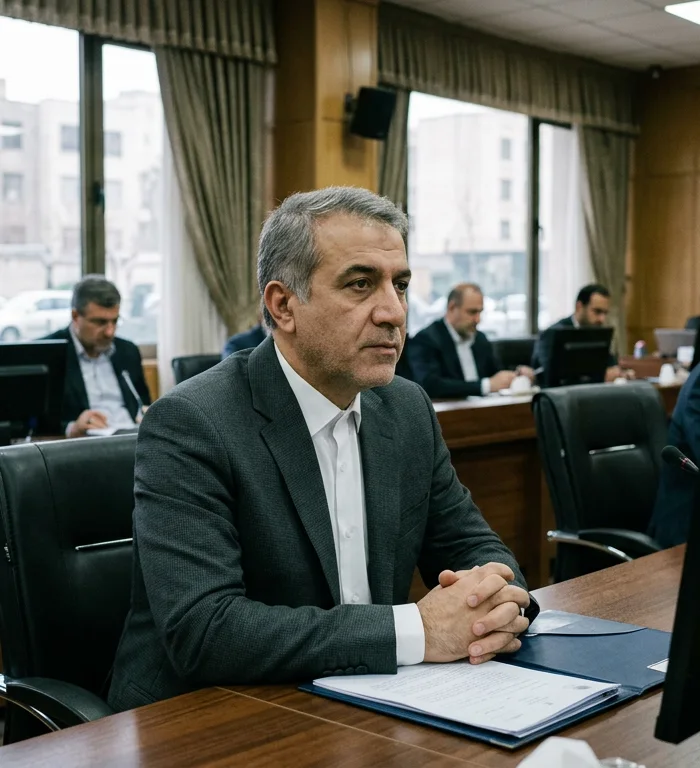
Iran’s parliament approved Mehrdad Akhlaghi Ketabchi as defence minister in a 237-15 vote on Sunday, Al Jazeera said in a news report published Oct. 18.
The vote margin was more than 15-to-1, according to Atlas360 calculations, putting a 68-year-old with more than 42 years of defence-sector experience in charge of the Ministry of Defence and Armed Forces Logistics.
Parliament has met online since Feb. 28, when the US-Israel war on Iran began, the article said. Akhlaghi replaces Aziz Nasirzadeh, the former defence minister who was killed on the first day of the war.
Akhlaghi’s plans had already been cleared by senior military authorities, President Masoud Pezeshkian and parliament’s Commission on National Security and Foreign Policy. Majid Ebn-e Reza, who had filled the post temporarily, will become Akhlaghi’s deputy.
“The Islamic Republic of Iran will not be the instigator of aggression against any country but will defend the territorial integrity of the country strongly and to the death against any aggression,” Pezeshkian said.
Akhlaghi will be responsible for rebuilding and expanding Iran’s military-industrial infrastructure, which the article described as heavily targeted by the US and Israel. State media said his main areas of experience include ballistic missiles, solid-fuel propulsion, aerospace technology and military-industrial production.
Solid-fuel propulsion refers to rocket motors that use fuel and oxidiser cast into the motor rather than pumped liquids. The technology can reduce launch preparation because the missile does not need to be fuelled immediately before firing.
Akhlaghi previously led the Shahid Bagheri Industrial Group, the Aerospace Industries Organization and the Defence Industries Organization. He and those entities are under US sanctions, and Akhlaghi is also under United Nations sanctions.
Tasnim, described by Al Jazeera as a newspaper linked with the Islamic Revolutionary Guard Corps, said Akhlaghi had been associated with developing several missile types and weapons projects over decades. The article linked him to work on the Sejjil and Zolfaghar ballistic missile families, Almas missiles and Yasin guided bombs.
Akhlaghi is also said to have expertise in space launchers, research rockets and infrastructure tied to the Imam Khomeini Space Center in Semnan. Al Jazeera described those capabilities as critical elements in Iran’s wars against Israel and the US.
Brigadier General Reza Talaei-Nik, the Defence Ministry spokesman, told reporters this month that Akhlaghi’s nomination reflected Iran’s need to increase both the quantity and quality of strategic weapons, especially missiles and drones. “Offensive arms are being actively improved,” Talaei-Nik said.
The dispute over Iran’s military capacity remains contested. The US has repeatedly said it destroyed most of Iran’s military-industrial capacity, while Tehran has said it retains substantial offensive and defensive capabilities beyond the reach of US and Israeli strikes.
Akhlaghi told lawmakers this month that he had met senior military commanders, including IRGC commander-in-chief Brigadier General Ahmad Vahidi, to assess requirements during and after the war. His stated priorities include faster defence production, air defences, emerging technologies, armed-forces welfare and international military cooperation, according to reports cited by Al Jazeera.
More stories
- Belgium seeks EU sanctions after West Bank attack on diplomats
- Macron vows prosecutions after 400 arrests at France protests
- Lovejoy links Bonetta to 700,000-person indenture system
- Six Black Sea ship attacks reach Romanian waters
- Egypt offers Saudi defense help, seeks parliament's role
- Magyar puts Hungary's euro plans before first budget test
- Germany backs China trade curbs before next EU summit talks
- Dubai tourism seeks advisory relief as hotels refill again
Latest news
- Feijóo targets Catalonia’s 48 seats with Albiol housing pledge
- Govil seeks 50% or full BBL stake to expand T20 portfolio
- BPC-157 use rises 33-fold despite limited human evidence
- Mynt prices $971m IPO in 2026's biggest Southeast Asia debut
- Louvre pledges €20m a year for security after jewel theft
- Low-UPF diet links to lower depression scores in 20-person study
- Personalized gait retraining cuts osteoarthritis knee pain by 2.5 points