

WHO backs Kenya Ebola response after second case
A 39-year-old relative of Kenya’s first fatality was already in quarantine; WHO says border closures are not needed.
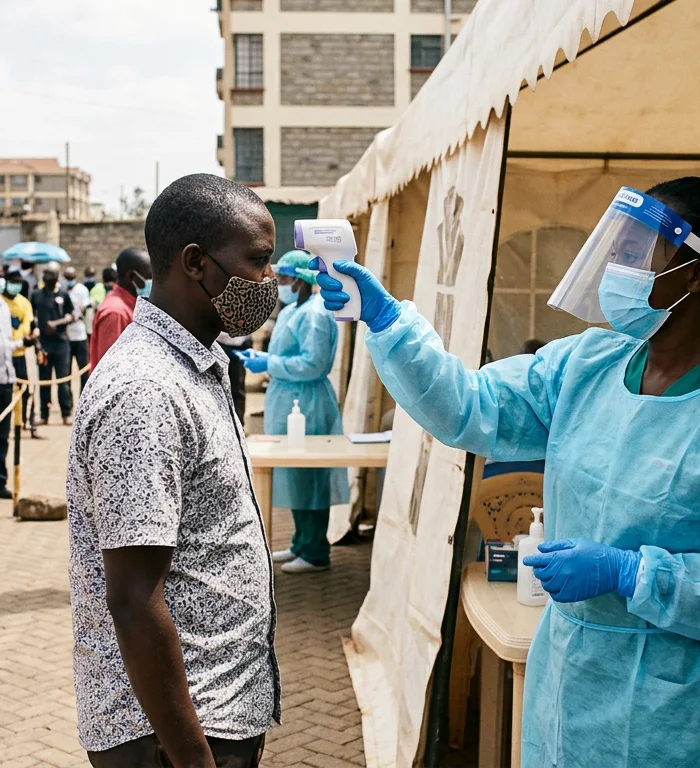
The World Health Organization is assisting Kenya’s Ebola containment effort after authorities recorded a second Bundibugyo virus infection, WHO’s country representative said in a UN News interview published Oct. 15.
UN News said the case was found among quarantined contacts, not through reported community spread. More than 40 contacts have been identified, compared with Kenya’s first patient, who died in hospital on Oct. 5 after travel from the DRC.
The new patient is a 39-year-old man and a relative of Kenya’s first case, UN News said. He developed symptoms on Oct. 13 while already under quarantine.
“I congratulate the Government for taking this important step to ensure that contacts are listed and quarantined,” WHO Representative Dr. Neema Rusibamayila Kimambo told UN News in Nairobi, one day after Kenya’s Ministry of Health confirmed the infection.
“But to defeat this disease, it's not about the Government, it is not about partners It is about everybody,” she said. “We all have a role to play and if each one of us plays our part, then we should be able to contain the disease and stop community spread.”
Kenya’s first Ebola patient was a local man who had been living in the Democratic Republic of the Congo, where UN News said an outbreak in the east is continuing. He arrived in Nairobi through Uganda on Oct. 3 and died two days later in hospital.
Dr. Kimambo said health authorities searched broadly for possible exposure, including among people linked to air travel, airport operations, health care and the patient’s family. Most contacts are in quarantine, while some low-risk contacts are self-quarantining under monitoring, UN News said.
A gap remains in the tracing effort. UN News said authorities are still trying to reach six passengers who have been difficult to find because their phone numbers are foreign.
WHO and Kenya had increased Ebola preparedness before the first case, after the DRC outbreak was declared in May, UN News said. Uganda also dealt with the disease before an outbreak there was officially ruled out in late August.
WHO has sent a senior incident manager who worked on the Uganda Ebola response and other experts to support Kenyan teams, UN News said. The work covers surveillance, contact tracing, case management and infection prevention and control, known as IPC, measures designed to limit transmission in health and quarantine settings.
“We are building on the work that we started during the preparedness phase, so case management and IPC (infection prevention and control) are critical at this time in the quarantine centres,” Dr. Kimambo said.
WHO has donated about $70,000 in supplies since Kenya identified its first case, including IPC and laboratory items, UN News said. More than 4,000 health workers have been trained, including for screening at points of entry.
Dr. Kimambo said there is no need to close borders or impose travel restrictions, while stressing screening for travellers who may pose a health risk. She said Ebola transmission occurs through contact with bodily fluids of an infected person and advised handwashing, sanitizer use and avoiding handshakes.
She also urged people with symptoms to seek care, noting that fever, vomiting and diarrhoea can resemble malaria and other illnesses. “I think one is not to over panic and be very fearful because we do not have community spread,” she said. “But two, let us be responsible.”
Source: UN News Service article distributed by AllAfrica, Oct. 16.
More stories
- Egypt offers Saudi defense help, seeks parliament's role
- Magyar puts Hungary's euro plans before first budget test
- Israeli settlers attack West Bank olive harvest, hurt two
- Zelenskyy says Starshield limits weaken Ukraine defenses
- Macua's Rutledge challenges mining boom after R1 trillion profit
- Bunia health teams rebuild trust after 4,000 Ebola deaths
- Ukraine power grid faces 15-site strike after Trump sanctions pause
- Ukraine railway strike tests diplomatic route safety
- Dubai Airport Weighs Underground Infrastructure for Security
Latest news
- Wall squats may lower blood pressure after four weeks
- 8-hour eating windows beat controls by 5 pounds in TRE trials
- Researchers link diabetic ulcers to stalled immune repair
- Loneliness and isolation linked to 5.8 fewer healthy years
- Weiss warns of breast cancer care gap after treatment
- CoreWeave gains ARK backing as borrowing concerns persist
- DeepSeek updates AI model as speed and cost rivalry grows
- CoreWeave bond yields hit 15% as AI funding doubts deepen