

Researchers link diabetic ulcers to stalled immune repair
A MedScience review says immune cells may prolong inflammation in diabetic wounds, but the evidence is mechanistic and not a new treatment trial.
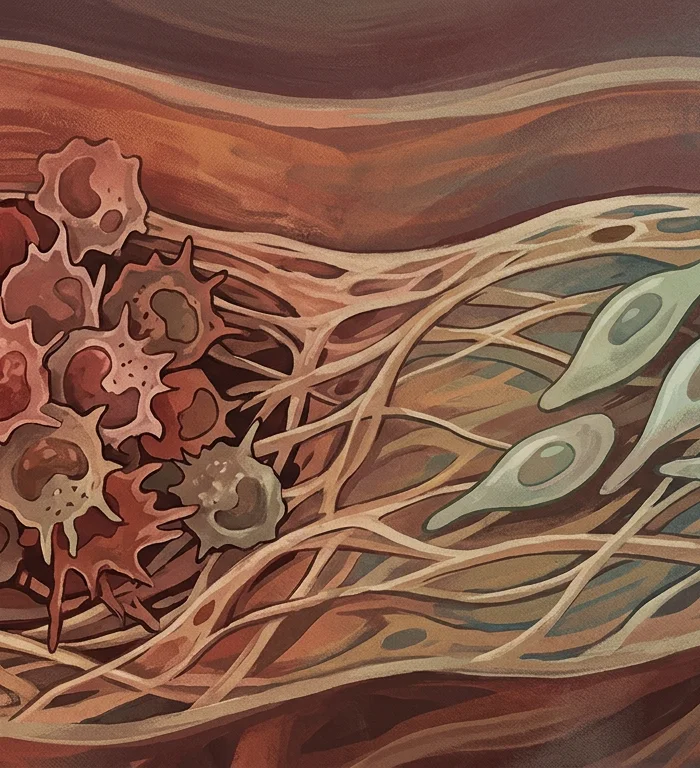
Yi Ru and colleagues linked chronic diabetic ulcers to immune cells stuck in inflammatory programs in a Higher Education Press item dated Oct. 9 and published by ScienceDaily, citing a MedScience review.
Evidence grade: Early (small, animal, cell or preprint). The release says more than 131 million people worldwide are affected by chronic diabetic wounds, which are associated with roughly $755 billion in healthcare costs each year.
The review focuses on why some diabetic wounds do not move from inflammation into repair. It describes a failure of immune timing: cells that normally help defend injured tissue may keep sending inflammatory signals instead of helping the wound close.
The article covers monocytes, macrophages, dendritic cells, neutrophils, mast cells, B cells, T cells and natural killer cells. Macrophages receive the most attention because they can shift between inflammatory and repair-supporting states. In diabetes, the authors say, that shift can falter.
Macrophage polarization refers to the tendency of macrophages to adopt different functional states. The review discusses the debated M1/M2 model, in which M1-like macrophages promote inflammation and M2-like macrophages support tissue repair. The authors say diabetic wounds may keep macrophages in a more inflammatory state for too long.
Other immune cells may add to the problem. The review says neutrophils, early responders to injury, can form poorly regulated extracellular traps in diabetic wounds. These traps can be useful against microbes, but excessive activity may extend inflammation and injure tissue through enzymes and reactive oxygen species.
Dendritic cells are also implicated. The review says diabetes may impair efferocytosis, the process by which immune cells clear dying cells. If dead cell material accumulates, inflammatory signals can continue.
The SLC7A11 transporter is described as one possible regulator of this process.
The review also says regulatory T cells and specialized skin γδ T cells may be reduced or less active under diabetic conditions. These cells normally help limit immune overreaction and support skin repair. B cells and natural killer cells are described as less studied but potentially relevant to inflammation control and blood-vessel formation.
The treatment ideas remain exploratory in this summary. The release says researchers are examining topical anti-cytokine biologics, drugs that influence macrophage polarization, mesenchymal stem cell therapies, extracellular vesicles, immune-modifying dressings, Janus liposozyme technologies and IL-15 superagonists. It also says some macrophage-regulating drugs have shown benefits in randomized clinical trials, without giving trial names, sample sizes or effect estimates.
It also does not report a new human trial or a new regulatory decision.
The findings apply most directly to research on diabetic wounds and diabetic ulcers, not to every person with diabetes or every slow-healing wound. For readers, the practical implication is limited: the review supports immune-targeted research, but it does not establish a new treatment standard.
Source: press release, ScienceDaily/Higher Education Press, Oct. 9, 2026.
Atlas360 reports health research and does not provide medical advice.
More stories
- Wall squats may lower blood pressure after four weeks
- 8-hour eating windows beat controls by 5 pounds in TRE trials
- Loneliness and isolation linked to 5.8 fewer healthy years
- Weiss warns of breast cancer care gap after treatment
- Bangladesh measles outbreak claims 1,147 lives, WHO says
- FDA approves Lilly breast-cancer pill combo for ESR1 tumors