Ukraine railway strike tests diplomatic route safety
Ukraine said a Russian drone hit railway infrastructure 2 km from Poland after passengers were evacuated from a train near Yahodyn.
Mateo Fernandez ·
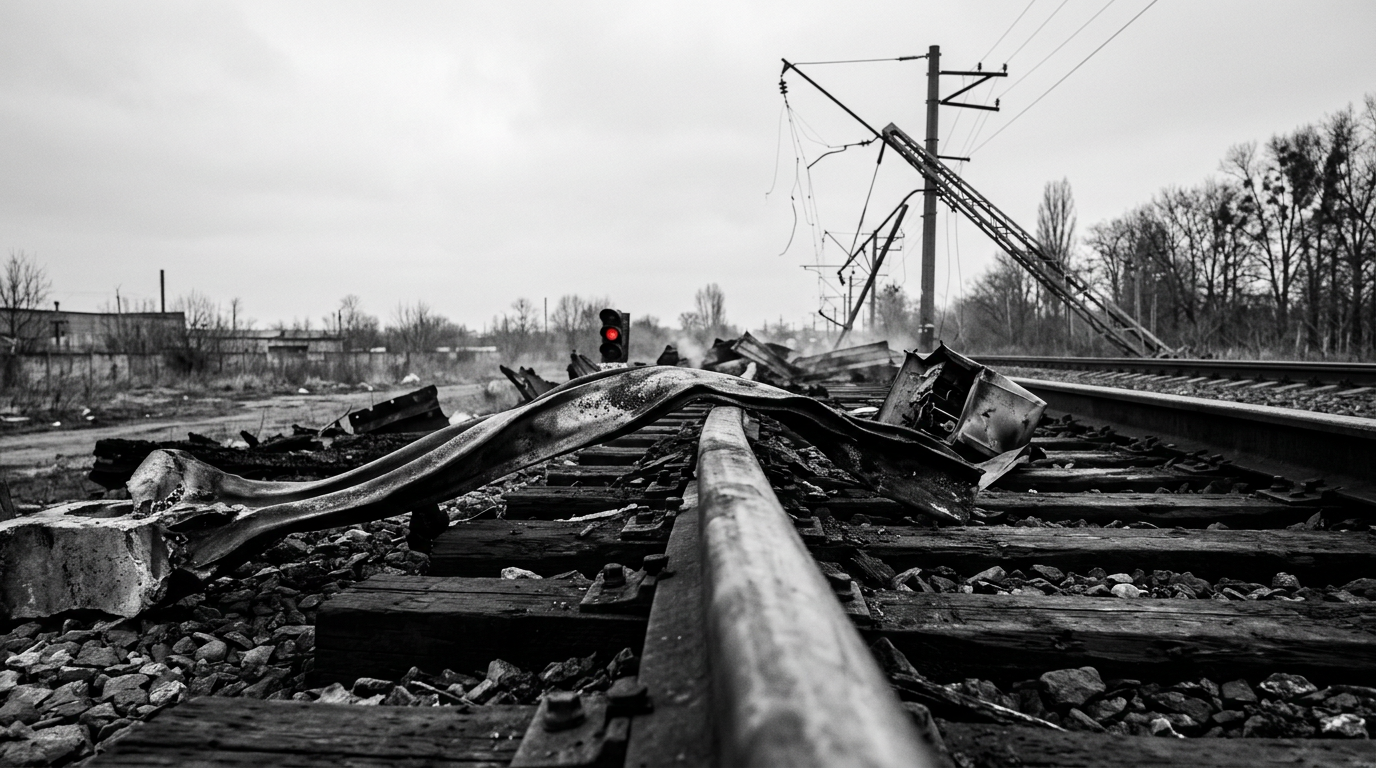
Ukraine railway strike hit 2 km from Poland after passengers were evacuated, Ukrainian authorities said, intensifying scrutiny of wartime diplomatic rail routes.
The strike involved a Russian jet-propelled drone and damaged the train's engine, according to Ukrainian authorities. All passengers had already been removed from the train before the impact, leaving the incident focused on timing, targeting and border risk rather than casualties.
Drone hits near Yahodyn
Both Ukrainian and Polish authorities said the drone struck 2 km from the Polish border, placing the incident close to NATO territory without crossing into it. The location matters because rail routes in western Ukraine have become a corridor for officials, aid traffic and civilians moving between Ukraine and Poland.
Russia said it had struck railway infrastructure in western Ukraine. Ukraine's state railway company Ukrzaliznytsia gave a narrower account, saying the drone may have been aimed at a train used for diplomatic travel.
The company said that “quite possibly, the target of this drone could have been the diplomatic train.” That assertion remains attributed to Ukrzaliznytsia; the source material does not include an independent confirmation of the intended target.
Timetable change preceded strike
Ukrzaliznytsia said the train in question had departed the station earlier than planned after a timetable change tied to continuing Russian strike threats. The company said the evacuation order for passengers on the train that was hit came “just 15 minutes” before the drone strike.
That sequence gives the railway's account two operational anchors: the train's early departure and the short window between the evacuation order and the impact. It also suggests that railway staff were making real-time adjustments under threat conditions, though the source does not say who ordered the timetable change or how the threat was detected.
Johnson and other European national security advisers, including the UK's Jonathan Powell, had traveled along the same line on another train while returning from a conference in Kyiv. Their train was separate from the one hit, according to the account provided by Ukrainian authorities.
Ukrzaliznytsia also said David Petraeus, described in the source as a former CIA chief, was on board another train at Yahodyn station when the drone strike occurred. The presence of multiple high-profile passengers in the area gives the incident a diplomatic dimension, even as Russia framed the target as railway infrastructure.
Border route draws scrutiny
Ukraine's rail system has carried extra strategic weight since Russia's full-scale invasion, linking Kyiv with western border crossings used by foreign officials and emergency logistics. Air travel remains constrained by the war, making trains a more visible and exposed part of Ukraine's diplomatic and civilian transport network.
The Yahodyn area is important because it sits near Poland, one of Ukraine's principal gateways to the European Union. A strike 2 km from the border does not by itself indicate spillover, but it narrows the margin between attacks inside Ukraine and security concerns for neighboring states.
If Russian strikes continue to hit railway nodes close to Poland, the immediate macro effect would be higher pressure on cross-border logistics and insurance assumptions for wartime transport. For Ukrzaliznytsia, the mechanism would be more timetable changes, evacuation calls and route-security decisions; for the wider rail and aid sector, it would mean longer planning cycles and tighter coordination with border authorities.
If the incident remains isolated, the effect is narrower: Ukraine's railway operator will still face scrutiny over how quickly it can clear trains after threat warnings, but international travel on the corridor may continue with adjusted procedures. The main open question is whether future Russian attacks remain limited to infrastructure inside Ukraine or move closer to border crossings used by foreign officials and civilian passengers.