

Cali Fund collects just $7,085 toward $1 bn nature goal
Major drugmakers have not contributed to the voluntary biodiversity fund, while industry representatives question its design and scope.
The Cali Fund held $7,085 in deposits as of Monday, against a $1 billion annual biodiversity target, a Guardian news report said Oct. 22, citing UNDP fund data.
The gap matters because the fund aims to move money from companies using nature’s genetic resources into conservation, while Zero Carbon Analytics estimated top drugmakers could have contributed $756 million under its formula.
The fund had $10,656 in commitments at the start of the Cop17 biodiversity summit in Yerevan, Armenia, The Guardian reported. More than 18 months after its launch, no major pharmaceutical company had contributed.
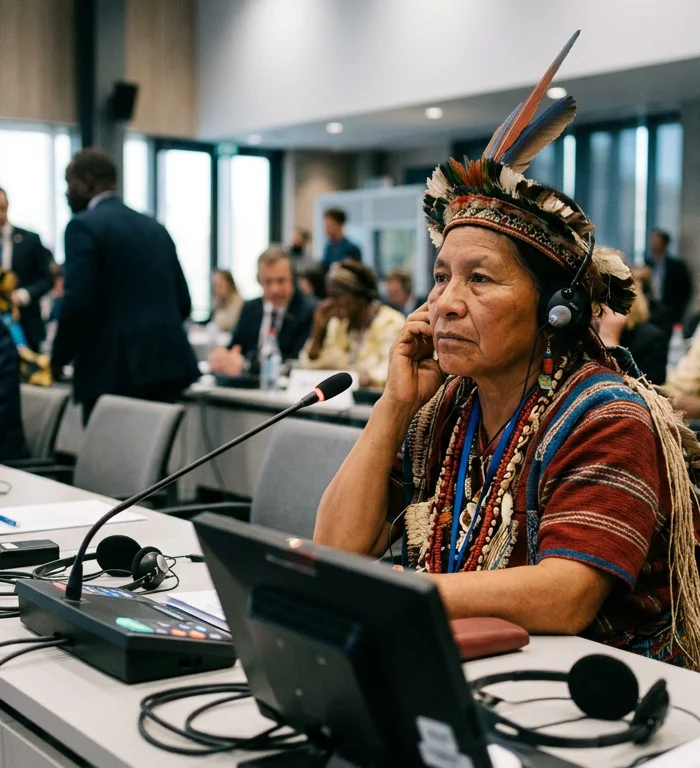
“Look at how much profit these pharmaceutical companies are getting – and we’re only asking for a tiny percentage,” said June Rubis of Macquarie University, an Indigenous peoples and local communities representative from Asia who sits on the Cali Fund’s steering committee.
“Definitely, they’re free-riding” on nature, Rubis said, adding that businesses did not appear to recognise the need to support communities “who have been in the frontlines of defending biodiversity conservation and therefore their future profits”.
Zero Carbon Analytics said the top 15 pharmaceutical companies generated about $161 billion in profits in 2025. The research group calculated that their shareholder payouts that year were 175 times the suggested contribution to the Cali Fund.
The fund’s voluntary guidelines suggest companies pay either 1% of profits or 0.1% of revenue. At least half of the money is meant to go to priorities identified by Indigenous peoples and local communities.
The mechanism forms part of wider efforts to address a $700 billion funding gap for nature conservation. Its focus is digital sequence information, or genetic data from organisms that can be stored in public databases and used in research.
The shift from physical samples to digital genetic information has complicated benefit-sharing, because companies can draw on data without taking new material from a country or community. The Cali Fund was designed to address those gaps.
Since its official launch in February 2025, the fund has received three private-sector payments: $5,000 from UK-based biotech company Prozomix, $1,000 from TierraViva AI, also based in Britain, and $1,085 from Belgian firm E-Biom.
Brian O’Donnell, director of Campaign for Nature, said voluntary payments were unlikely to raise enough money. “More money has been spent on meetings talking about the Cali Fund than there is in the Cali Fund’s coffers,” he said.
Industry resists formula
The pharmaceutical industry has challenged the mechanism. Guilherme Cintra, director of innovation policy at the International Federation of Pharmaceutical Manufacturers and Associations, said the industry was committed to biodiversity but had “ongoing questions about the design and implementation of the mechanism”.
“The current mechanism overlaps with existing law, relies on inaccurate assumptions about how data is used in the discovery of medicines, and asks companies to hand over a share of their total revenue, whether DSI was used to develop a medicine or not,” Cintra said.
A Sanofi spokesperson said the company recognised the importance of biodiversity and healthy ecosystems to human health. A GSK spokesperson said open access to digital sequence information was critical for medical innovation and pandemic response.
GSK said it supported the intent of the Cali Fund and would decide on voluntary contributions when it had more information on how the fund would work alongside other national and multilateral access and benefit-sharing mechanisms.
Yerevan tests this week
The Cali Fund is on the agenda at Cop17 in Yerevan this week. The first check is whether any major pharmaceutical company announces a voluntary commitment during the conference discussions described by the fund’s spokesperson.
A second check is whether the fund gives companies more operational detail. A Cali Fund spokesperson called the money raised so far “disappointing but not entirely surprising”, saying comparable financial instruments have generally taken two to three years before contributions begin to scale up.
The spokesperson said contributions would probably remain limited while the fund’s operating structure is completed and while companies become more familiar with it. Discussions at Cop17 would give companies more information and allow them to come forward with commitments, the spokesperson said.
Source: news report, The Guardian, Oct. 22, 2026
More stories
- Policy Alert seeks Nigeria hearing over $50bn offshore plan
- WHO rejects Nigeria outbreak label after 1 imported Ebola case
- Singapore prepares grid for up to 6.5% annual demand growth
- ECB faces 6.1% Lithuania inflation with 2.50% rate
- Philippine Supreme Court bars Congress budget increases
- Philippines explores Taiwan cable cooperation despite one-China policy
- Musk pledges $10.7bn SpaceX stake to US children
- Researchers urge wider mental-health systems for African schools