

Lebanese doubt Oct. 27 Israel vote ends south Lebanon presence
Al Jazeera interviews point to mistrust rooted in airspace violations, past invasions and the June framework’s still-unmet withdrawal goal.
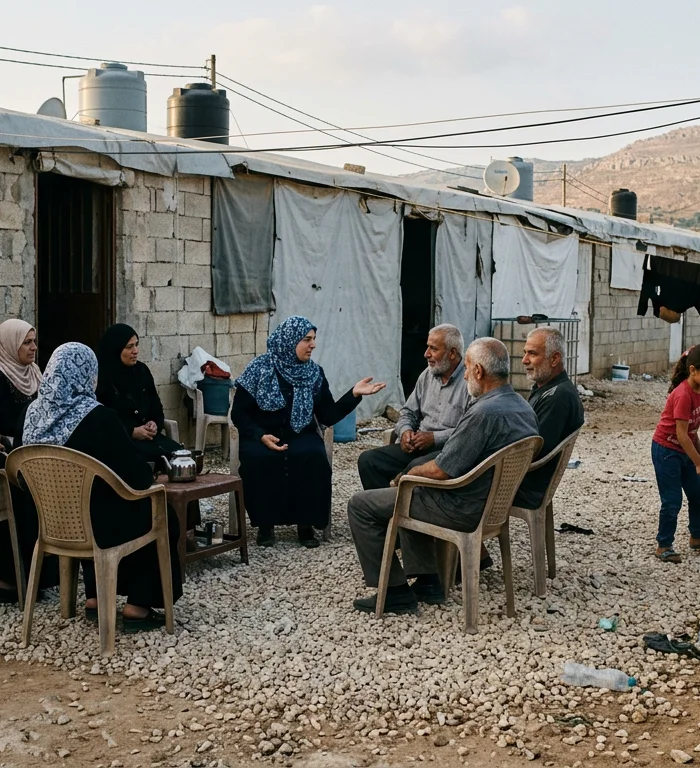
Lebanese residents and analysts told Al Jazeera in an Oct. 24 feature that Israel’s Oct. 27 election is unlikely to change policy toward Lebanon or end its military presence in the south.
Al Jazeera reported nearly 9,000 people have been killed in Lebanon since October 2023, while a June 2026 Lebanese American University survey found 54% supported diplomacy with Israel versus 35% backing armed resistance.
“I don’t think anything major – or at all – will change for Lebanon even if there’s a change in [Israeli] leadership,” Beirut resident Fouad Debs, a lawyer, told Al Jazeera.
Karim Safieddine, a Beirut-based nonresident fellow at the Tahrir Institute for Middle East Policy, said Israeli candidates were not treating Lebanon as a policy failure. “No one is promising withdrawal, and no one is addressing south Lebanon as a crisis or a mistake,” he said.
Elia Ayoub, a Lebanese researcher and podcaster, told Al Jazeera that Netanyahu’s challengers were criticising him over domestic politics and security, not rights concerns. “I don’t necessarily believe that it’s going to change Israeli policy towards Lebanon,” Ayoub said.
The election could remove Prime Minister Benjamin Netanyahu, whose government has overseen Israel’s war in Lebanon and what Al Jazeera described as the reoccupation of southern Lebanon. The main challenger cited by Al Jazeera is Gadi Eisenkot, leader of the Yashar party and a former Israeli army chief of staff.
Eisenkot is closely associated with the Dahiyeh Doctrine, an Israeli military approach that uses heavy destruction against areas linked to armed groups. Al Jazeera said Lebanese observers do not see him as a likely departure from Netanyahu on Lebanon, citing his previous call for attacks on Hezbollah targets anywhere in the country.
Israel and Hezbollah have fought at varying intensity since October 2023, after the Hamas-led attack in southern Israel and Israel’s war in Gaza. Al Jazeera reported that Israel escalated the Lebanon conflict in September 2024 and again in March 2026, after the start of the United States-Israeli war on Iran.
A US-brokered framework signed in June by Israel and the Lebanese government included the aim of a phased Israeli withdrawal from Lebanon, Al Jazeera reported. Hezbollah rejected direct negotiations tied to that process, according to the outlet.
Al Jazeera said Israel still occupies large parts of southern Lebanon and has demolished homes and infrastructure in dozens of villages, displacing more than 1 million people.
Lebanese opinion is not uniform on tactics toward Israel. The Lebanese American University survey led by professor Jad Melki found 87% of respondents viewed Israel as their enemy, even as a majority backed diplomacy over armed resistance.
Ayoub told Al Jazeera the United States midterm elections on November 3 also matter because US politics affects how Israeli leaders judge their room for action toward Palestinians, Lebanon and Syria. Israel’s election is scheduled for October 27.
More stories
- Taiz hospital cuts dialysis sessions to 2.5 hours
- Kenya records second Ebola death in first outbreak
- Taiz's Republican Hospital warns 270 dialysis patients face shutdown
- Singapore regulator finds 65 harmful apps, 24 wrongly rated
- Democrats tie Iran war to $4.27 gasoline in midterm races
- Biya faces Cameroon succession pressure after 74-day absence
- Australia Security Council bid starts 2029 UN seat race
- Pacific security drives Peters plea for stronger US role
Latest news
- Estonia protects 15 shipwrecks in Baltic heritage push
- UAE leads AI adoption with 73.3% working-age use
- American Express to cut 3,500 jobs in restructuring tied to AI
- Flow Games raises $49 million as labor and safety pressure builds
- Jio Platforms draws 22.19 times bids for IPO
- Bolt shares rise 63% after Prana deal and $120m placement