

Estonia protects 15 shipwrecks in Baltic heritage push
The newly protected sites include the cargo steamship Success, which sank in 1885, and wrecks in internal waters, territorial waters and Estonia’s exclusive…
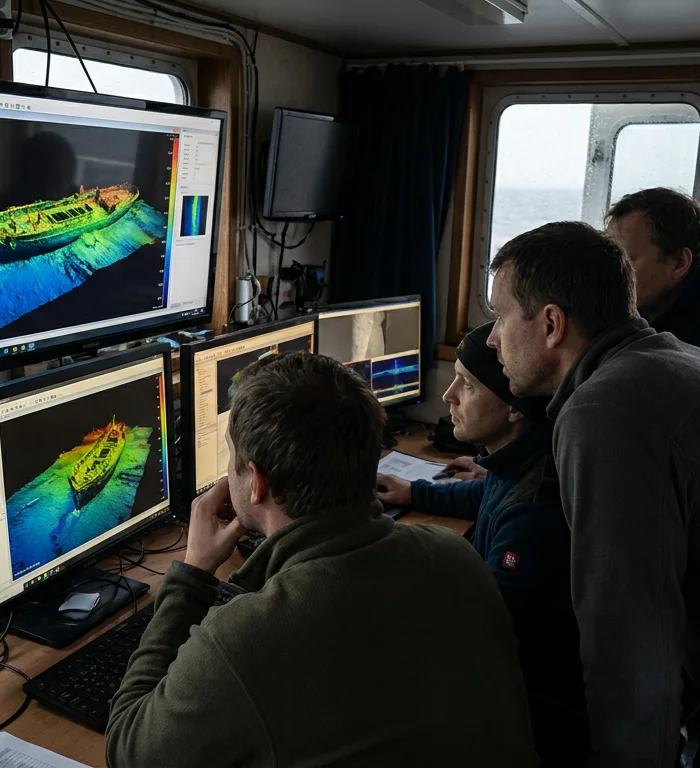
Estonia has placed 15 shipwrecks under state protection, including the cargo steamship Success, which sank in 1885, ERR News reported on Saturday, citing ETV’s “Terevisioon.”
The additions expand a protected underwater heritage register that already covers more than 100 sites in Estonian maritime areas, according to the ERR report.
Underwater archaeologist Maili Roio said Baltic Sea conditions help preserve wrecks, but more intensive use of maritime areas means preservation cannot rely on the environment alone.
"We're actually in a very good position here on the Baltic Sea because the sea itself does an excellent job of preserving our shipwrecks. However, our maritime areas are being used increasingly intensively and for a growing range of purposes. The state must therefore ensure that underwater cultural heritage is taken into account when planning activities," Roio said on ETV’s “Terevisioon.”
The new designations cover 12 sailing ships, the destroyer S31, a steamship and the cargo steamship Success, ERR reported. Four of the sites are in internal waters, nine are in territorial waters and two are in Estonia’s exclusive economic zone.
Protection does not close the surrounding sea to other uses, according to the report. It does mean that work near a wreck and its buffer zone must account for preservation; the report cited wind turbines as an example of infrastructure that should be placed far enough away to avoid damage during construction.
The Success was identified after underwater archaeologists worked with the National Archives of Estonia, Roio said. Archival material linked the wreck to a vessel that was traveling from Kronstadt to London when it sank in Estonian waters in July 1885, after previously running aground in the Gulf of Finland and sustaining damage.
Roio said the Success is well preserved, though not undamaged. Its visible masts illustrate a 19th-century transition in which steam-powered vessels still used sails, offering researchers evidence of how shipping technologies overlapped.
"This transitional period is really fascinating. At the same time, the ship still has those beautiful lines characteristic of sailing vessels. It must have been a very beautiful ship," Roio said.
Other newly protected wrecks remain less certain. One site more than 60 meters below the surface is preliminarily dated to the 16th or 17th century, based on footage from an underwater remotely operated vehicle, but researchers have not established its age, origin or link to written records.
Roio said the Estonian Transport Administration finds new wrecks during annual seabed surveys, but discovery alone is not enough for protection. Archaeologists first need information about a wreck’s type, condition and research value.
Trawling has long damaged shipwrecks in Estonian waters, Roio said, making intact details significant when they survive. One newly protected 19th-century sailing ship still has its figurehead, a decorative bow feature that often breaks off or is damaged.
The designations also help Estonia meet obligations under UNESCO’s 2001 Convention on the Protection of the Underwater Cultural Heritage, ERR reported.
Source: ERR News report citing ETV “Terevisioon,” Oct. 24, 2026
More stories
- Jio Platforms draws 22.19 times bids for IPO
- Tractor Supply plans up to 90 stores in 2027
- Oil rises as Aramco staff reportedly told to leave offices
- Citi gets China securities license, now faces scale test
- French vandals face compensation under Senate-backed riot bill
- Major emitters face climate-health gap in 132-plan review
- Beijing favors gradual yuan gains, currency strategists say
- PepsiCo markets euro bonds after cutting profit outlook
Latest news
- Taiz hospital cuts dialysis sessions to 2.5 hours
- Lebanese doubt Oct. 27 Israel vote ends south Lebanon presence
- Kenya records second Ebola death in first outbreak
- Taiz's Republican Hospital warns 270 dialysis patients face shutdown
- UAE leads AI adoption with 73.3% working-age use
- Singapore regulator finds 65 harmful apps, 24 wrongly rated
- American Express to cut 3,500 jobs in restructuring tied to AI
- Flow Games raises $49 million as labor and safety pressure builds