

Major emitters face climate-health gap in 132-plan review
An NGO scorecard ranked the EU 12th and said high-emitting economies cite public health without matching those pledges with stronger emissions action.
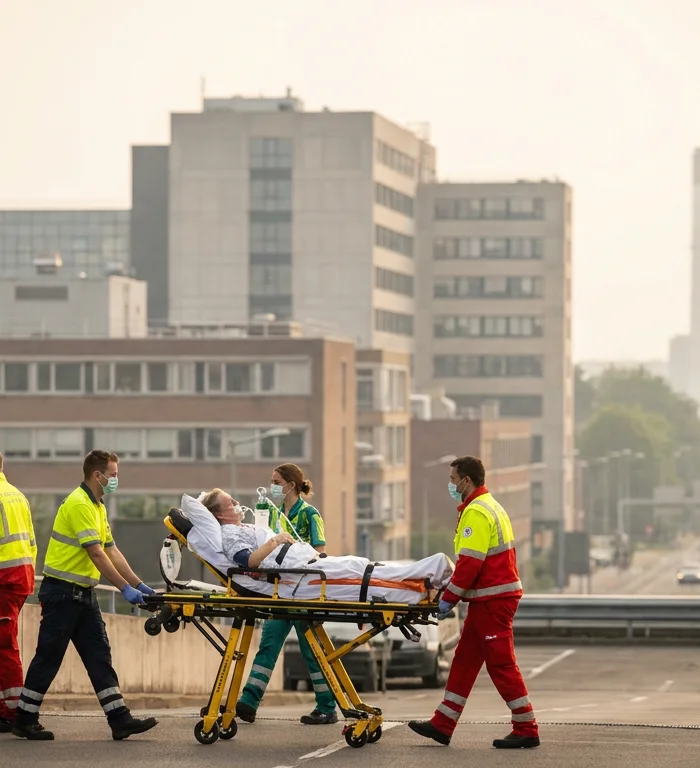
The Global Climate and Health Alliance said in a 2026 analysis reported by Euronews on Oct. 23 that 132 countries’ climate commitments often cite health while lacking emissions cuts.
The finding puts pressure on high-income emitters before COP31 in November: the EU ranked 12th, while 19 of the 20 highest-scoring countries were low- and middle-income economies.
The alliance, a coalition of NGOs, assessed nationally determined contributions, the Paris Agreement climate plans governments submit to outline emissions goals and adaptation policies. Its scorecard reviewed eight areas, including health impacts, air pollution, healthcare-sector action, finance and implementation.
Colombia led the ranking with 29 points out of 32, followed by Nigeria with 25 points and Cambodia with 24 points, according to the assessment cited by Euronews. The EU files one joint contribution for the bloc and its 27 member states.
“Hypocrisy is a perfect word for that,” Jess Beagley of the Global Climate and Health Alliance told Euronews, referring to governments that invoke health concerns while not addressing fossil fuel dependence. “We can’t pay lip service to health unless we are taking action on health,” she said.
The alliance said the EU, Indonesia, South Africa, Türkiye, Canada and the UAE scored relatively higher on health references but did not pair those scores with emissions reductions it judged sufficient to protect populations. Among high-emitting economies with mid-range health scores, the EU was the only one whose plan included a specific air-pollution target, according to the scorecard.
That EU target concerns the phase-out of hydrofluorocarbons by 2050, the assessment said. None of the countries in the group included specific targets for black carbon, nitrous oxide or ozone, pollutants linked in the source material to warming and harm to human health.
Beagley told Euronews that health systems absorb the effects of wider energy, transport and industrial choices. “The healthcare [sector] is really on the front line,” she said. “The burden that falls is the end result of a wider climate action that has been taken or not taken.”
The analysis also pointed to policymaking gaps. Beagley said health ministries were closely involved in drafting national climate plans in only 15% of the countries covered, raising the risk that climate decisions miss consequences for public health.
The report cited recent impacts including more than 1,400 deaths and more than 6,600 people missing in Nepal, eight million children at risk of hunger in Eastern and Southern Africa, and tens of thousands of deaths associated with European heatwaves. Those figures were presented by the alliance as evidence of current climate-health pressures.
Beagley said wealthy countries with high historical emissions should cut pollution faster and help finance climate action in developing economies. “Those countries should be reducing their emissions furthest and fastest,” she told Euronews.
The scorecard is an advocacy-group assessment of how health is reflected in climate plans, not an official UN ranking of emissions performance. COP31, approaching in November, is the next forum identified in the source material where governments may present whether health concerns translate into stronger climate policies.
Source: news article, Euronews, Oct. 23, 2026
More stories
- Lockheed Martin sets F-35 framework for at least 850 jets
- Tesla profit drops 43% despite $1.5bn cash flow
- Abu Dhabi crown prince brings 60-member delegation to Greece
- Oil prices rise after reported attack on Saudi oil field
- Tesla cuts spending plan to $20 billion amid AI overhaul
- JPMorgan to close Turkish securities unit
- IMF Venezuela office plan sets Caracas return for lender
- Paramount Skydance settles $110 billion Warner merger case
Latest news
- Steward AI trader limits live-test loss to 0.3%
- UN climate fund earmarks $20m for Nepal flood recovery
- Gemini flags 69% of held-out thermal-video falls
- Ethiopia's coffee sector faces $453m EU export risk
- EU faces Vietnam rights test over $57.9bn trade gap
- Obakulactone reduces joint swelling in arthritis-model rats
- Albania lawmakers clash over policing of student protests
- Congress faces Supreme Court rulings with control at stake