Australia Security Council bid starts 2029 UN seat race
Australia will campaign for a 2029–30 UN Security Council seat, with Prime Minister Anthony Albanese citing climate, AI and regional support.
Atlas Newsdesk ·
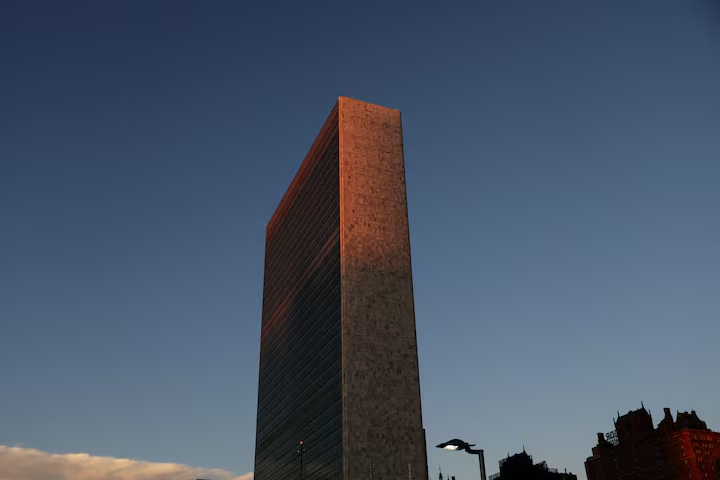
Australia Security Council bid targets a 2029–30 seat, placing Canberra alongside Finland in the race for its bloc’s two-year posts.
Prime Minister Anthony Albanese launched the campaign Sunday in New York, where leaders are gathering for the annual United Nations General Assembly. The vote for the non-permanent seats is expected by secret ballot in 2028, giving Australia several years to secure support.
Albanese opens New York campaign
Albanese said a seat would give Australia a role in shaping international responses to issues that affect its citizens, including climate change and rapid developments in artificial intelligence. He told reporters that Australia can influence global affairs beyond its size, and said he wanted the country to use that reach.
The bid comes after Australia’s most recent two-year term on the council ended in 2014, leaving a gap of roughly 15 years before the 2029 term would begin. Canberra is seeking one of the two seats allocated to the Western European and Others Group, the UN electoral bloc that includes Australia despite its geography.
Finland joins ballot field
Finland is also seeking a 2029–30 seat from the same bloc, according to the campaign field described by Albanese. Other regional groups, including Asia-Pacific, African, and Latin American and Caribbean states, are expected to put forward their own candidates for the same election cycle.
The Security Council has 15 members: five permanent powers and 10 elected members serving two-year terms. The elected seats turn over in batches of five each year, while the United States, China, France, Russia and the United Kingdom hold permanent seats.
For Australia, the campaign is both diplomatic and regional. Albanese said he expected strong backing from Pacific island countries and Southeast Asia, two areas where Canberra has sought to maintain close political and security ties.
Domestic ratings add counterweight
The overseas campaign begins as Albanese faces softer polling at home. A domestic Newspoll released Monday showed his approval rating at its lowest point since he won his first term in 2022, according to its published results.
The timing gives the campaign a local political backdrop, even though Security Council elections are decided by UN member states, not voters at home. Albanese also said his relationships with world leaders would help Australia’s case as the campaign develops.
Climate and AI shape case
Albanese framed climate change and AI as issues that will be among the leading global challenges by the end of the decade. His argument links the council bid to national interest: if those topics drive security debates, Australia would have a seat in the room when responses are negotiated.
If Australia can hold Pacific and Southeast Asian support, its campaign would gain a regional base before the 2028 ballot. That path would strengthen Canberra’s diplomatic standing, give the government a foreign policy achievement, and place Australia’s policy priorities nearer to Security Council debate.
If Finland attracts broader backing inside the bloc, Australia would need to widen its coalition among states weighing climate, security and technology priorities. That scenario would keep the global effect limited until the vote, put pressure on Canberra’s campaign operation, and leave smaller states with more leverage over commitments sought from both candidates.
The main open question is how many governments publicly commit before the secret ballot. Until then, Australia’s bid turns on private diplomacy, regional trust and whether Albanese’s case for climate and AI influence remains persuasive into 2028.