

AI trade steadies as Nasdaq futures climb after tech rout
AI trade shares steadied before the US open as Nasdaq-100 futures gained more than 1%, pointing to a partial tech rebound.
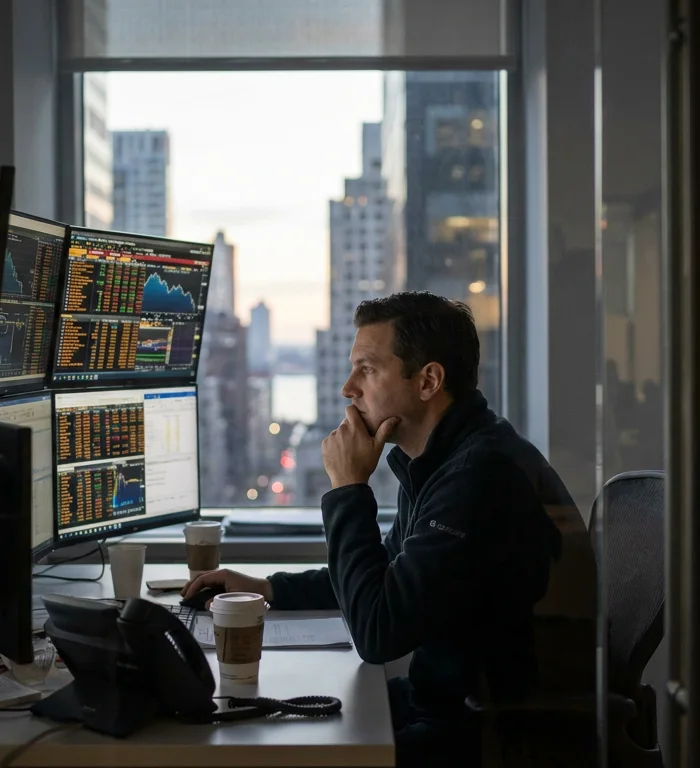
AI trade shares steadied before the US open as Nasdaq-100 futures gained more than 1%, pointing to a partial tech rebound.
The move followed a selloff that left the S&P 500 on course for its weakest week since last year's Liberation Day. Premarket gains do not determine the cash session, and the Dow was still indicated lower.
The early rebound was concentrated in the stocks hit hardest during the week. CoreWeave, Intel, Nvidia and Micron were all indicated higher before the bell, reversing part of the prior decline rather than erasing it.
Nasdaq futures test the rebound
The immediate question for investors is whether the AI trade has found a temporary floor or is only pausing after a broader repricing. Futures tied to the Nasdaq-100 were up more than 1%, a move that matters because the index is heavily exposed to large technology and chip names.
The S&P 500's weekly trajectory gives the selloff a wider market frame. A move toward the worst week since last year's Liberation Day suggests the pressure has not been limited to speculative corners of the market.
Premarket trading can narrow or reverse after the open, especially when the prior session has forced investors to rebalance positions. That makes the first hours of regular trading the cleaner test of whether buyers are returning to AI-linked shares or simply covering short-term exposure.
Asia and Europe absorb losses
The weakness was not confined to the United States. Tech-heavy indexes in Asia fell overnight after the US decline, while European indexes dropped more than 1% in the same global pullback.
SoftBank, one of OpenAI's biggest investors, slid 10% in Tokyo. Its decline gave investors a listed proxy for concern over AI valuations beyond US chipmakers and data-center companies.
The pressure arrived after sentiment toward the AI trade had already become more fragile. Democrats' sweeping midterm victory added a political backdrop to a market debate already focused on whether AI-linked capital spending and earnings expectations can justify current prices.
Jobs report meets Fed caution
The October jobs report is the next scheduled data point for investors trying to judge the strength of the US economy. Its market effect may be limited if Federal Reserve officials remain more focused on inflation than labor-market data.
For the global macro picture, a sustained rebound would point to steadier risk appetite as investors absorb the jobs figures and the political shift. For CoreWeave, Nvidia, Intel and Micron, the same path would help separate a position-driven reversal from a deeper challenge to AI demand expectations; for the wider sector, it would preserve the argument that the selloff was a valuation reset rather than an end to the trade.
If the rebound fades after the open, the mechanism would look different. A renewed slide would keep pressure on the S&P 500's week-to-date performance, leave AI suppliers and data-center names exposed to further multiple compression, and push global technology indexes to price in a longer unwinding of crowded AI exposure.
The open question is whether the October jobs report changes the balance between growth confidence and inflation caution. Until cash trading confirms the futures move, the recovery in AI-linked shares remains an early signal, not a settled turn.
More stories
- Brent crude rebounds as chip shares extend their retreat
- French MPs reject 2027 budget revenue plan 458-0
- AI stocks split as Democrats win Congress and tech gains
- US Treasury expands Iran sanctions on maritime operators
- Data centers face backlash after Democratic midterm wins
- Democratic sweep lifts stock futures, dents dollar, yields
- Global debt warnings target $365 trillion borrowing bill
- Oil prices rebound as Brent climbs to $103.08 per barrel
Latest news
- Trump Media investors face losses as shares hit new lows
- Raman wins Los Angeles mayor race as Bass concedes defeat
- Häkkänen blames US politics for Ukraine Patriot delay
- Cape Town faces appeal over Equinix data-centre zoning
- War-zone water attacks triple to more than 135 incidents in 2025
- Lulu Retail posts 2% Q3 revenue gain with 53% online sales growth
- Hoax bomb threats disrupt 25 Europe flights
- NHS England misses cancer wait targets with 373,000 diagnoses