

Hoax bomb threats disrupt 25 Europe flights
Investigators have not identified who sent the threats or hacked refrigeration systems, leaving open whether the disruption was criminal, state-linked or…
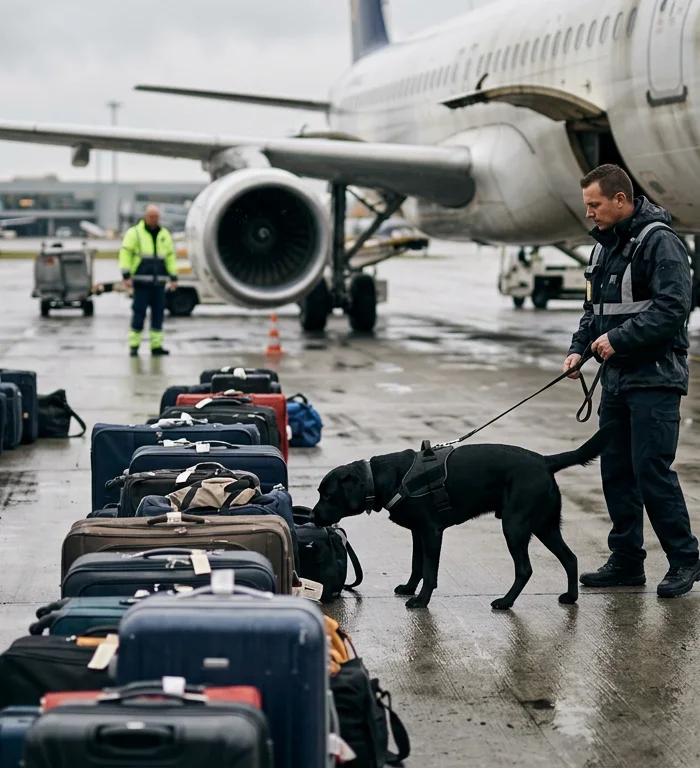
Hoax bomb threats disrupted at least 25 commercial flights across Europe on Thursday, The Guardian reported in a Nov. 6 newsletter, after seven planes were searched or diverted on Tuesday.
The same Guardian newsletter said supermarket fridges and freezers in seven European countries malfunctioned this week, widening concern that routine civilian systems can be exploited below the threshold of war.
Investigators have not pointed to a hostile state or terrorist organisation as the organiser of the aviation threats, the newsletter said, while inquiries continue. Aviation experts told The Guardian that airlines’ decision to treat the alerts as credible suggested possible coordination.
Dan Sabbagh, The Guardian’s defence and security editor, said the airline disruption should be viewed against a broader security backdrop. “Terrorism doesn’t have to be violent to terrorise,” Sabbagh said. “The purpose of terrorism is to scare.”
Sabbagh also cautioned against assuming a single explanation. “Airlines receive bomb threats on a daily basis, at a rate that we would find extraordinary if we knew,” he said.
The cyber incidents point to a different but related vulnerability: networked equipment that can be accessed remotely. The Guardian said refrigeration systems in supermarkets were affected, with thermostats in some cases pushed to 50C, and that cold-storage facilities used by France’s national blood service were also targeted.
Dan Milmo, The Guardian’s global technology editor, said cyber intrusions usually narrow to two broad categories. “There are only ever two likely candidates for a hack,” Milmo said. “Criminal gangs or nation states.”
He also cited a third category of “troublesome teenagers,” including loosely organised hacking groups.
Attribution remains the central uncertainty. One cybersecurity researcher told The Guardian that activity against dummy Danfoss fridge-control systems had “all the hallmarks” of operations linked to Russia, but the newsletter did not identify the actors behind this week’s incidents.
The Guardian framed the incidents as part of a grey zone, meaning activity between normal peacetime competition and conventional military conflict. Since 2022, the newsletter said, European states have faced intensifying sabotage believed to trace back to Russia and designed to avoid a military response.
The reported disruption also comes as governments urge resilience. The newsletter said the UK’s Be Ready initiative advises households to hold 72 hours of emergency supplies, while police and security services continue to monitor threats. It said MI5 currently has about 3,000 active subjects of interest.
Aisha Down, The Guardian’s global technology reporter, said many hacks exploit edge devices, internet-connected equipment that is not the main focus of security upgrades. “Just like a burglary, you might get into the room where all the jewellery is stored,” Down said, “but the damage you can do is not a given.”
The Guardian cited Finland as one indicator of the rising volume of reports, saying notifications to the national cybersecurity centre increased to 21,000 this year from 18,000 last year, in a country of 6 million people.
Source: newsletter, The Guardian, Nov. 6, 2026.
More stories
- War-zone water attacks triple to more than 135 incidents in 2025
- Lulu Retail posts 2% Q3 revenue gain with 53% online sales growth
- Tax Justice Network links UK havens to 13.6% of EU tax losses
- Tundu Lissu faces Nov. 6 treason ruling in Tanzania
- AVPA sees Africa risk-capital gap despite $4tn in assets
- Frankfurt violence splits Merz coalition after 100 police injured
- Israel election turnout reaches 74.3% before polls close
- Trump questions Brazil election as Liberal Party accepts
Latest news
- NHS England misses cancer wait targets with 373,000 diagnoses
- Singapore Airlines plans $1.57bn cabin upgrade from 2027
- Kingdom Come: Deliverance II Receives High Critical Acclaim
- Clair Obscur: Expedition 33 Receives High Critical Acclaim
- Riot Games Announces New Open Qualification Path for VCT 2027
- The Turkish Championship League Remains the Hub for LoL Esports
- Valve Regional Standings Now Dictate CS2 Major Qualification Paths