

War-zone water attacks triple to more than 135 incidents in 2025
UNICEF’s Water Under Fire report links damage to WASH systems with higher disease, malnutrition and violence risks for children in conflict areas.
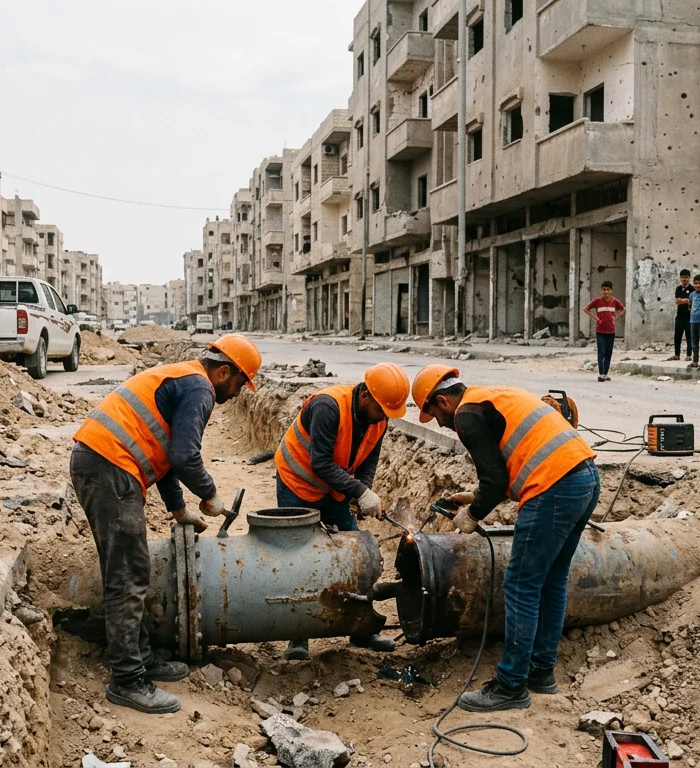
UNICEF said in a report published Thursday that assaults affecting conflict-area water and sanitation networks rose to more than 135 incidents in 2025, from fewer than 45 in 2021.
The UNICEF Water Under Fire report, published Nov. 5 and distributed by AllAfrica on Nov. 6, said incidents spread to 15 countries in 2025 from eight in 2021, raising risks of disease, malnutrition and violence for children.
UNICEF Executive Director Catherine Russell said attacks on water and sanitation systems "deprive children of safe drinking water and the essential services that rely on water to function effectively".
The report covers January 2021 to June 2026 and documents attacks on water, sanitation and hygiene systems, known as WASH, as well as on workers and communities that rely on those services. UNICEF said it examined incidents in 23 countries and territories.
UNICEF grouped the attacks into seven categories. They include strikes on treatment facilities, pipelines and wells, deliberate pollution of water supplies, and restrictions on spare parts and chemicals needed to treat water.
The report cited Sudan, where only one of 13 water treatment plants in Khartoum state was fully operational by March 2024. It also said more than 130,000 meters of sewage pipelines had been destroyed in the Gaza Strip since October 2023, equivalent to a 130-kilometer line of pipe.
The agency said water services can fail even when pumps and pipes are not directly hit. In Iraq, UNICEF said a November 2025 drone attack on a gas field cut electricity production in the Kurdistan region by about 80%, forcing authorities to ration power among water projects, hospitals and cities.
UNICEF said the damage extends beyond household drinking water. Without clean water, health facilities struggle to sterilize equipment, support childbirth safely and prepare therapeutic milk for children with severe malnutrition, according to the report.
The report also said children had been killed, injured or otherwise harmed while waiting for water, citing examples from the Gaza Strip. It highlighted risks to women and girls who collect water for families, including sexual violence and loss of schooling, and said the UN recorded the killing of 14 water facility employees in Lebanon during the 2024 conflict.
Funding shortages are compounding the pressure, according to UNICEF. Among countries with coordinated humanitarian WASH responses, 137.9 million people need assistance, while only 26% of required funding for this year has been received.
"Humanitarian workers do their best to keep water flowing despite increasing attacks," Russell said. "However, repairs cannot substitute for the protection of these facilities that is required under international humanitarian law."
UNICEF called for parties to conflicts, governments, donors and aid groups to protect WASH systems, improve data collection on attacks, secure access for water and energy workers, and invest in services designed to continue operating during conflict.
Source: UN News Service report distributed by AllAfrica, Nov. 6, 2026
More stories
- Lulu Retail posts 2% Q3 revenue gain with 53% online sales growth
- Hoax bomb threats disrupt 25 Europe flights
- Tax Justice Network links UK havens to 13.6% of EU tax losses
- Tundu Lissu faces Nov. 6 treason ruling in Tanzania
- AVPA sees Africa risk-capital gap despite $4tn in assets
- Frankfurt violence splits Merz coalition after 100 police injured
- Zelenskyy says Starshield limits weaken Ukraine defenses
- Macua's Rutledge challenges mining boom after R1 trillion profit
Latest news
- NHS England misses cancer wait targets with 373,000 diagnoses
- Singapore Airlines plans $1.57bn cabin upgrade from 2027
- Kingdom Come: Deliverance II Receives High Critical Acclaim
- Clair Obscur: Expedition 33 Receives High Critical Acclaim
- Riot Games Announces New Open Qualification Path for VCT 2027
- The Turkish Championship League Remains the Hub for LoL Esports
- Valve Regional Standings Now Dictate CS2 Major Qualification Paths