Brazil election race tightens as court crisis deepens anew
A BTG/Nexus poll put Lula at 46% and Flávio Bolsonaro at 45% in a runoff, within the survey’s error margin.
Sofia Reyes ·
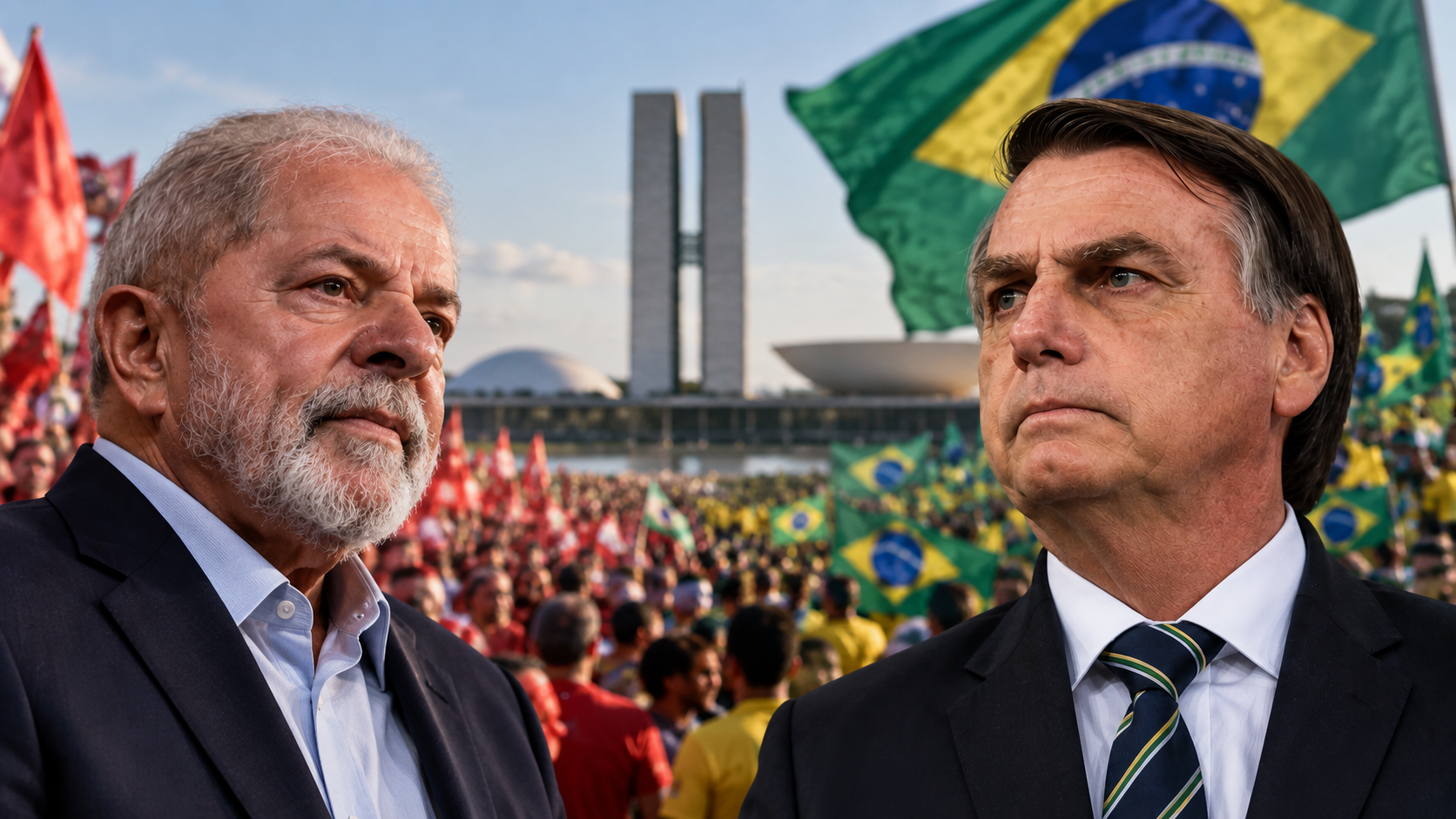
Brazil election polling put Luiz Inácio Lula da Silva at 46% to Flávio Bolsonaro’s 45% in a runoff, leaving the race effectively tied.
The BTG/Nexus survey published Monday gave Lula a one-point advantage, inside the poll’s 2 percentage-point margin of error. The result was broadly in line with last week’s survey, which also showed the president numerically ahead but without a clear statistical lead.
In a first-round scenario, Lula drew 40% support against 37% for Bolsonaro, the poll found. That three-point gap narrowed from five points in the previous week’s survey, giving the challenger a smaller distance to close before the October vote.
One-point runoff gap
Brazilians are scheduled to vote on October 4, with a second round likely three weeks later if no candidate wins outright. A Datafolha survey published Thursday also placed the 80-year-old Lula numerically ahead of Bolsonaro, though that gap was also within its margin of error.
The numbers leave the race for Latin America’s largest country unusually compressed before the campaign’s final stretch. A runoff decided inside the error margin would make turnout, late endorsements and candidate discipline more important than a single headline polling figure.
Court crisis enters campaign
The poll arrived during a political fight over Brazil’s Supreme Court and the bank fraud investigation surrounding Daniel Vorcaro. Vorcaro, the jailed former owner of Banco Master SA, is linked to a defunct lender now central to the case.
A series of disclosures has connected some justices on Brazil’s top court to Vorcaro, putting the judiciary into the election debate. Bolsonaro has tried to use the episode to tie Lula to the court controversy and channel anti-system anger against the president.
That attack carries its own complication for Bolsonaro. He approached Vorcaro for financing for a film about his father, Jair Bolsonaro, according to the account of the dealings, creating a link his opponents can use to blunt the charge.
Flávio Bolsonaro denies wrongdoing. Federal police are examining whether the contacts involved crimes including corruption and money laundering, making the inquiry a campaign risk even before any legal outcome is settled.
Banco Master shadow widens
For Lula, the immediate political problem is whether the court controversy turns from an institutional dispute into a voter-level trust issue. If his one-point runoff edge holds inside the margin of error, his campaign still lacks the cushion usually needed to absorb late shocks.
For Bolsonaro, the opening is clear but narrow. If he keeps the Supreme Court case tied to Lula while distancing himself from Vorcaro, the scandal could help him consolidate anti-establishment voters; if the funding approach receives more attention, the same case could weaken that message.
For Banco Master, the election has turned a fraud investigation into a national political reference point. Continued attention to Vorcaro would keep the defunct lender in public view and may increase pressure on financial regulators and banks to show that due diligence failures are being addressed.
The wider market and macro effect depends on whether the race stays inside the polling error bands. If it does, investors and companies are likely to face a longer period of policy uncertainty in Brazil; if one candidate opens a lead outside the margins, the campaign’s economic program would become the clearer focus for sectors exposed to regulation, credit and public spending.