US-China talks lift tone before Trump-Xi summit this week
US-China talks on AI, trade and investment ended with upbeat official comments before President Trump and Xi Jinping meet this week.
Mei Lin ·
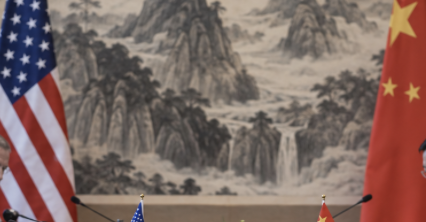
US-China talks on AI, trade and investment ended with upbeat comments before President Trump meets Xi Jinping during Xi’s September 23-25 visit.
The discussions in New York produced public signals of restraint from both governments, even as no extension of the countries’ trade truce was announced. Markets rose after the meeting, with Asian technology shares gaining and futures pointing to higher openings in Europe and on Wall Street.
Xi visit gets formal date
China’s Ministry of Foreign Affairs said Xi will make a state visit to the US from September 23 to 25, his first since 2015. Foreign Ministry spokesman Guo Jiakun said Xi and President Trump will hold in-depth exchanges, after Trump met Xi in Beijing earlier this year.
Guo described the sequence of visits as a milestone, according to the ministry’s account. The formal announcement followed talks involving senior economic officials at JPMorgan Chase & Co.’s headquarters in New York on Sunday.
China’s top trade negotiator, Li Chenggang, said the talks took place in a "good atmosphere" as he left the venue. US Treasury Secretary Scott Bessent called the discussions "very successful," while China’s state news agency described the exchange as "candid, in-depth and constructive."
Trade truce remains unsettled
The public tone pointed to an effort by Washington and Beijing to manage rivalry before it spreads into a wider confrontation. The two governments remain divided on technology controls, Taiwan and national security issues that have shaped economic policy on both sides.
People familiar with the talks said the discussions did not produce an agreement to extend the trade truce. They also said an announcement of new US tariffs tied to allegations about trading partners’ excess manufacturing capacity had been delayed until after the Trump-Xi meeting.
The sequencing matters for companies exposed to tariffs, export controls and Chinese demand. If the leaders preserve the truce, importers would get more time to plan inventories, while technology companies would still face policy limits around advanced chips and artificial intelligence.
If the truce is not extended, the tariff channel would become the faster transmission mechanism for the dispute. Higher duties would raise costs for importers first, then test whether retailers and manufacturers can absorb them or pass them to customers.
Farm purchases shape expectations
Agricultural markets also moved after the talks. Wheat and corn futures rose as traders tied the move to expectations that China may buy more US farm products following the diplomatic contact.
Soybeans are already part of the trade balance between the two countries. Traders with knowledge of recent deals said Chinese state-owned firms bought at least four US soybean cargoes late last week.
Earlier this month, China passed the halfway mark of a pledge to purchase at least 25 million tons of US soybeans annually through 2028. That commitment was part of a wider trade truce reached during a summit in South Korea last October.
For global markets, the first scenario is a managed pause: if Trump and Xi keep the truce intact, commodity exporters would get steadier demand signals, risk assets could retain support, and companies with China exposure would have a clearer planning window. The mechanism would be policy delay rather than a resolution of the technology and security disputes.
The second scenario is a narrow diplomatic failure: if the leaders leave without a tariff understanding, global trade expectations would weaken through higher import costs and more cautious corporate ordering. US agricultural exporters would be exposed if Chinese buying slows, while technology and industrial companies would face a longer period of policy uncertainty.
The main open question is whether the upbeat public language is matched by written commitments after September 25. Until then, investors, exporters and technology firms are likely to treat the summit as a test of whether the rivalry can be contained without removing its core disputes.