Swedish school attack puts TikTok sword post under review
Swedish police are examining online links after an 18-year-old sword suspect killed one student and injured two boys at a Fagersta school.
Lauren Collins ·
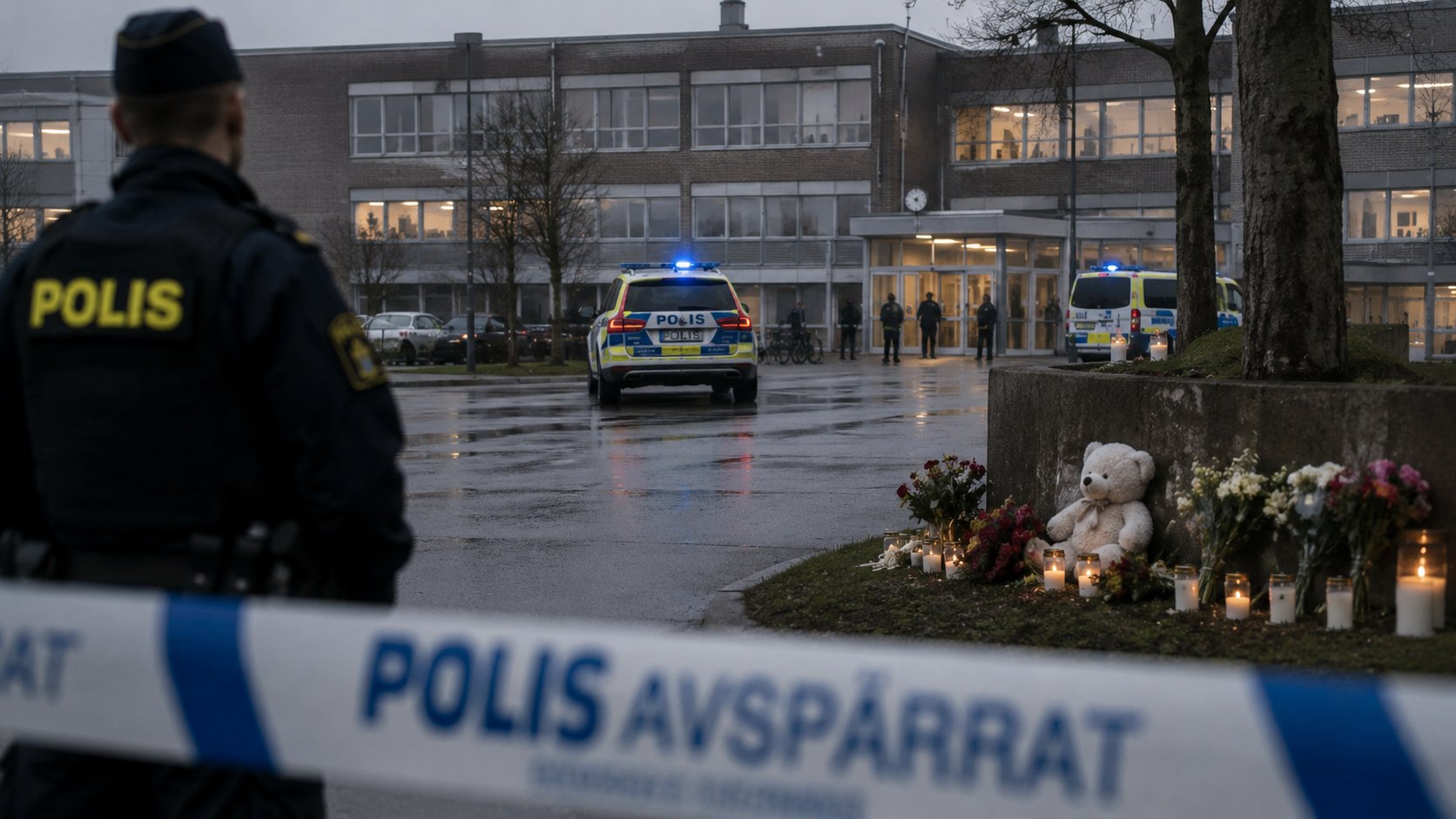
Swedish school attack investigators are examining online activity after a sword assault killed one student and severely injured two boys.
Fagersta sword assault deepens
The attack took place Friday at a high school in Fagersta, a town in central Sweden. Police arrested an 18-year-old man after the assault, according to a police source familiar with the inquiry.
The dead student was identified in local accounts as a 17-year-old girl, based on statements from her parents. Two teenage boys were seriously hurt, making the case both a murder investigation and an attempted-murder inquiry.
TikTok post draws scrutiny
Investigators are checking whether a TikTok account that showed a sword about 20 minutes before the attack belonged to the suspect, the police source said. The account is a central line of inquiry, but police have not publicly confirmed that it was operated by the detained man.
The image was described in local reporting as appearing to have been taken in a restroom at the school. The account, which had existed for about a month, was removed Friday after the attack, according to the same source material.
Before it disappeared, the account contained videos referring to two earlier mass-violence attacks in Sweden and to Norwegian far-right mass murderer Anders Behring Breivik. It also referenced a 2015 school attack in Trollhattan, western Sweden, where a masked swordsman killed a teaching assistant and two boys before police shot him dead.
Detention order raises stakes
Prosecutors on Saturday ordered the suspect detained on suspicion of murder and several counts of attempted murder. That step gives investigators more time to question him, examine digital material and test whether the online evidence is connected to the assault.
Prosecutor Ann-Sofie Trossing said the inquiry was moving quickly, with interrogations and information-gathering under way. She declined to give details on the evidence, citing the stage of the investigation.
The police source said investigators were also examining online communities that may have encouraged the suspect. That claim remains single-sourced and has not been publicly corroborated by prosecutors or the police authority.
Earlier attacks frame inquiry
The references to past school violence matter because they may help investigators assess whether the suspect acted alone, copied earlier attacks or interacted with forums that glorify such assaults. On the current record, police have not announced a motive.
If the TikTok account is not tied to the suspect, the case is more likely to center on the physical attack, school security and the suspect’s direct actions. That path would have little macroeconomic channel and would leave the immediate burden on the Fagersta school community and Swedish law enforcement.
If investigators connect the account to the suspect but find no wider network, the pressure point shifts toward platform moderation and early detection of violent school-attack content. The education sector would face renewed scrutiny over safety procedures, while technology companies could face questions from authorities about how quickly threatening material is identified and removed.
If police establish that online communities encouraged the attack, the inquiry could widen beyond Fagersta into cross-border extremist spaces and digital copycat networks. The global macro effect would still be limited on the facts now available, but the policy impact could run through security spending, platform compliance demands and coordination between police and prosecutors.
The main open questions are whether the TikTok account belonged to the detained man, whether anyone else influenced or assisted him, and what evidence prosecutors can present beyond the attack itself. Until those points are tested, the online-violence theory remains an investigative lead rather than an established explanation.