

Nvidia names Kress interim CEO after Huang exits in scandal
Nvidia named Colette Kress interim CEO after Jensen Huang stepped down, putting its AI financing strategy and succession search under scrutiny.
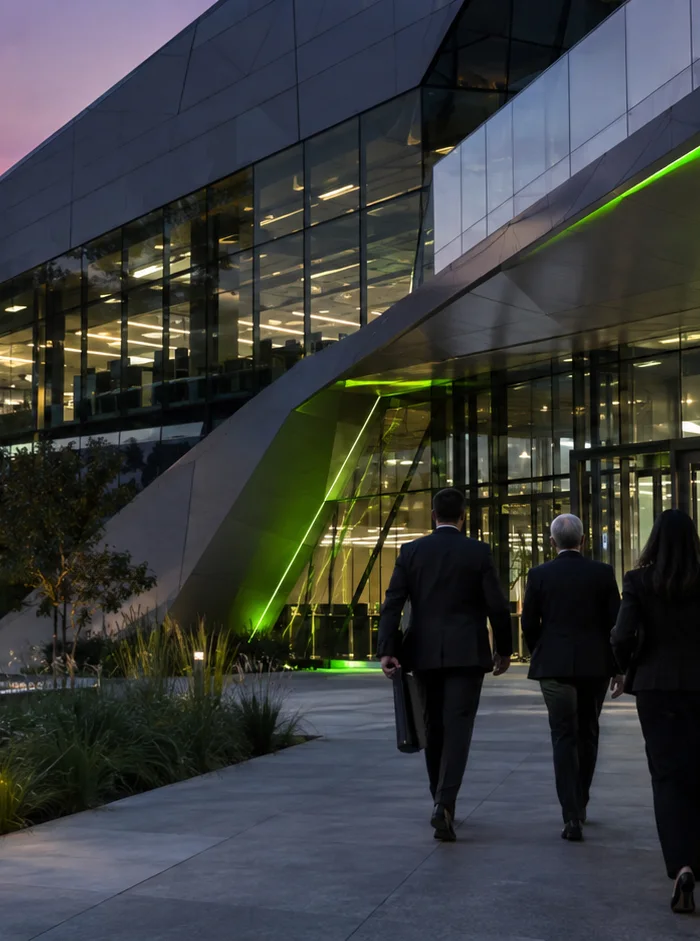
Nvidia named finance chief Colette Kress interim CEO after Jensen Huang ended a 30-year run, forcing its first leadership handover.
The change came Thursday as Nvidia faced questions about Huang's conduct, its customer financing strategy and the durability of its AI investment model. Nvidia shares fell as much as 14% to their lowest level in nearly 16 months after the company said Huang would step down, before closing down 4.3%.
Kress inherits Huang's risk debate
Kress, 59, takes over after years as one of the senior executives willing to challenge Huang's appetite for large AI bets, according to two people with knowledge of the matter. The tension centered partly on multibillion-dollar financing deals tied to Nvidia customers and AI infrastructure companies.
One person with knowledge said Kress and her finance staff clashed with Huang and the sales organization over deals that fed concerns among Wall Street critics about a circular AI economy. Those arrangements included investments involving OpenAI and infrastructure companies such as Lambda, according to the same person.
A proposed $250 billion plan to support an OpenAI data center project in Ohio was later reduced to $120 billion, according to the supplied account. A venture capital investor said Huang had pushed Nvidia to finance startups and was unlikely to be matched by another executive in backing customers as aggressively.
AI financing faces a reset
Kress joined Nvidia in 2013 after senior finance roles at Microsoft, Cisco and Texas Instruments. People who know her described her as a more pragmatic and calming figure than Huang, whose leadership style was often confrontational, according to the supplied account.
That profile may help reassure customers, suppliers and investors during the CEO search. One person with knowledge said Kress had joined recent calls aimed at stabilizing relationships as the company dealt with internal turmoil.
The interim appointment also changes the policy tone around Nvidia's Washington strategy, according to a person familiar with the matter. Under Kress, Nvidia is likely to approach the capital more like other technology companies, by building support and relationships rather than confronting export-control policy directly, the person said.
Investors and analysts still questioned whether a finance chief can preserve the engineering risk-taking that helped turn Nvidia into the dominant AI chip supplier. Anshel Sag, principal analyst at Moor Insights and Strategy, said Kress was a logical interim choice for market stability but not necessarily the long-term visionary Nvidia needs to sustain its current path.
Washington questions shadow the search
The succession also intersects with questions about what Kress knew of Nvidia's chip sales and Huang's personal relationships. China has denied allegations that a woman linked to Huang was suspected of spying, and the woman could not be reached for comment in the supplied account.
A separate person with knowledge said Kress knew about Huang's relationship with Kimberly Powell, Nvidia's vice president of healthcare, who reported to him. Nvidia and Powell did not immediately respond to requests for comment, according to the supplied account.
Sunny Cheung, an analyst at the Washington-based Jamestown Foundation, said Kress could face congressional questions about Nvidia's oversight of chip sales involving Chinese military-linked institutions and intermediaries in Southeast Asia. That leaves the interim CEO managing not only a succession process, but also potential political scrutiny over export controls and compliance.
Scenarios turn on financing
The permanent search remains open. Names that have surfaced include Nvidia executive Ian Buck, who helped launch AI on Nvidia chips and led development of the CUDA software system, along with AMD CEO Lisa Su and Arm boss Rene Haas.
If Kress curbs customer financing, Nvidia may reduce balance-sheet and governance risk, while AI infrastructure companies could face tighter funding conditions for data center expansion. If she preserves Huang's approach, Nvidia may keep supporting demand for its chips, but investor and congressional scrutiny over circular financing could intensify.
The main uncertainty is whether Nvidia's next leader can satisfy three audiences at once: customers dependent on its chips, investors watching the quality of AI demand and policymakers focused on China-linked sales. Until that balance is clearer, the leadership search will remain a test of Nvidia's business model as well as its management bench.
More stories
- North Korea changes flag as Kim reshapes national symbols
- Lutnick faces White House review over Nvidia AI exports
- Nelson Mandela Bay firms face 76% power tariff premium
- Kallas warns Russia seeks to redirect Ukraine talks
- Europe to join next Ukraine talks, Kushner says
- Melaka vote puts living costs before 687,697 voters
- Students turn Serbia election into Vučić's biggest loss
- South Africa brings Coetzee into 1-1 Australia decider
Latest news
- FAA halts US departures after communications disruption
- Europe faces unity test as Trump revives Ukraine diplomacy
- Democrats push AI regulation as two state veterans arrive
- Lutnick faces AI chip scrutiny as Bessent faults Commerce
- AI investment boom binds global suppliers to US spending
- Senate Democrats face leadership fight after midterm gains
- Trump extends Jones Act waiver for another 90 days: official
- Russia reports 1% growth as refinery output declines 18%