

Lutnick faces White House review over Nvidia AI exports
Lutnick is under White House scrutiny as lawmakers demand answers on Nvidia AI chip exports to China and stalled trade blacklist additions.
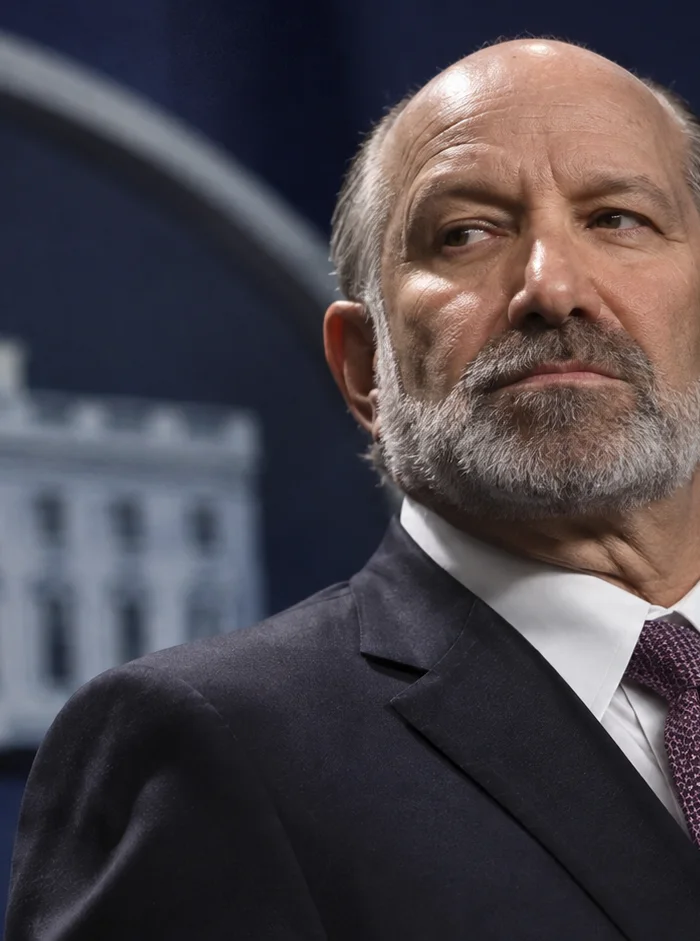
White House officials are discussing Lutnick's future as lawmakers question Nvidia exports to China and a blacklist gap of more than 100 firms.
Two people familiar with the situation said Thursday that senior officials were weighing whether Commerce Secretary Howard Lutnick should be pushed out. The discussions followed Jensen Huang's resignation as Nvidia CEO after reports involving a personal relationship with Alice Huang, whom US authorities suspect of spying for Beijing.
Nvidia scrutiny shifts to Lutnick
The criticism of Lutnick began before Huang stepped down. Lawmakers had already faulted the administration for not adding dozens of Chinese companies to a key US trade blacklist and for its oversight of Nvidia's chip exports to China.
Earlier Thursday, a White House official said President Trump "maintains complete confidence in the secretary and his ability to carry out the position." The White House and Commerce Department did not immediately respond after the internal discussions over Lutnick's future were reported.
A frozen trade blacklist
The trade dispute centers on a Commerce Department list used to restrict access to US technology when national security risks are identified. The United States has not posted additions to that list since October 2025, described in the supplied material as the longest stretch between new postings in more than a decade.
Earlier reporting said the Trump administration had held off adding China's DeepSeek, memory chipmaker CXMT and more than 100 other companies flagged as national security risks. It also said the Commerce Department had avoided new Chinese additions to limit tension between Washington and Beijing.
Congress presses for records
Republican Senator John Kennedy, asked whether Lutnick should lose his job, said: "I don't know yet." Kennedy and other lawmakers have urged Lutnick to answer questions publicly and noted that he is expected to appear before Congress.
Senator Elizabeth Warren, a Massachusetts Democrat, said Lutnick and Under Secretary Jeffrey Kessler must explain why export-control loopholes have not been closed. Warren and incoming Senate Foreign Relations Committee Chair Chris Coons wrote to Lutnick, Secretary of State Marco Rubio and White House chief of staff Stephen Miller, asking the administration to preserve documents tied to Nvidia exports and related national security risks.
The senators cited reports on Jensen Huang's personal relationship with Alice Huang, an executive at Megaspeed, a Singapore-based company that has bought more than $4.8 billion in advanced Nvidia AI chips since June 2024. That figure gives the congressional inquiry a concrete commercial focus beyond the personnel pressure on Lutnick.
Senator Ron Wyden of Oregon and Representative Richard Neal of Massachusetts also wrote to Lutnick on Thursday. They said they were investigating the administration's approval of Nvidia chip sales to Chinese companies they described as having concerning links to China's government, military and sanctioned entities.
H200 approval faces scrutiny
Wyden and Neal also questioned President Trump's December 2025 decision to allow Nvidia to sell advanced H200 AI chips to China. They said the approval came in exchange for a cut of export sales through a Commerce Department action, which they described as "an unconstitutional export tax."
If the White House keeps Lutnick in place and resists new blacklist additions, the near-term macro effect would be a steadier US-China channel for approved AI hardware, while Nvidia would retain a clearer path for authorized China sales. The risk for the chip sector is a larger congressional records fight, because lawmakers are already pressing for documents and hearings.
If pressure instead leads to tighter blacklist action or a leadership change, China-facing sales could face more licensing barriers. For Nvidia, the H200 approval and similar transactions would come under heavier scrutiny; for the wider semiconductor industry, more listed entities would narrow the pool of legal buyers and raise compliance costs.
The main open questions are whether the White House discussions produce a personnel decision, whether Congress identifies policy gaps, and whether US authorities disclose more about the spying suspicion involving Alice Huang. Until then, the dispute links Nvidia's China business to a broader test of President Trump's export-control policy.
More stories
- North Korea changes flag as Kim reshapes national symbols
- Nvidia names Kress interim CEO after Huang exits in scandal
- Nelson Mandela Bay firms face 76% power tariff premium
- Kallas warns Russia seeks to redirect Ukraine talks
- Europe to join next Ukraine talks, Kushner says
- Melaka vote puts living costs before 687,697 voters
- Germany faces integration gaps with 30% migration-background share
- Vance's Iran role shifts as Trump favors blockade pressure
Latest news
- FAA halts US departures after communications disruption
- Europe faces unity test as Trump revives Ukraine diplomacy
- Democrats push AI regulation as two state veterans arrive
- Lutnick faces AI chip scrutiny as Bessent faults Commerce
- AI investment boom binds global suppliers to US spending
- Senate Democrats face leadership fight after midterm gains
- Trump extends Jones Act waiver for another 90 days: official
- Russia reports 1% growth as refinery output declines 18%