

AI investment boom binds global suppliers to US spending
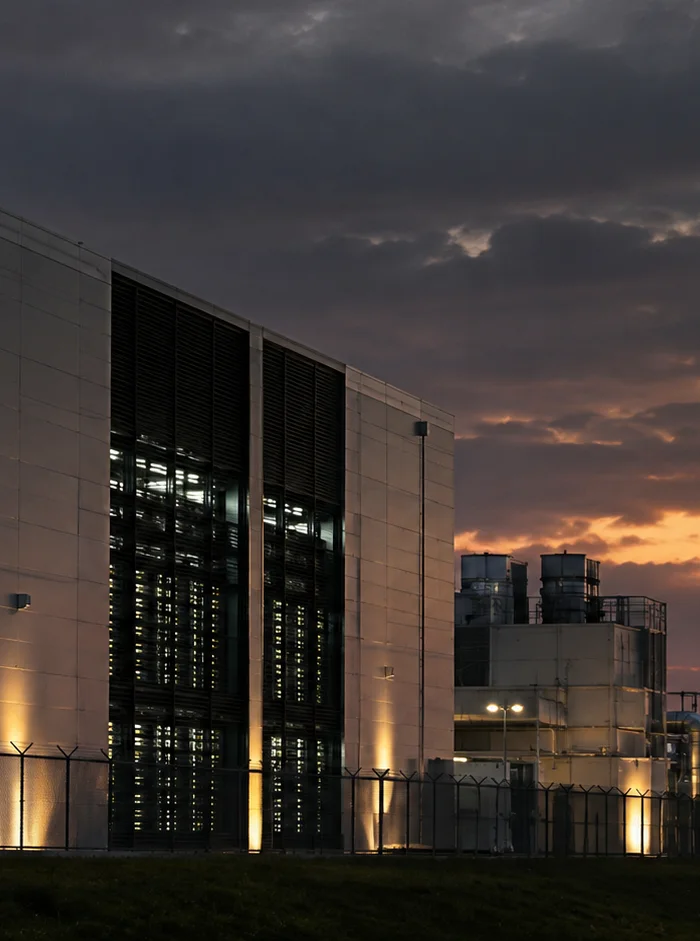
Asian exporters face AI investment risks as US computing demand ties chip shipments and overseas suppliers to a shared spending cycle.
American data-center spending supports businesses well beyond the technology companies commissioning the facilities. Across Asia, Europe and assembly centers in Mexico, suppliers are participating in an expansion whose reversal would expose several economies to the same source of weaker demand.
US computing demand reaches overseas factories
China, Taiwan and South Korea supply semiconductors, servers and other electronics for the US computing expansion. Their export businesses connect American investment decisions to manufacturing activity overseas, giving the spending cycle an international reach beyond technology shares.
Vietnam and Mexico also participate through their assembly operations, while European industrial manufacturers provide equipment for electricity supply and cooling. These businesses occupy different positions in the supply chain, but each supplies part of the infrastructure required to expand computing capacity.
Construction is also spreading beyond the American market: Malaysia, Thailand and Australia are developing data centers. That creates another layer of exposure, alongside the factories shipping components and the industrial companies supplying equipment for those facilities.
Export dependence meets household market exposure
The economic concern is not simply that technology stocks might lose value. A spending slowdown would also threaten export demand in economies where other sources of growth are limited, while pressure on public finances constrains governments' ability to offset weakness through additional expenditure.
Households represent a separate channel of exposure. Individual investors internationally have bought technology shares in pursuit of returns; if a market decline persists, losses on those holdings would accompany any deterioration in orders for manufacturers.
Frederic Neumann, chief Asia economist at HSBC in Hong Kong, describes a collapse in unusually stark terms. “There is very little that can be done to prevent a global recession should the AI boom collapse,” he said.
Neumann's assessment is conditional, not a finding that recession has begun or that investment is already contracting. A reduction in the speed of expansion and an outright collapse are different scenarios, with different consequences for suppliers and the economies hosting them.
Spending paths determine supplier exposure
If American investment continues to expand, the same cross-border channels would remain sources of demand: electronics exports from Asia, assembly work in Vietnam and Mexico, and industrial equipment supplied from Europe. At the company level, businesses serving those projects would remain dependent on customers proceeding with construction and equipment purchases.
If investment instead grows more slowly, suppliers could face weaker growth in orders without necessarily experiencing an outright fall in sales. For the wider sector, that distinction separates a moderation in expansion from a contraction; globally, it would mean less support from a source of demand that has helped sustain otherwise weak growth.
A collapse would present the more severe scenario identified by Neumann, combining an investment reversal with exposure across exporting economies. The central uncertainty is whether market volatility precedes a change in actual spending: construction commitments, equipment orders and export performance would help distinguish financial losses from a broader business downturn.
More stories
- Trump extends Jones Act waiver for another 90 days: official
- Russia reports 1% growth as refinery output declines 18%
- The Week in Games: GTA 6 sets market pace
- Salik profit falls 8.6% as Q3 trips rise 4%
- Stantec raises 2026 profit targets after 20.2% EBITDA margin
- Sudan gold revenue reaches $3.5bn without price relief
- Trump confronts gasoline prices topping $4 at holiday pumps
- Gold prices steady as Fed bets shift before US jobs data
Latest news
- FAA halts US departures after communications disruption
- Europe faces unity test as Trump revives Ukraine diplomacy
- Democrats push AI regulation as two state veterans arrive
- Lutnick faces AI chip scrutiny as Bessent faults Commerce
- Senate Democrats face leadership fight after midterm gains
- North Korea changes flag as Kim reshapes national symbols
- Nvidia names Kress interim CEO after Huang exits in scandal
- Lutnick faces White House review over Nvidia AI exports