

Senate Democrats face leadership fight after midterm gains
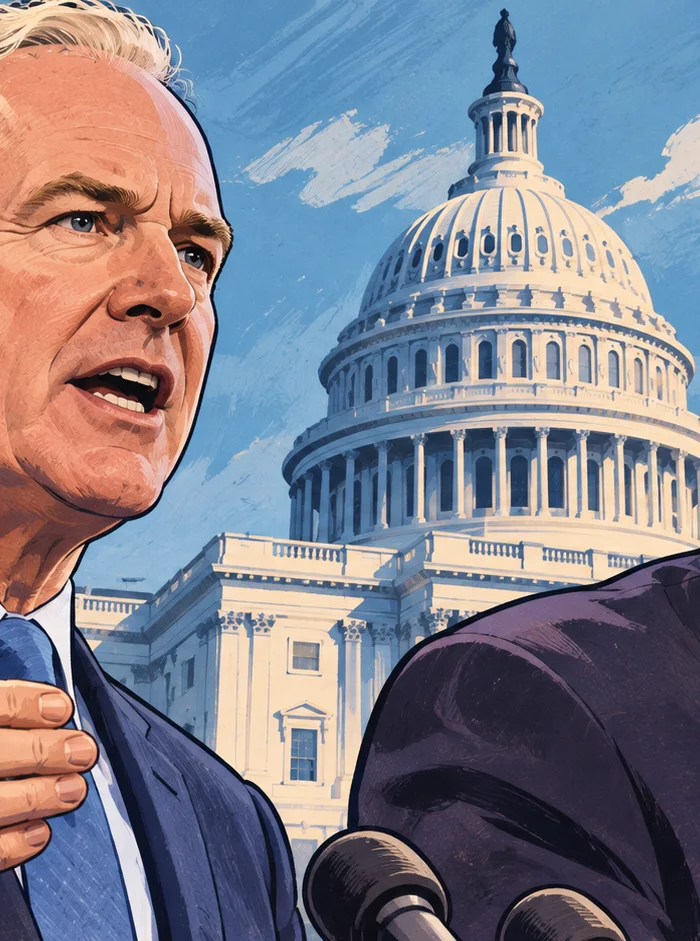
Senate Democrats will choose their leader December 1 as Chris Van Hollen challenges Chuck Schumer after the party's midterm gains.
The Maryland senator announced his bid to lead the incoming majority, challenging the assumption that electoral success would secure Schumer another term. Democrats gained at least eight seats, with a ninth still possible, reversing their minority position.
The contest puts competing interpretations of that result before the caucus: Schumer's supporters credit the New York senator's campaign work, while Van Hollen argues the outcome demands a different approach. Their choice will shape Democratic leadership during disputes with President Trump over federal spending, healthcare assistance and potential impeachment proceedings.
Schumer defends his electoral record
Schumer has headed Senate Democrats since 2017 and says he has sufficient support to remain in charge. Responding to the challenge, he said, "I welcome any discussion about the future of our caucus and the important work ahead."
His allies attribute part of the party's electoral success to his candidate recruitment and fundraising. They say those efforts helped Democrats compete across a broader range of Midwestern and Southern races.
Sen. Tammy Baldwin and independent Sen. Angus King, who participates in the Democratic caucus, declared their support for Schumer after Van Hollen announced his candidacy. Sen. Brian Schatz also renewed his endorsement, urging colleagues to settle the contest promptly and unite.
Sen. Ruben Gallego has offered a more qualified defense of the incumbent. After praising Schumer's electoral performance, he subsequently said Democrats should discuss improvements to the caucus rather than make the conversation solely about its leader.
Van Hollen seeks a different mandate
Van Hollen spent the preceding week contacting fellow senators and pressing the case for a contested leadership election. In a television interview, he declined to quantify his backing.
Michigan Sen.-elect Abdul El-Sayed endorsed the challenger shortly after the announcement. Sens. Bernie Sanders and Elissa Slotkin had already said they would oppose Schumer, although opposition to the incumbent does not establish support for Van Hollen.
The challenger has attracted progressive support through his criticism of Trump's immigration enforcement policies and Israel's operations in Gaza. He also supported progressive contenders over moderate rivals in competitive-state Senate primaries and backed Zohran Mamdani's mayoral candidacy last year.
Calls for generational change form another part of the criticism directed at Schumer, who is 75, compared with Van Hollen's 67. Van Hollen nevertheless brings a lengthy congressional record: he won election to the Senate in 2016 following 14 years as a House member.
December ballot precedes policy disputes
The leadership election will use a secret ballot, with a simple majority required to win. Public endorsements therefore offer a partial picture of the contest, particularly while Van Hollen withholds a count of his supporters.
If Schumer prevails, he will retain leadership while facing demands from colleagues seeking a more confrontational approach toward the administration. If Van Hollen wins, he will inherit responsibility for holding together a majority whose members have already taken different sides in the leadership dispute.
Government funding, the restoration of healthcare subsidies and possible impeachments await that majority. The December vote will determine who leads Democrats into those disputes, but it will not itself resolve their differences over strategy.
More stories
- FAA halts US departures after communications disruption
- Europe faces unity test as Trump revives Ukraine diplomacy
- Lutnick faces AI chip scrutiny as Bessent faults Commerce
- T-Mobile agrees to drop 50 GB cap in New York broadband deal
- Iran threats put Bessent security alongside sanctions push
- Nvidia's Huang gets Trump backing as spy allegations widen
- Democrats hold Michigan Senate seat with El-Sayed victory
- Democrats face limits on gains as midterm voting arrives
Latest news
- Democrats push AI regulation as two state veterans arrive
- AI investment boom binds global suppliers to US spending
- Trump extends Jones Act waiver for another 90 days: official
- Russia reports 1% growth as refinery output declines 18%
- North Korea changes flag as Kim reshapes national symbols
- Nvidia names Kress interim CEO after Huang exits in scandal
- Lutnick faces White House review over Nvidia AI exports