

Germany faces integration gaps with 30% migration-background share
Jobs data point to strong labour-market gains, but women with children, young male refugees and language-course funding remain policy pressure points.
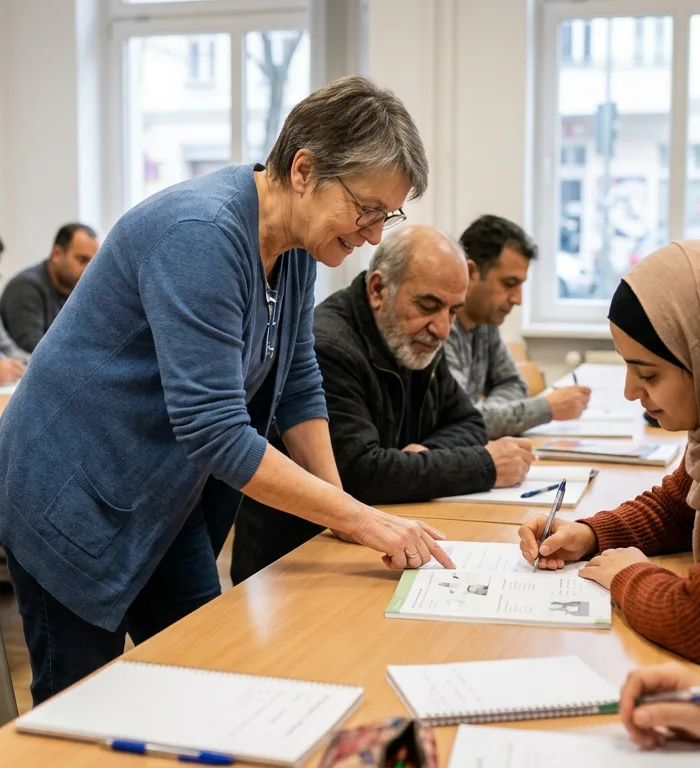
Germany’s Integration Commissioner Natalie Pawlik said in Berlin on Nov. 11 that integration is improving, as a government integration report put people with a migration background at about 30% of the population.
The report’s labour-market data show why the issue matters for Europe’s largest economy: immigrant employment is nearly 70%, higher than in most EU countries, while non-German workers rose to 5.8 million in 2025 from 1.8 million in 2009.
Pawlik, a Social Democratic Party lawmaker who has held the commissioner post since last year, gave a broadly positive reading of the data. “Integration is improving steadily, despite ongoing hurdles and challenges,” she said, according to Deutsche Welle.
She linked that progress to public expectations of language learning and respect for the law. “The people of our country want integration to succeed. They rightly expect that people who live in Germany permanently will learn our language and abide by our laws,” Pawlik said.
The report was prepared by a team led by Frank Kalter, director of the German Center for Integration and Migration Research, using official government statistics, surveys and independent studies. The commissioner’s role sits within the Federal Ministry of Labor, reflecting the central place of employment in Germany’s integration policy.
The labour data show both scale and dependency. According to the report, the largest recent increase in workers without German citizenship has come in health and social services, a sector where Germany has relied on foreign staff.
The report also identified persistent gaps. In almost all immigrant groups, women have more difficulty entering work, particularly mothers whose husbands are employed. About 60% of women in those families have jobs, compared with nearly 88% of women in families with German passports.
Young men who arrived in Germany as refugees were described as facing barriers in education and the labour market. Using citizenship as the measure, the report said non-German citizens account for around 40% of convicted criminals, a share above their proportion of the population, while people without German passports are also more likely to be victims of crime.
Language policy is another fault line. Pawlik has described language acquisition as the basis for integration, but the government tightened funding for integration courses earlier this year to save money, leaving many courses cancelled or with reduced public support.
The political dispute now extends to residency rights. On Tuesday, SPD lawmakers adopted a position paper proposing that legal provisions allowing workers to remain in Germany should also apply to refugees, giving working refugees a more secure status.
Support from the conservative CDU and CSU, which lead Chancellor Friedrich Merz’s coalition, has not been established. Asked by DW whether the bloc would back the idea, Pawlik replied: “You'll have to ask the interior minister.”
Source: Deutsche Welle article, Nov. 11.
More stories
- Cameroon faces succession test after Biya's 10-week absence
- Vance's Iran role shifts as Trump favors blockade pressure
- EU defence start-ups face two funding gaps, MEPs warn
- China rejects US spy claims in Nvidia-linked tech fight
- Italy lower house advances vaccine-sceptic medic return bill
- US envoys pursue Ukraine peace talks in Moscow with Putin
- Planned North Africa hydrogen plants may draw 170 litres per kilogram
- Ethiopia faces governance warning after 10.4-point rights drop
Latest news
- Japan & Asia: Zelda remake tops Japan boxed sales with 537,041
- Sudan gold revenue reaches $3.5bn without price relief
- ADNOC L&S lifts 2026 profit outlook to $4bn
- EU receives 12.89 million tonnes of Russian Arctic LNG before ban
- How did a $4 trillion company miss it?
- UK GDP rises 0.7% as tech services lead third-quarter growth