

US envoys pursue Ukraine peace talks in Moscow with Putin
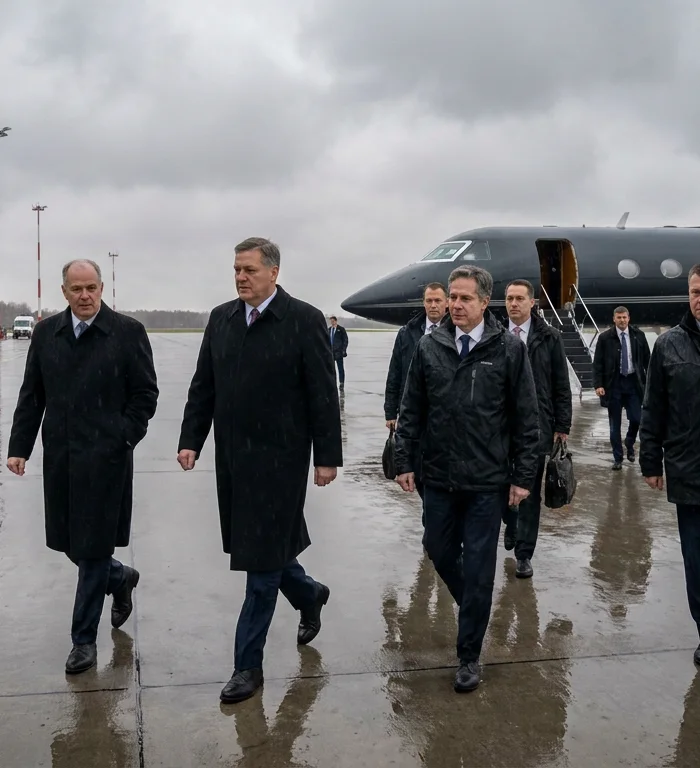
US envoys arrived in Moscow for Ukraine peace talks with Vladimir Putin after negotiations in Abu Dhabi left territorial disputes unresolved.
Jared Kushner and Steve Witkoff reached the Russian capital on November 12 for another attempt to advance a settlement. Their visit follows negotiations that produced plans for a further prisoner exchange, but no publicly announced agreement on the central political disputes.
Putin's special envoy, Kirill Dmitriev, greeted the Americans at their aircraft and traveled with them into Moscow. The meeting with Putin was scheduled for the morning; the supplied account does not establish that it had begun.
Donbas demands divide the negotiating sides
The central obstacle remains the disposition of Ukrainian territory. Kyiv rejects Putin's demand that it relinquish all of Donbas, the eastern region Moscow wants surrendered as a condition for peace.
With the territorial negotiations stalled, American mediators have sought to shift attention toward arrangements for Ukraine's security after the war and the country's rebuilding. Those discussions represent a separate strand of the diplomacy, not evidence that either side has changed its position on land.
President Trump has expressed optimism about the diplomatic effort, but the negotiations have yielded no public indication of major concessions. The distinction matters for assessing the Moscow visit: renewed access to Putin does not itself establish movement toward an agreement.
Abu Dhabi yields prisoner exchange plans
The Abu Dhabi round ended on November 11 after two days of discussions. It marked the first direct, US-mediated negotiations involving Ukrainian and Russian representatives in nine months, restoring that negotiating format after a prolonged interval.
Negotiators from both countries described progress, while the American side said important disagreements persisted, including over territory. The planned prisoner exchange was the clearest publicly identified outcome, although the supplied account gives neither a timetable nor the number of people involved.
If it proceeds, the exchange would deliver a concrete result for prisoners without necessarily resolving the dispute over a peace settlement. Its announcement therefore needs to be distinguished from progress on borders, a ceasefire or postwar security arrangements.
Moscow proposes wider European security discussions
A senior Russian diplomat said on November 11 that Moscow was prepared to consider non-aggression agreements with NATO countries within a revised European security framework. That was a Russian proposal, not an agreement with the alliance or its individual members.
European politicians cited in the account oppose opening broader negotiations on continental security before tangible progress in Ukraine, including a ceasefire. The disagreement concerns sequencing as well as substance: whether Europe's wider security arrangements should enter the talks before fighting in Ukraine stops.
Witkoff's scheduled encounter with Putin would be their 10th face-to-face meeting, extending an established channel rather than opening a new one. If the Moscow discussions produce movement on territory or security commitments, they would address obstacles identified during the preceding round; if those positions remain unchanged, the prisoner exchange could remain a narrower diplomatic result.
More stories
- Cameroon faces succession test after Biya's 10-week absence
- Germany faces integration gaps with 30% migration-background share
- Vance's Iran role shifts as Trump favors blockade pressure
- EU defence start-ups face two funding gaps, MEPs warn
- China rejects US spy claims in Nvidia-linked tech fight
- Italy lower house advances vaccine-sceptic medic return bill
- Bundeswehr faces misconduct gap as few as one-sixth reported
- Megaspeed’s 2024 affiliate filings widen Nvidia chip scrutiny
- Bunia health teams rebuild trust after 4,000 Ebola deaths
- Ukraine power grid faces 15-site strike after Trump sanctions pause
Latest news
- Japan & Asia: Zelda remake tops Japan boxed sales with 537,041
- Sudan gold revenue reaches $3.5bn without price relief
- ADNOC L&S lifts 2026 profit outlook to $4bn
- EU receives 12.89 million tonnes of Russian Arctic LNG before ban
- How did a $4 trillion company miss it?
- UK GDP rises 0.7% as tech services lead third-quarter growth