

Nelson Mandela Bay firms face 76% power tariff premium
Court papers say Nersa’s approvals for five municipalities are unlawful, putting potential credits and recalculated charges before the Gauteng High Court.
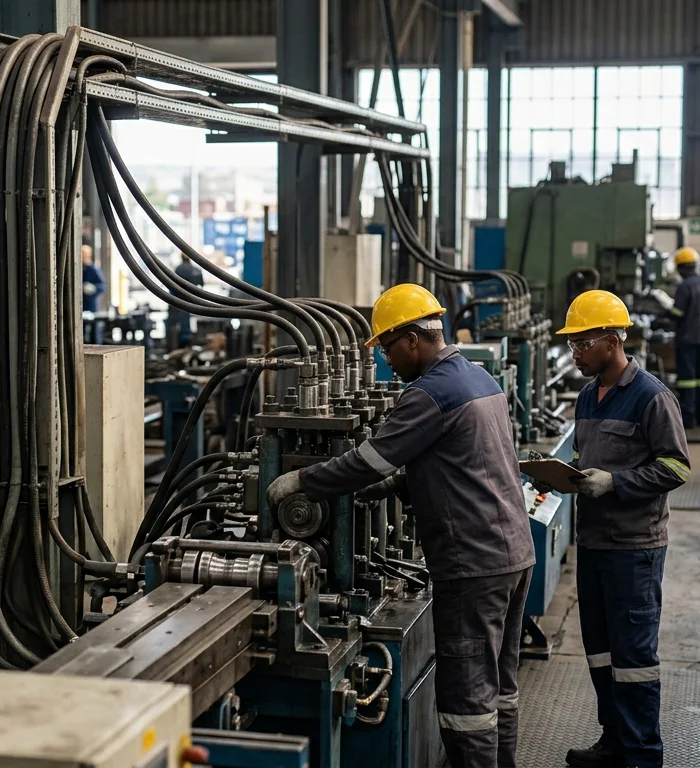
Nelson Mandela Bay businesses paid 76% more for electricity in the 2025/26 financial year than the municipality’s supply cost, Daily Maverick reported on Nov. 12, citing Moneyweb.
The dispute matters for a manufacturing hub where unemployment was 32.2% in the second quarter of 2026, down from 33.1% in the previous quarter, according to the report.
Major industrial electricity users are challenging the National Energy Regulator of South Africa in the Gauteng High Court in Pretoria over municipal electricity tariffs that the regulator admitted were unlawfully approved.
According to court papers cited by Daily Maverick, Nersa’s approvals for Nelson Mandela Bay, Johannesburg, Ekurhuleni, Emfuleni and Madibeng “are reviewable, unlawful and invalid, and fall to be set aside”. The regulator admitted approving municipal tariff applications with significant errors without adequately checking the figures, Daily Maverick reported.
The applicants, including Nelson Mandela Bay-based Coega Steels, want the tariffs set aside. They are seeking either retrospective credits to their electricity accounts, with interest if repayment is delayed, or temporary replacement tariffs while Nersa recalculates the charges.
Nelson Mandela Bay Business Chamber Chief Executive Denise van Huyssteen said the chamber was not part of the court case, but warned that electricity costs were squeezing companies already operating in difficult conditions.
“If you had to interrogate the financials of a lot of the manufacturers in the city, you’ll find that electricity has now become the biggest expense item out of everything – more than logistics, more than wages and salaries. That is a big red flag, which affects the sustainability of the businesses,” Van Huyssteen said.
The stakes extend beyond individual electricity bills. Nelson Mandela Bay is a major automotive and manufacturing centre, and the chamber warned that pressure on factories can affect workers, suppliers, service providers and households tied to the sector.
Van Huyssteen said Nelson Mandela Bay lost R1.7 billion through vandalism, electricity theft and billing failures in the previous financial year. She expects that figure to rise to R1.9 billion in the current financial year.
Daily Maverick also cited an earlier report that Isuzu Motors South Africa spent close to R400,000 on diesel in one day to keep its plant running during an unplanned 15-hour power outage on Oct. 8 in Gqeberha’s Struandale and Deal Party industrial areas.
“Our electricity in South Africa used to be a competitive advantage,” Van Huyssteen said. “We used to have among the cheapest electricity in the world, but now with everything that’s happened over the last few years, our electricity has progressively got very expensive.”
Nersa and the Nelson Mandela Bay Municipality had not responded to Daily Maverick’s questions by publication, the outlet said. The court process will determine whether the disputed tariffs are set aside, credited back or replaced while new calculations are made.
More stories
- North Korea changes flag as Kim reshapes national symbols
- Nvidia names Kress interim CEO after Huang exits in scandal
- Lutnick faces White House review over Nvidia AI exports
- Kallas warns Russia seeks to redirect Ukraine talks
- Europe to join next Ukraine talks, Kushner says
- Melaka vote puts living costs before 687,697 voters
- Ukraine power grid faces 15-site strike after Trump sanctions pause
- LAAF executes 31 people after 15-year Libya moratorium
Latest news
- FAA halts US departures after communications disruption
- Europe faces unity test as Trump revives Ukraine diplomacy
- Democrats push AI regulation as two state veterans arrive
- Lutnick faces AI chip scrutiny as Bessent faults Commerce
- AI investment boom binds global suppliers to US spending
- Senate Democrats face leadership fight after midterm gains
- Trump extends Jones Act waiver for another 90 days: official
- Russia reports 1% growth as refinery output declines 18%