

UN agencies seek aid for 30.3m facing DR Congo hunger
Conflict, displacement, high food prices and disease outbreaks are pushing needs beyond current humanitarian support, the agencies warned.
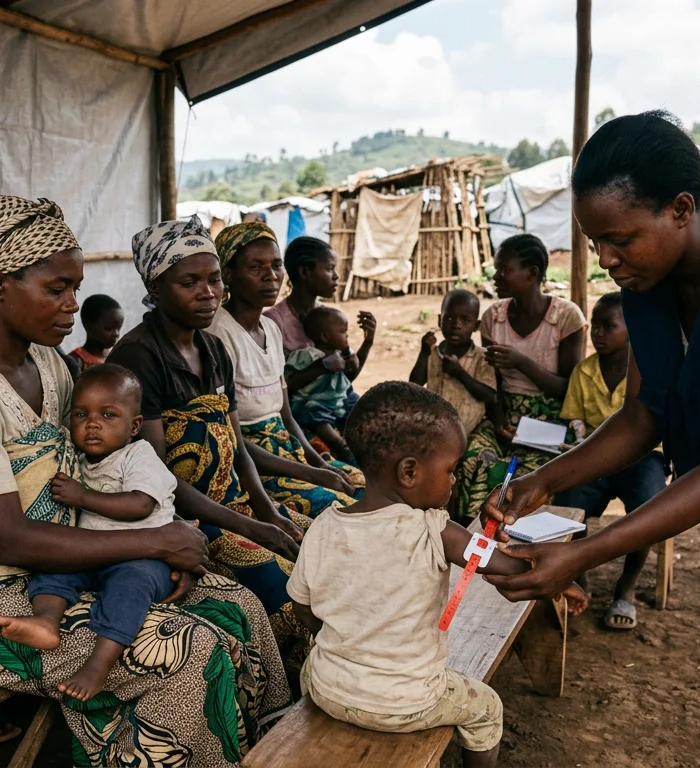
FAO, WFP, UNICEF and WHO called Nov. 13 for urgent action after an IPC analysis projected 30.3 million people in DR Congo to face Crisis-level hunger or worse in January-June 2027.
The agencies said in the Nov. 13 WFP press release that the projected total, up from 26.5 million in January-June 2026, includes 4.2 million people in Emergency, IPC Phase 4.
The Integrated Food Security Phase Classification, or IPC, ranks acute food insecurity from Minimal, Phase 1, to Catastrophe/Famine, Phase 5. Crisis, or Phase 3, means households face serious food consumption gaps or are forced to use damaging coping strategies; Emergency, Phase 4, is more severe.
Nearly 29 million people, described by the agencies as almost a quarter of the population, face Crisis-level acute food insecurity or worse from September to December 2026. That includes 3.6 million people in Emergency, before the projected rise of nearly 600,000 in early 2027.
Eastern DR Congo carries the heaviest concentration of urgent needs. More than 11 million people in North Kivu, South Kivu and Ituri are projected to face Crisis levels or worse between January and June 2027, with nine territories projected to be in Emergency.
"Conflict is driving families from their homes, cutting them off from their fields and putting food beyond their reach," said Ross Smith, WFP Director of Emergency Preparedness and Response. He said the Ebola outbreak had become "a crisis on top of a pre-existing crisis" and called for safe access and resources to expand food assistance.
The agencies attributed the worsening outlook to armed conflict, repeated displacement, rising food prices and disease outbreaks including Ebola, mpox and cholera. They said insecurity, damaged infrastructure and logistical barriers were disrupting trade, while restricted access to land and agricultural inputs was reducing harvests and farm incomes.
FAO said timely farming support could limit dependence on relief. "Every agricultural season missed deepens hunger and increases dependence on humanitarian assistance," said Rein Paulsen, Director of the FAO Office of Emergencies and Resilience, adding that farmers need seeds, tools and other support before planting begins in early 2027.
The agencies said the crisis extends beyond the eastern conflict zones into Tanganyika, Maniema, Kasaï, Haut-Lomami, Lomami, Kwango and Haut-Uele. They also warned that poor access to health care, safe water and sanitation increases the risk of acute malnutrition, especially for children under five.
The IPC figures are projections for specified periods, not a count of current conditions throughout 2027. The agencies said Phase 3-or-above totals already include people in Phase 4, meaning the Emergency figures should not be added separately to the wider totals.
The agencies urged coordinated financing and diplomatic action to expand food assistance, protect agricultural livelihoods, treat acute malnutrition and sustain health, nutrition, water and sanitation services. They also called on all parties to protect civilians and allow safe, rapid and unimpeded humanitarian access.
Source: WFP press release distributed by AllAfrica, Nov. 13, 2026.
More stories
- Hungary seizes nearly $20m in Orban-era corruption probe
- Singapore aid groups face Gaza delivery bottlenecks despite 200 daily trucks
- North Korea changes flag as Kim reshapes national symbols
- Nvidia names Kress interim CEO after Huang exits in scandal
- Lutnick faces White House review over Nvidia AI exports
- Nelson Mandela Bay firms face 76% power tariff premium
- Iran parliament backs Akhlaghi as defence minister in 237-15 vote
- Belgium seeks EU sanctions after West Bank attack on diplomats
Latest news
- Airlines face FAA outage reset after nationwide shutdown
- Fielding distances himself from Brand after 10-year sentence
- Children in England receive 341 GLP-1 prescriptions in four months
- MEPs seek EU cloud shift with US groups at 70% share
- Roche's Gazyva gains EU panel backing after 76.7% lupus response
- FAA halts US departures after communications disruption
- Europe faces unity test as Trump revives Ukraine diplomacy
- Democrats push AI regulation as two state veterans arrive