

Airlines face FAA outage reset after nationwide shutdown
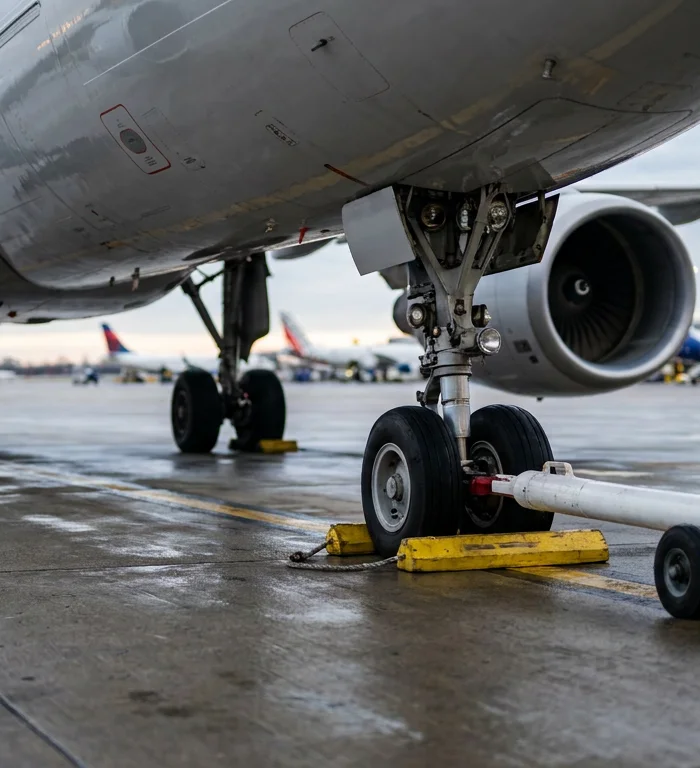
The FAA lifted a four-hour departure ban Friday, but thousands of cancellations left airlines facing a disrupted weekend across the United States.
The Federal Aviation Administration stopped departures shortly before 4 p.m. Eastern after intermittent disruptions to radio communications and radar services. More than 3,500 aircraft were already airborne when the restriction began, leaving airports to accommodate arriving flights while departures remained suspended.
Cancellations extend beyond the departure ban
The reported cancellation tally exceeded 9,000 flights Friday, with more than 3,200 additional cancellations Saturday. Delays numbered nearly 7,000 Friday and more than 800 early Saturday, indicating that lifting the restriction had not immediately restored airline schedules.
Aviation-data company Cirium put Friday's cancellations at more than 30% of departing U.S. flights. For comparison, FlightAware recorded more than 11,600 cancellations during a single day of January winter weather, a higher total than Friday's reported disruption.
Hundreds of flights returned to their departure airports or landed elsewhere as parking space became scarce. Aircraft and crews ended up away from their scheduled assignments, creating another obstacle to restarting services even where air-traffic communications had recovered.
Duffy seeks funding for aging equipment
Transportation Secretary Sean Duffy attributed the failure to aging technology and telecommunications routers overloaded by data. Speaking Friday at the White House, he urged Congress to finance an overhaul that he estimated would cost $50 billion.
Duffy pointed to earlier disruptions in the Northeast in September and near Newark Liberty International Airport the previous year. He warned that further failures were possible without modernization, presenting the current breakdown as part of a broader equipment problem rather than an isolated interruption.
Homeland Security Secretary Markwayne Mullin offered a related explanation, saying system patches and newer technology were placing demands on older equipment. He also said officials had found no indication of a cyberattack at that stage; that assessment did not establish a definitive technical cause.
The officials' explanations leave a distinction between restoring service and identifying what failed. Their accounts describe problems involving both equipment capacity and the interaction of newer technology with existing infrastructure, but do not establish which intervention would prevent a recurrence.
Aircraft placement complicates the weekend restart
Officials said departures would return gradually, with larger passenger aircraft receiving priority over smaller planes. Some airlines had already canceled most of their remaining Friday services, limiting how much of the day's schedule could be recovered after the restriction ended.
Telecommunications services at some FAA facilities were returning by early Friday evening. Duffy nevertheless cautioned that resolving the disruption would take time and encouraged college football teams to contact the agency about charter flights for weekend games.
If communications remain stable, airlines can concentrate on returning aircraft and crews to the airports needed for subsequent departures. If interruptions recur, another restriction could compound those scheduling problems and prolong passenger disruption.
The immediate operational tests are whether restored services hold and whether airlines can rebuild workable schedules. The longer-term policy issue is whether Congress provides the modernization funding Duffy requested, and what technical findings support the eventual spending plan.
More stories
- FAA halts US departures after communications disruption
- Europe faces unity test as Trump revives Ukraine diplomacy
- Lutnick faces AI chip scrutiny as Bessent faults Commerce
- Senate Democrats face leadership fight after midterm gains
- T-Mobile agrees to drop 50 GB cap in New York broadband deal
- Iran threats put Bessent security alongside sanctions push
- Canada tariffs hit $27.6 billion in US goods Tuesday night
- Oil prices hold weekly surge as Iran risks lift diesel costs
Latest news
- UN agencies seek aid for 30.3m facing DR Congo hunger
- Hungary seizes nearly $20m in Orban-era corruption probe
- Fielding distances himself from Brand after 10-year sentence
- Children in England receive 341 GLP-1 prescriptions in four months
- MEPs seek EU cloud shift with US groups at 70% share
- Roche's Gazyva gains EU panel backing after 76.7% lupus response
- Singapore aid groups face Gaza delivery bottlenecks despite 200 daily trucks
- Democrats push AI regulation as two state veterans arrive